Department of Pharmacology, School of Medicine, University of North Carolina at Chapel Hill, Chapel Hill, NC, United States of America.
Bowles Center for Alcohol Studies, School of Medicine, University of North Carolina at Chapel Hill, Chapel Hill, NC, United States of America.
PLoS One. 2018 Mar 30;13(3):e0195335. doi: 10.1371/journal.pone.0195335. eCollection 2018.
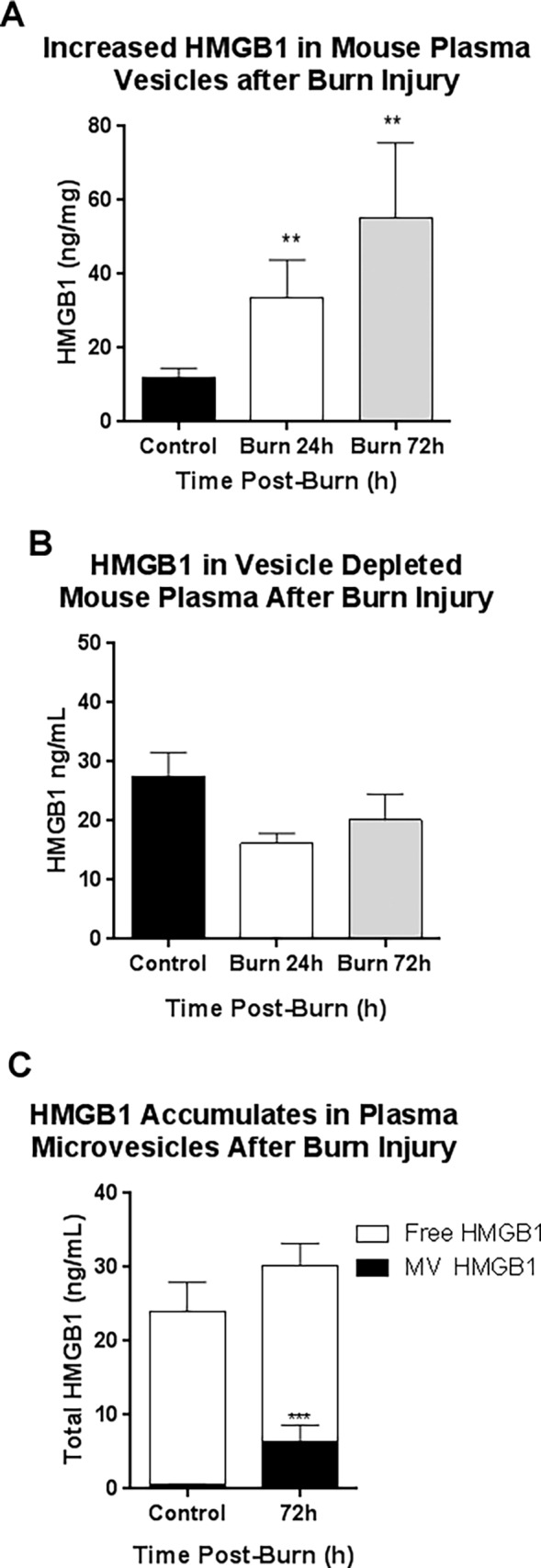
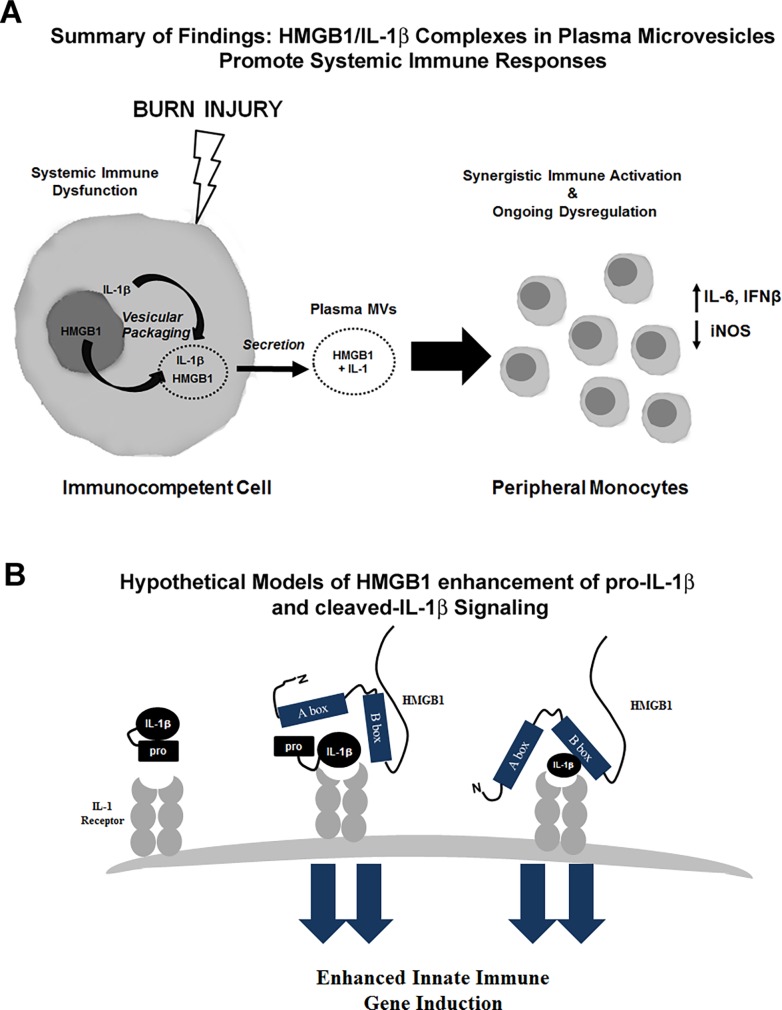
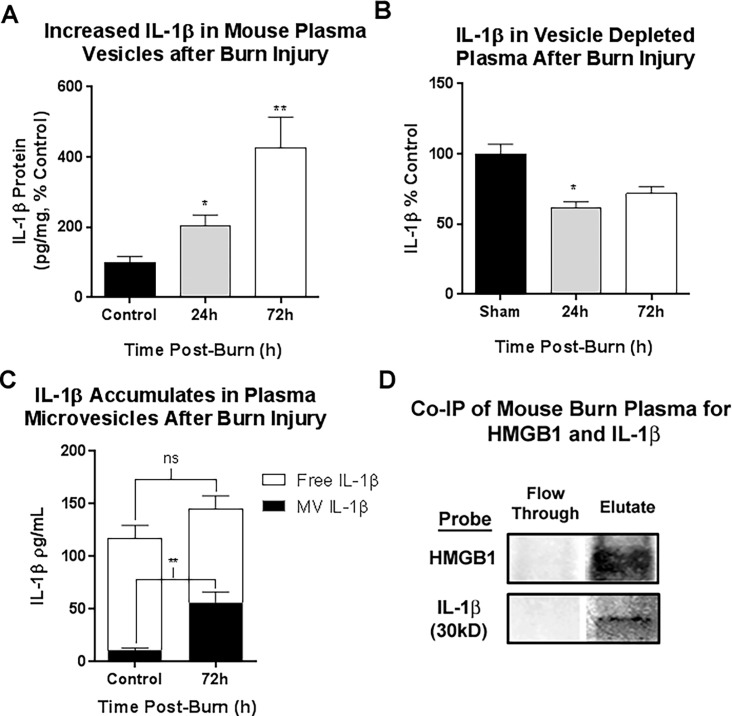
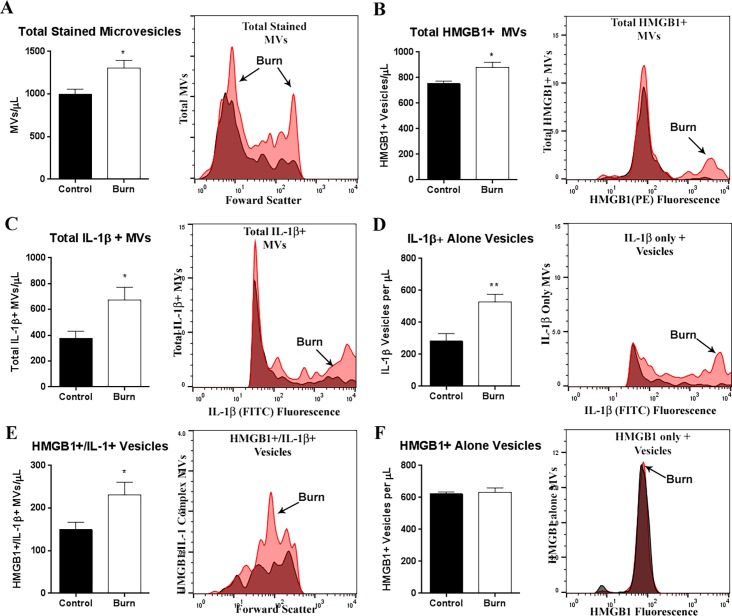
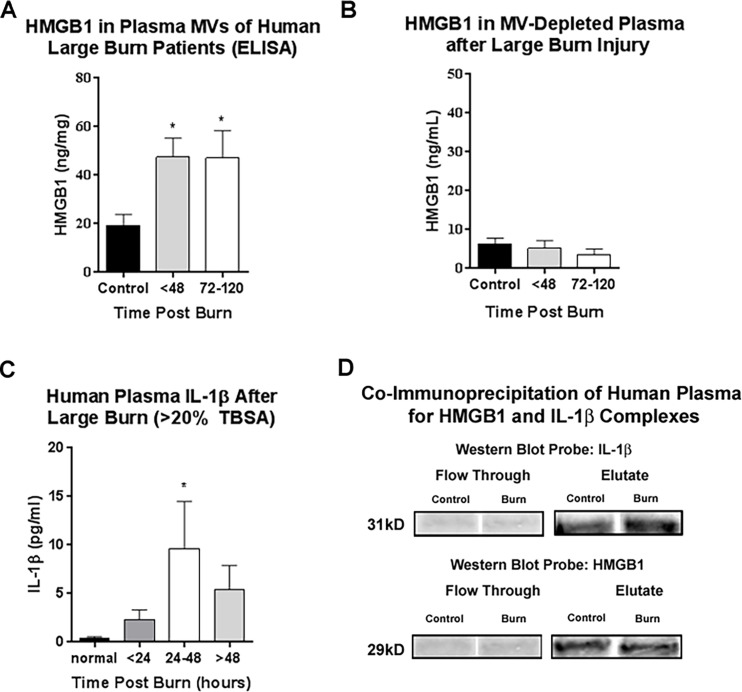
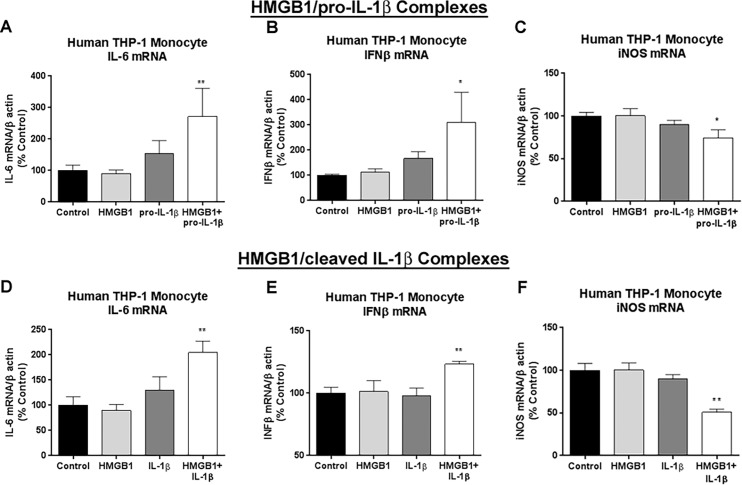
Modulating immune responses to sepsis and trauma remain one of the most difficult challenges in modern medicine. Large burn injuries (LBI) are a severe form of trauma associated with sepsis, immune impairment, and mortality. Immune dysfunction after LBI is complex, involving both enhanced and impaired immune activation. The release of Damage-Associated Molecular Patterns (DAMPs), such as HMGB1, and cytokines (e.g. IL-1β) creates an environment of immune dysfunction often leading to end organ failure and death. Both HMGB1 and IL-1β have been found to play critical roles in sepsis and post-burn immune dysfunction. HMGB1 and IL-1β have been shown previously to form potent complexes in vitro. We recently identified the presence of HMGB1/IL-1β heterocomplexes in human tissue. We now find HMGB1/IL-1β complexes in human and mouse plasma, and identify a synergistic role of HMGB1/IL-1β complexes in post-burn immune dysfunction. In both humans and mice, we found that HMGB1 was enriched in plasma microvesicles (MVs) after LBI. HMGB1 was found form complexes with IL-1β. Using flow cytometry of mouse plasma MVs, we identified an increase in an HMGB1+/IL-1β+ MVs. Using co-IP, HMGB1 was found to bind the pro-form of IL-1β in mouse and human plasma. Pro-IL-1β, which is traditionally considered inactive, became active when complexed with HMGB1. Human THP-1 monocytes treated with HMGB1-pro-IL-1β complexes showed increased transcription of LBI associated cytokines IL-6 and IFNβ along with suppression of iNOS, mimicking findings associated with LBI. These findings identify that HMGB1/IL-1β complexes released after burn injuries can modulate immune responses, and microvesicles are identified as a novel reservoir for these immune mediators. These complexes might serve as novel immune targets for the treatment of systemic immune responses due to LBI or other causes of sepsis.
调节脓毒症和创伤的免疫反应仍然是现代医学最具挑战性的难题之一。大面积烧伤(LBI)是一种严重的创伤形式,与脓毒症、免疫功能障碍和死亡率有关。LBI 后的免疫功能障碍复杂,涉及增强和受损的免疫激活。损伤相关分子模式(DAMPs)的释放,如高迁移率族蛋白 B1(HMGB1)和细胞因子(如白细胞介素 1β[IL-1β]),会产生免疫功能障碍的环境,常导致终末器官衰竭和死亡。HMGB1 和 IL-1β 已被证明在脓毒症和烧伤后免疫功能障碍中发挥关键作用。HMGB1 和 IL-1β 以前已被证明在体外形成有效复合物。我们最近在人体组织中发现了 HMGB1/IL-1β 异源复合物的存在。我们现在发现 HMGB1/IL-1β 复合物存在于人及小鼠血浆中,并鉴定出 HMGB1/IL-1β 复合物在烧伤后免疫功能障碍中的协同作用。在人和小鼠中,我们发现 LBI 后 HMGB1 在血浆微泡(MVs)中富集。HMGB1 与 IL-1β 形成复合物。通过对小鼠血浆 MVs 的流式细胞术分析,我们发现 HMGB1+/IL-1β+MVs 增加。通过共免疫沉淀,发现 HMGB1 与人及小鼠血浆中的前体 IL-1β 结合。前体 IL-1β 通常被认为是无活性的,与 HMGB1 结合后变得有活性。用 HMGB1-前体 IL-1β 复合物处理人 THP-1 单核细胞后,与 LBI 相关的细胞因子白细胞介素 6(IL-6)和干扰素β(IFNβ)的转录增加,同时抑制诱导型一氧化氮合酶(iNOS),模拟与 LBI 相关的发现。这些发现表明,烧伤后释放的 HMGB1/IL-1β 复合物可调节免疫反应,并且微泡被鉴定为这些免疫介质的新型储库。这些复合物可能成为治疗由于 LBI 或其他脓毒症原因引起的全身免疫反应的新型免疫靶标。