Center for Translational Medicine, The First Affiliated Hospital of Xi'an Jiaotong University, Xi'an, China.
Key Laboratory for Tumor Precision Medicine of Shaanxi Province, The First Affiliated Hospital of Xi'an Jiaotong University, Xi'an, China.
J Cell Mol Med. 2018 Jul;22(7):3423-3433. doi: 10.1111/jcmm.13619. Epub 2018 Mar 30.
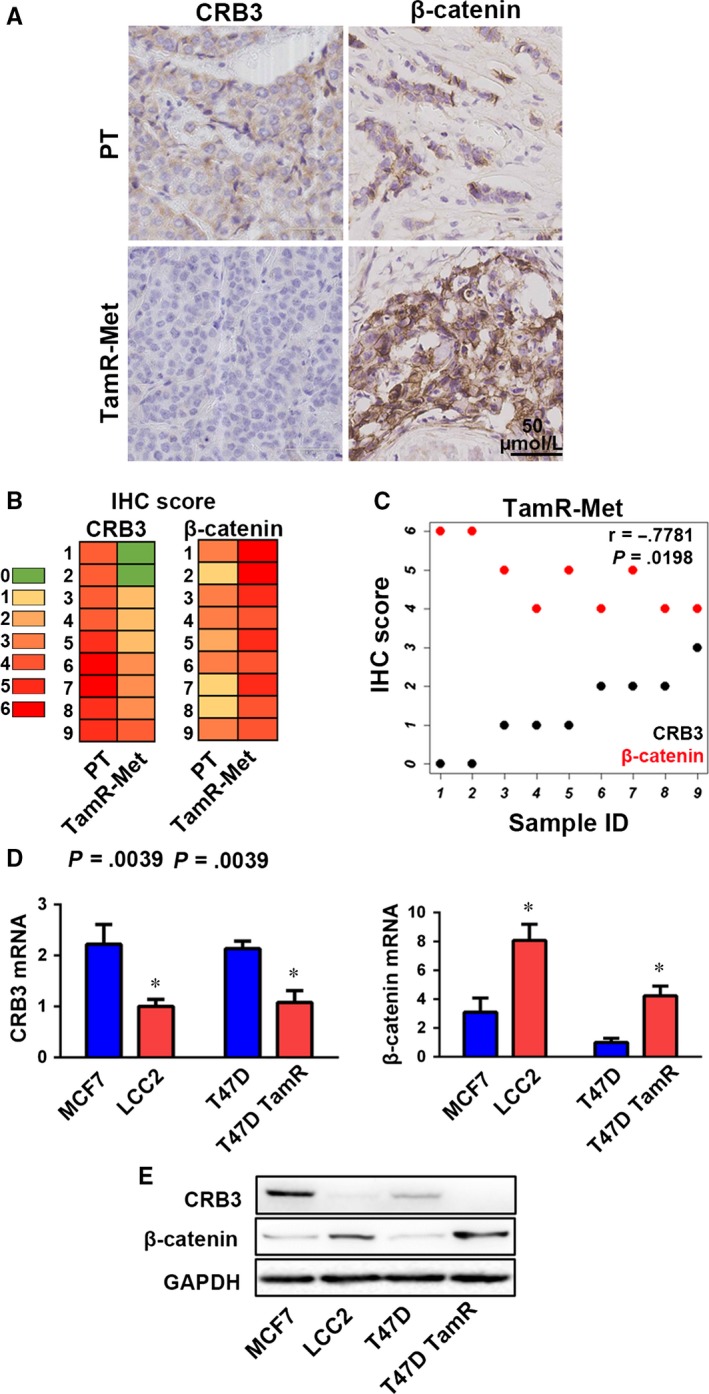
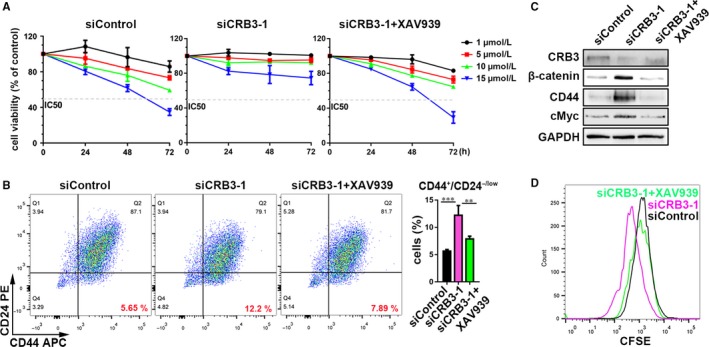
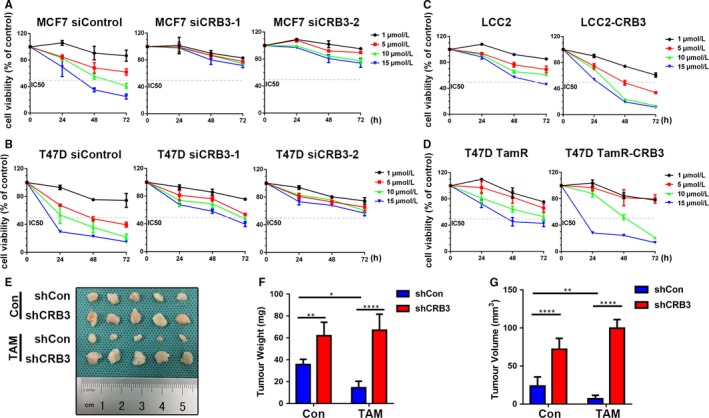
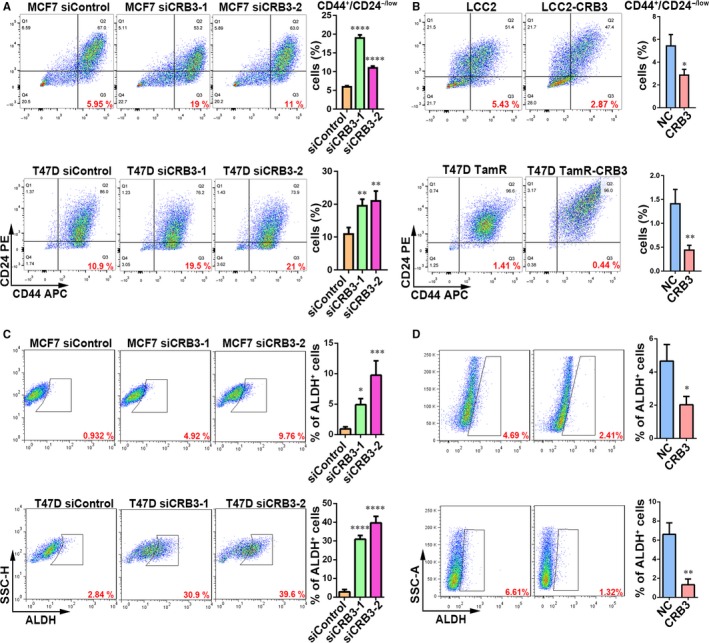
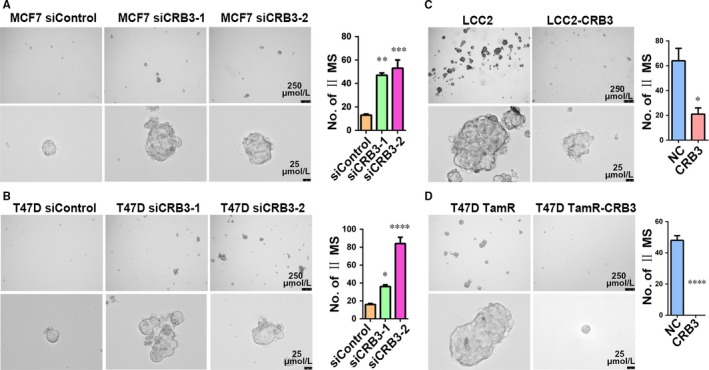
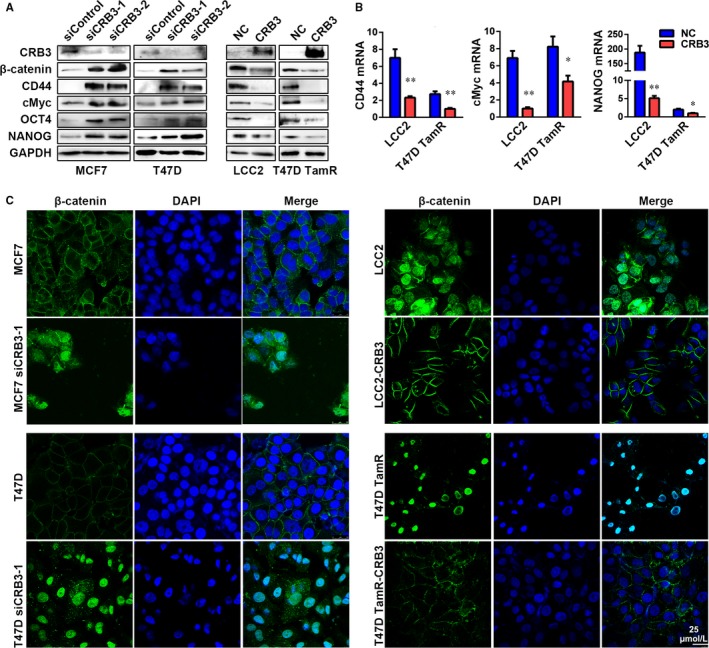
Tamoxifen is a first-line drug for hormone therapy (HT) in oestrogen receptor-positive breast cancer patients. However, 20% to 30% of those patients are resistant to tamoxifen treatment. Cancer stem cells (CSCs) have been implicated as one of the mechanisms responsible for tamoxifen resistance. Our previous study indicated that decreased expression of the CRB3 gene confers stem cell characteristics to breast cancer cells. In the current investigation, we found that most of the breast cancer patient tissues resistant to tamoxifen were negative for CRB3 protein and positive for β-catenin protein, in contrast to their matched primary tumours by immunohistochemical analysis. Furthermore, expression of CRB3 mRNA and protein was low, while expression of β-catenin mRNA and protein was high in tamoxifen resistance cells (LCC2 and T47D TamR) contrast to their corresponding cell lines MCF7 and T47D. Similarly, CRB3 overexpression markedly restored the tamoxifen sensitivity of TamR cells by the MTT viability assay. Finally, we found that CRB3 suppressed the stemness of TamR cells by inhibiting β-catenin signalling, which may in turn lead to a decrease in the breast cancer cell population. Furthermore, these findings indicate that CRB3 is an important regulator for breast cancer stemness, which is associated with tamoxifen resistance.
他莫昔芬是雌激素受体阳性乳腺癌患者激素治疗(HT)的一线药物。然而,有 20%至 30%的患者对他莫昔芬治疗产生耐药。癌症干细胞(CSC)被认为是导致他莫昔芬耐药的机制之一。我们之前的研究表明,CRB3 基因表达下调赋予乳腺癌细胞干细胞特性。在当前的研究中,我们发现大多数对他莫昔芬耐药的乳腺癌患者组织中 CRB3 蛋白呈阴性,β-连环蛋白蛋白呈阳性,通过免疫组织化学分析与配对的原发性肿瘤相反。此外,在耐药细胞(LCC2 和 T47D TamR)中,CRB3 mRNA 和蛋白的表达较低,而β-连环蛋白 mRNA 和蛋白的表达较高,与相应的细胞系 MCF7 和 T47D 相比。同样,CRB3 过表达通过 MTT 活力测定显着恢复了 TamR 细胞对他莫昔芬的敏感性。最后,我们发现 CRB3 通过抑制β-连环蛋白信号通路抑制 TamR 细胞的干性,这可能导致乳腺癌细胞群减少。此外,这些发现表明 CRB3 是乳腺癌干细胞干性的重要调节剂,与他莫昔芬耐药性有关。