PATH, Seattle, WA, USA.
Save the Children, Washington, DC, USA. Now with School of Public, University of Alberta, Edmonton, Canada.
Glob Health Sci Pract. 2018 Mar 30;6(1):178-191. doi: 10.9745/GHSP-D-17-00380. Print 2018 Mar 21.
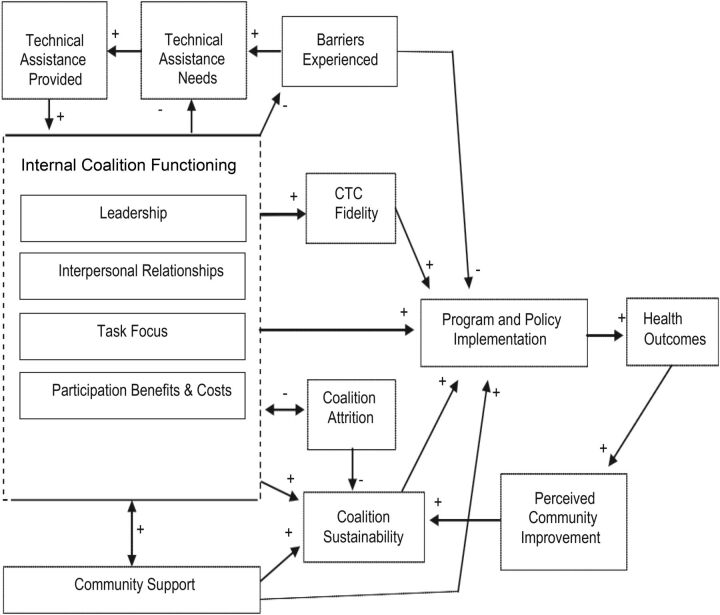
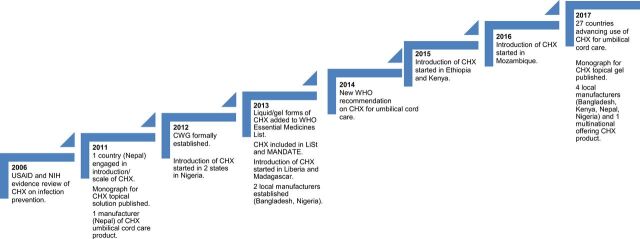
The global health field is replete with examples of cross-organizational collaborative partnerships, such as networks, alliances, coalitions, task forces, and working groups, often established to tackle a shared global health concern, condition, or threat affecting low-income countries or communities. The purpose of this article is to review factors influencing the effectiveness of a multi-agency global health collaborative effort using the Chlorhexidine Working Group (CWG) as our case study. The CWG was established to accelerate the introduction and global scale-up of chlorhexidine for umbilical cord care to reduce infection-related neonatal morbidity and mortality in low-income countries. Questions included: how current and past CWG members characterized the effectiveness, productivity, collaboration, and leadership of the CWG; what factors facilitated or hindered group function; institutional or individual reasons for participating and length of participation in the CWG; and lessons that might be relevant for future global collaborative partnerships. Data were collected through in-depth, semistructured individual interviews with 19 group members and a review of key guiding documents. Six domains of internal coalition functioning (leadership, interpersonal relationships, task focus, participant benefits and costs, sustainability planning, and community support) were used to frame and describe the functioning of the CWG. Collaboration effectiveness was found to depend on: (1) leadership that maintained a careful balance between discipline and flexibility, (2) a strong secretariat structure that supported the evolution of trust and transparent communication in interpersonal relationships, (3) shared goals that allowed for task focus, (4) diverse membership and active involvement from country-level participants, which created a positive benefit-cost ratio for participants, (5) sufficient resources to support the partnership and build sustainable capacity for members to accelerate the transfer of knowledge, and (6) support from the global health community across multiple organizations. Successful introduction and scale-up of new health interventions require effective collaboration across multiple organizations and disciplines, at both global and country levels. The participatory collaborative partnership approach utilized by the Chlorhexidine Working Group offers an instructive learning case.
全球卫生领域充满了跨组织合作的例子,例如网络、联盟、联盟、工作队和工作组,这些组织通常是为了应对影响低收入国家或社区的共同全球卫生关注、状况或威胁而成立的。本文的目的是利用洗必泰工作组(CWG)作为案例研究,回顾影响多机构全球卫生合作努力有效性的因素。CWG 的成立是为了加速洗必泰在脐带护理中的应用和全球推广,以降低低收入国家与感染相关的新生儿发病率和死亡率。问题包括:当前和过去的 CWG 成员如何描述 CWG 的有效性、生产力、合作和领导力;哪些因素促进或阻碍了小组的职能;参与的机构或个人原因以及参与 CWG 的时间长短;以及可能对未来全球合作关系相关的经验教训。通过对 19 名小组成员进行深入的半结构化个人访谈,并审查了关键指导文件,收集了数据。使用内部联盟运作的六个领域(领导力、人际关系、任务重点、参与者收益和成本、可持续性规划和社区支持)来构建和描述 CWG 的运作。合作的有效性取决于:(1)领导力,在纪律和灵活性之间保持谨慎平衡;(2)强大的秘书处结构,支持人际关系中信任和透明沟通的演变;(3)共享目标,允许任务重点;(4)来自国家一级参与者的多样化成员和积极参与,为参与者创造了积极的收益-成本比;(5)足够的资源支持伙伴关系,并为成员建立可持续的能力,以加速知识转移;(6)来自多个组织的全球卫生界的支持。新卫生干预措施的成功引入和推广需要在全球和国家各级进行有效的多组织和多学科合作。洗必泰工作组采用的参与式合作伙伴关系方法提供了一个有益的学习案例。