Lourenço de Freitas Natália, Al-Rikabi Ahmed Basheer Hamid, Bertollo Luiz Antonio Carlos, Ezaz Tariq, Yano Cassia Fernanda, Aguiar de Oliveira Ezequiel, Hatanaka Terumi, Cioffi Marcelo de Bello
Departamento de Genética e Evolução, Universidade Federal de São Carlos, São Carlos, SP, Brazil.
Jena University Hospital, Friedrich Schiller University, Institute of Human Genetics, Kollegiengasse 10, D-07743Jena, Germany.
Curr Genomics. 2018 Apr;19(3):216-226. doi: 10.2174/1389202918666170711160528.
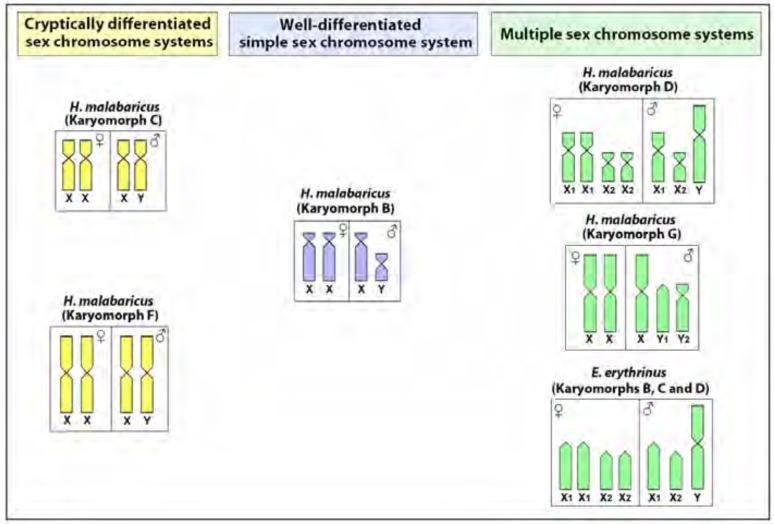
Species with 'young' or nascent sex chromosomes provide unique opportunities to understand early evolutionary mechanisms (e.g. accumulation of repetitive sequences, cessation of recombination and gene loss) that drive the evolution of sex chromosomes. Among vertebrates, fishes exhibit highly diverse and a wide spectrum of sex-determining mechanisms and sex chromosomes, ranging from cryptic to highly differentiated ones, as well as, from simple to multiple sex chromosome systems. Such variability in sex chromosome morphology and composition not only exists within closely related taxa, but often within races/populations of the same species. Inside this context, the wolf fish Hoplias malabaricus offers opportunity to investigate the evolution of morphologically variable sex chromosomes within a species complex, as homomorphic to highly differentiated sex chromosome systems occur among its different karyomorphs.
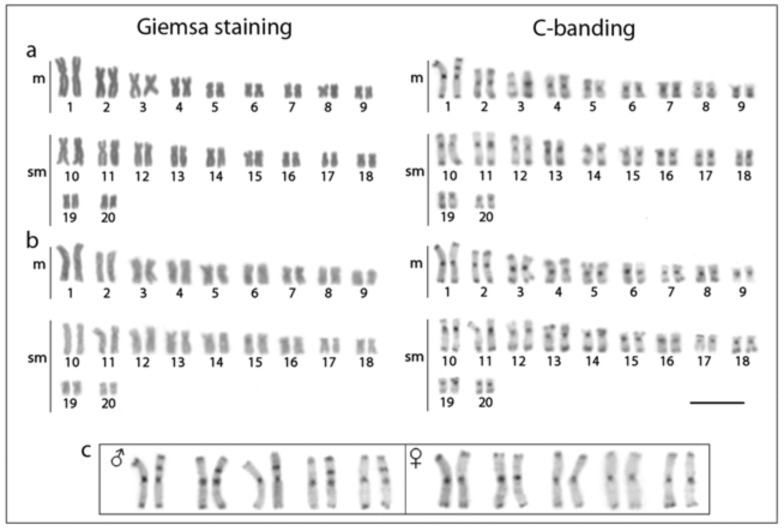
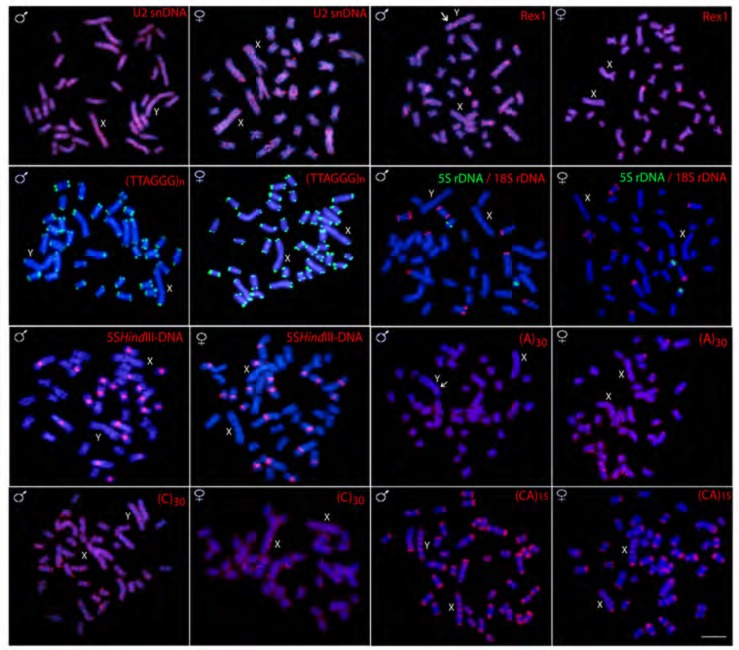
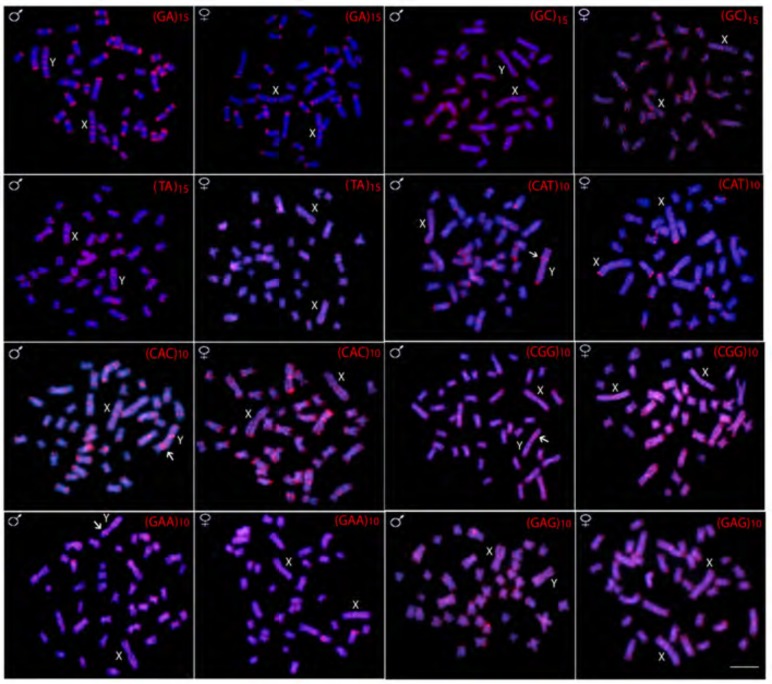
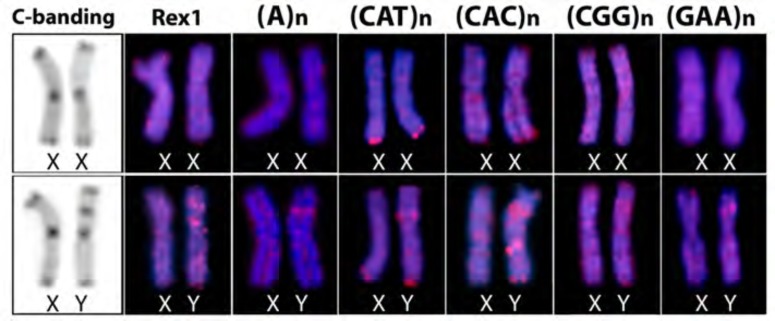
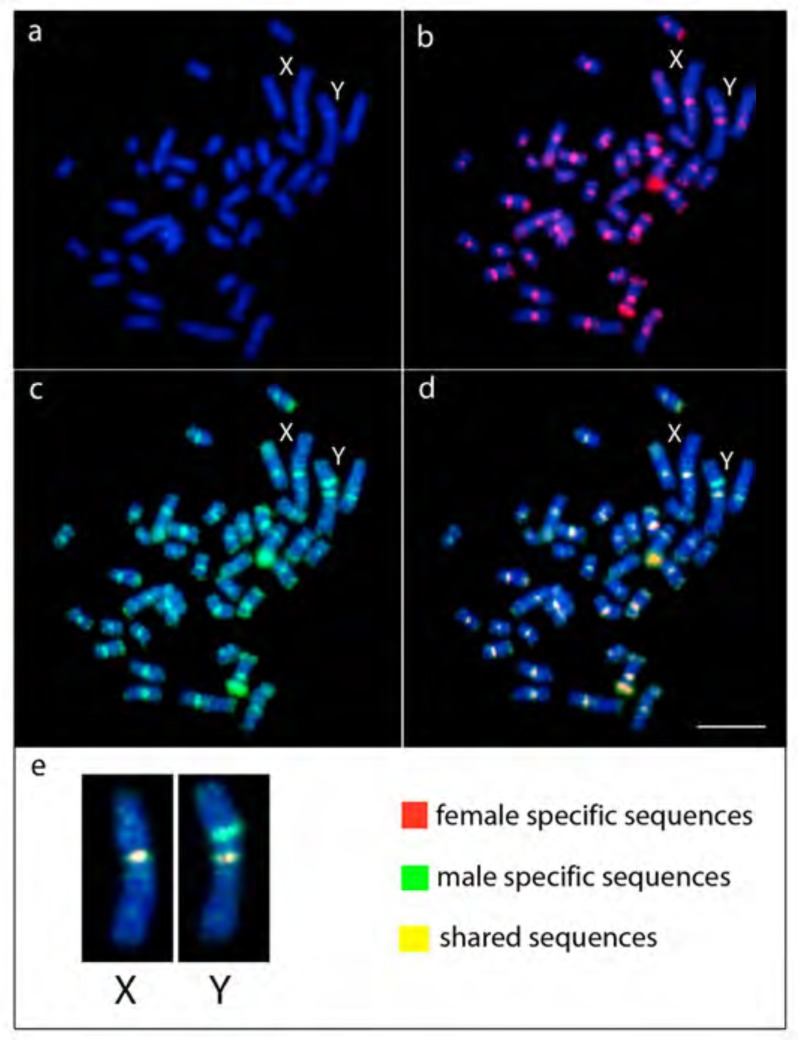
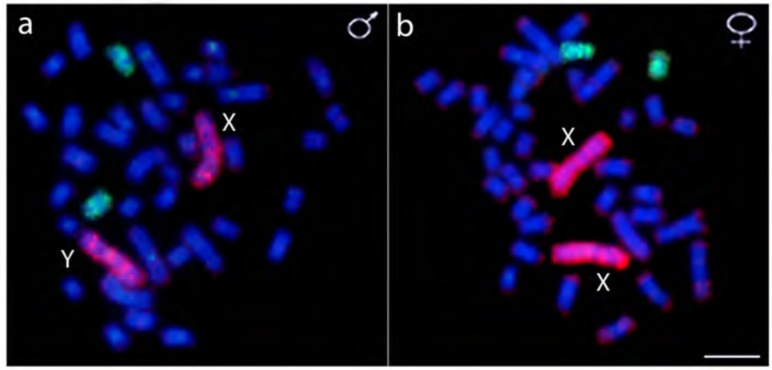
MATERIALS & METHODS: To discover various evolutionary stages of sex chromosomes and to compare their sequence composition among the wolf fish´s karyomorphs, we applied multipronged molecular cytogenetic approaches, including C-banding, repetitive DNAs mapping, Comparative Genomic Hybridization (CGH) and Whole Chromosomal Painting (WCP). Our study was able to characterize a cryptically differentiated XX/XY sex chromosome system in the karyomorph F of this species.
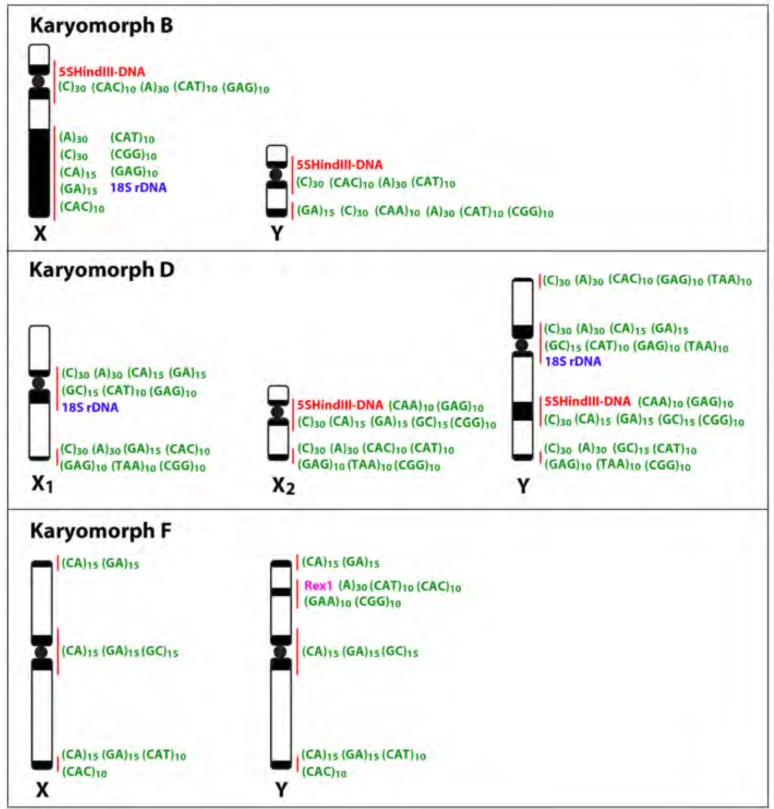
The Y chromosome was clearly identified by an interstitial heterochromatic block on the short arms, primarily composed of microsatellite motifs and retrotransposons. Additionally, CGH also identified a male specific chromosome region in the same chromosomal location, implying that the accumulation of these repeats may have initiated the Y chromosome differentiation, as well as played a critical role towards the evolution and differentiation of sex chromosomes in various karyomorphs of this species.
具有“年轻”或新生性染色体的物种为理解驱动性染色体进化的早期进化机制(如重复序列的积累、重组的停止和基因丢失)提供了独特的机会。在脊椎动物中,鱼类表现出高度多样且广泛的性别决定机制和性染色体,从隐蔽型到高度分化型,以及从简单到多重性染色体系统。性染色体形态和组成的这种变异性不仅存在于亲缘关系密切的分类群中,而且常常存在于同一物种的种族/种群内部。在此背景下,狼鱼 Hoplias malabaricus 为研究物种复合体中形态可变的性染色体的进化提供了机会,因为在其不同的核型中存在从同型到高度分化的性染色体系统。
为了发现性染色体的各个进化阶段并比较狼鱼核型之间的序列组成,我们应用了多管齐下的分子细胞遗传学方法,包括 C 带、重复 DNA 定位、比较基因组杂交(CGH)和全染色体涂染(WCP)。我们的研究能够在该物种的核型 F 中鉴定出一个隐蔽分化的 XX/XY 性染色体系统。
Y 染色体通过短臂上的一个居间异染色质块被清晰地鉴定出来,该异染色质块主要由微卫星基序和逆转座子组成。此外,CGH 还在相同的染色体位置鉴定出一个雄性特异性染色体区域,这意味着这些重复序列的积累可能启动了 Y 染色体的分化,并且在该物种不同核型的性染色体进化和分化中发挥了关键作用。