From the Department of Biomedical Engineering, University of Arizona, Tucson, Arizona.
Biomedical Engineering Graduate Interdisciplinary Program, University of Arizona, Tucson, Arizona.
ASAIO J. 2018 May/Jun;64(3):351-359. doi: 10.1097/MAT.0000000000000784.
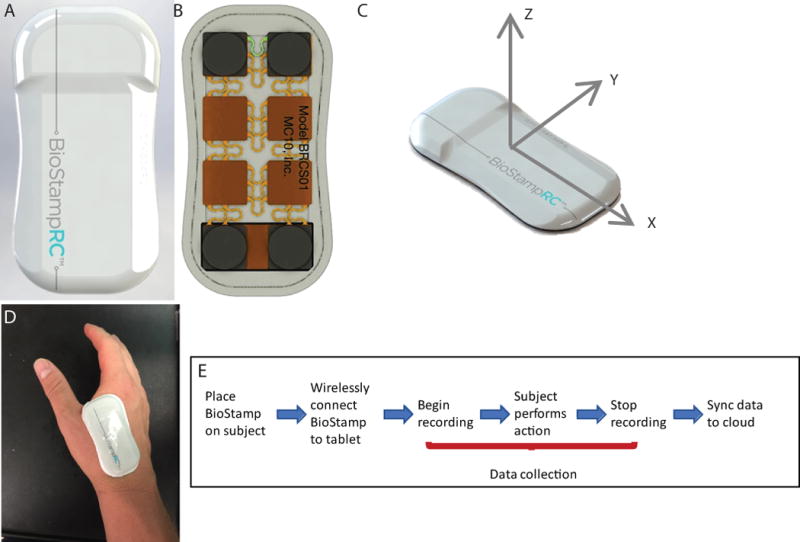
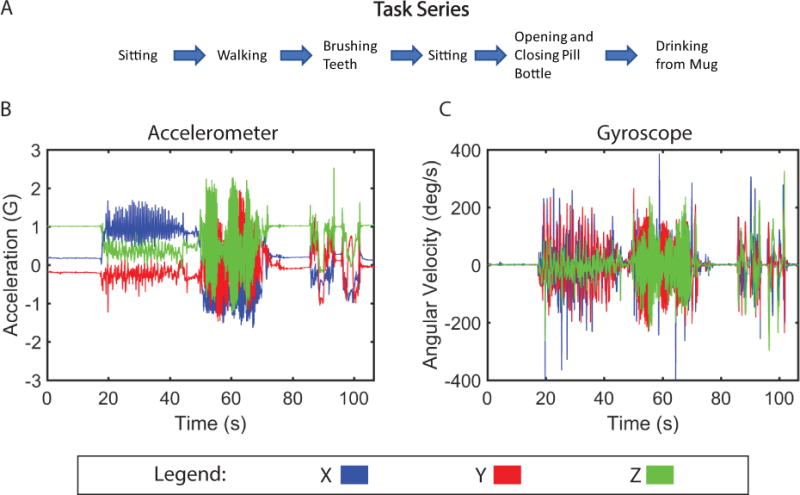
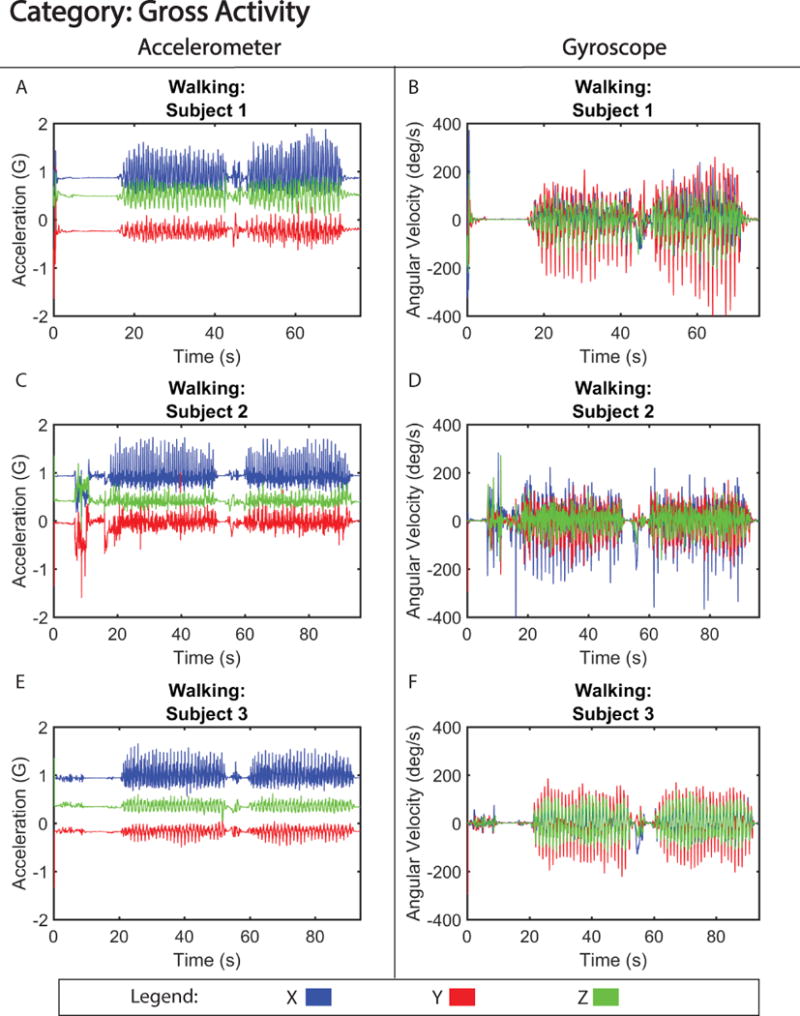
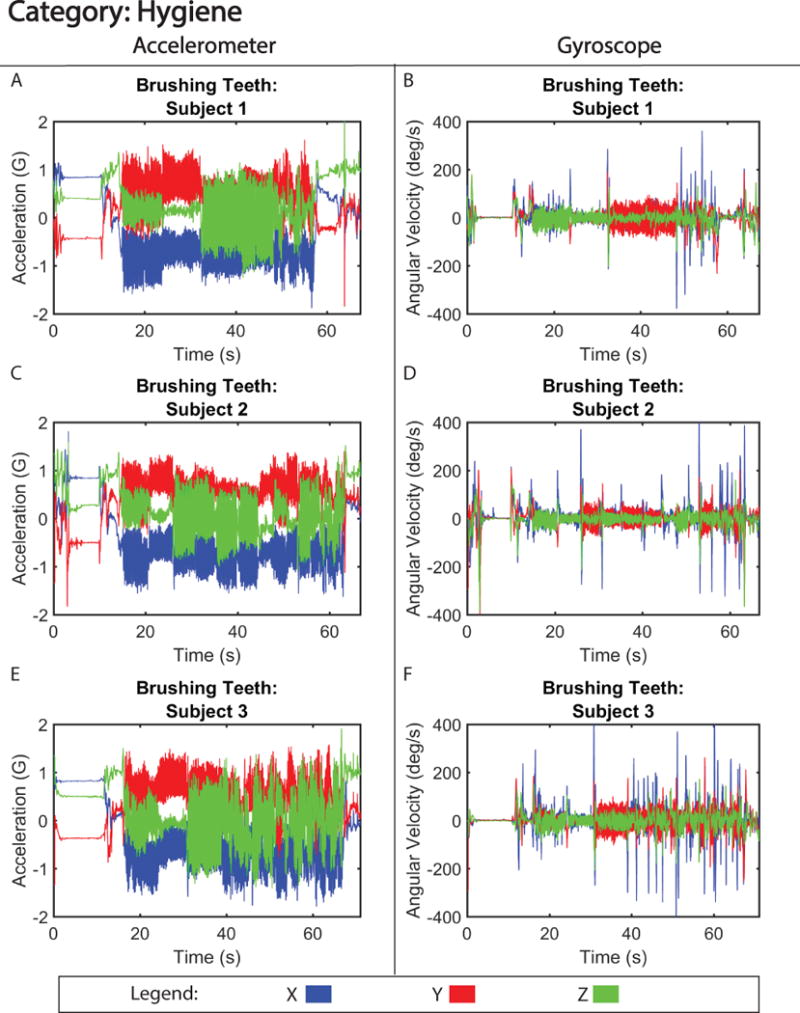
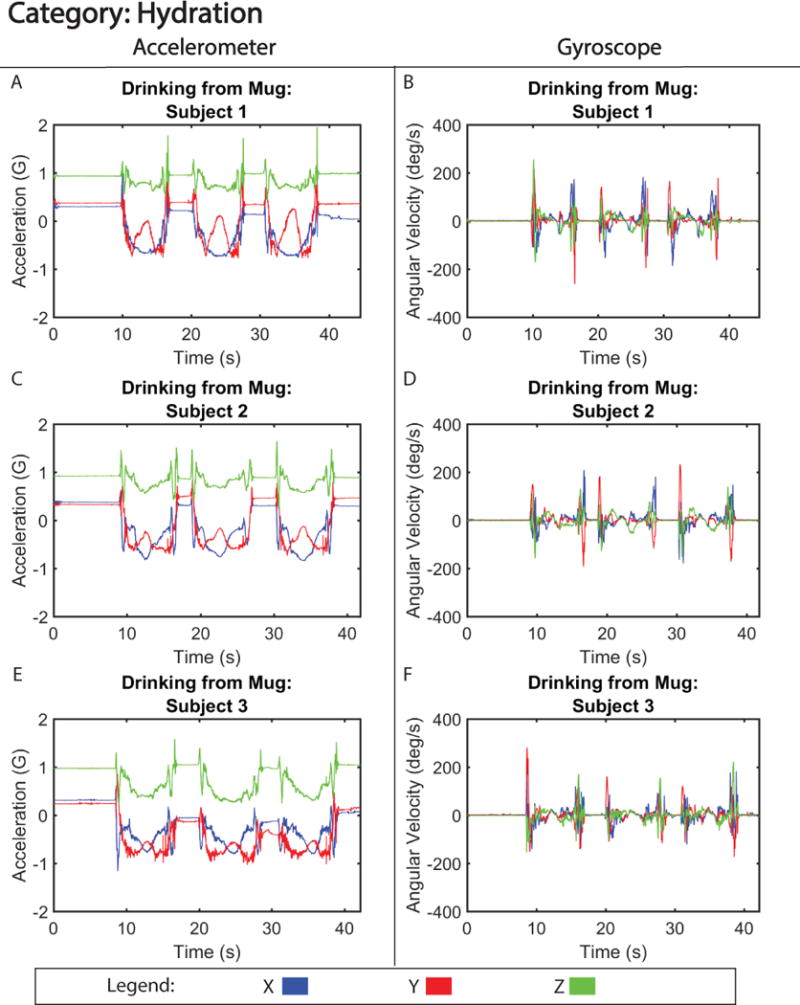
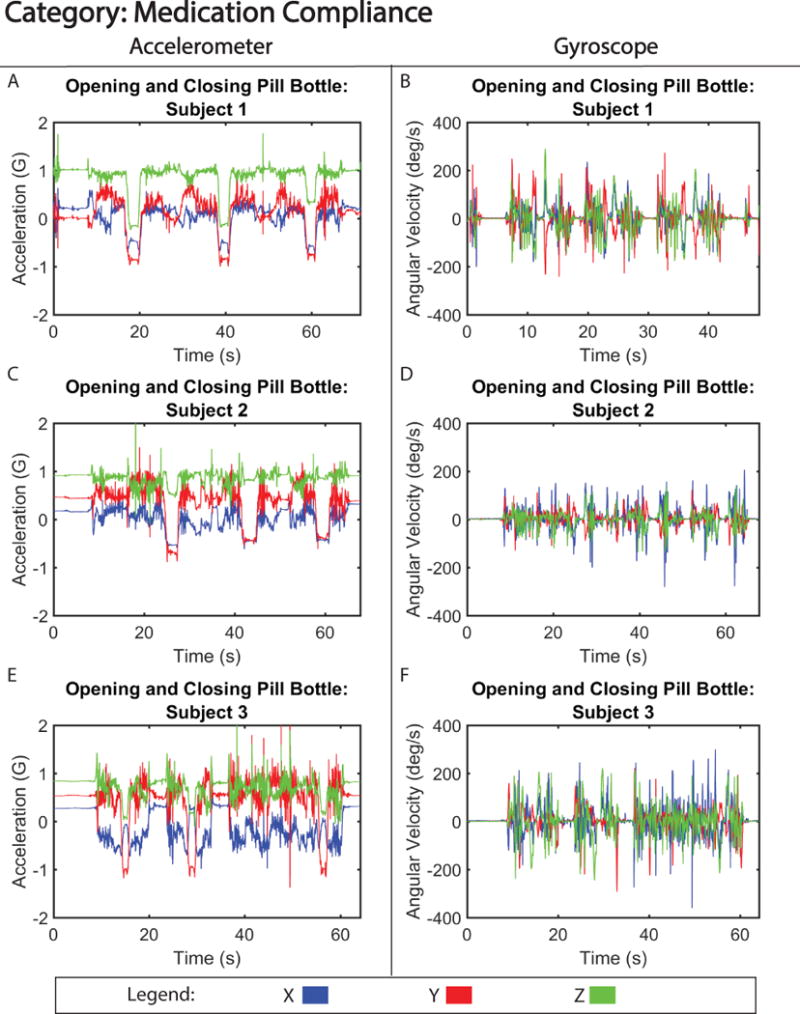
Digital tracking of human motion offers the potential to monitor a wide range of activities detecting normal versus abnormal performance of tasks. We examined the ability of a wearable, conformal sensor system, fabricated from stretchable electronics with contained accelerometers and gyroscopes, to specifically detect, monitor, and define motion signals and "signatures," associated with tasks of daily living activities. The sensor system was affixed to the dominant hand of healthy volunteers (n = 4) who then completed four tasks. For all tasks examined, motion data could be captured, monitored continuously, uploaded to the digital cloud, and stored for further analysis. Acceleration and gyroscope data were collected in the x-, y-, and z-axes, yielding unique patterns of component motion signals for each task studied. Upon analysis, low-frequency (<10 Hz) tasks (walking, drinking from a mug, and opening a pill bottle) showed low intersubject variability (<0.3g difference) and low interrepetition variability (<0.1g difference) when comparing the acceleration of each axis for a single task. High-frequency (≥10 Hz) activity (brushing teeth) yielded low intersubject variability of peak frequencies in acceleration of each axis. Each motion task was readily distinguishable and identifiable (with ≥70% accuracy) by independent observers from motion signatures alone, without the need for direct visual observation. Stretchable electronic technologies offer the potential to provide wireless capture, tracking, and analysis of detailed directional components of motion for a wide range of individual activities and functional status.
人体运动的数字追踪具有监测广泛活动的潜力,可用于检测任务的正常和异常表现。我们研究了一种可穿戴的、顺应性的传感器系统,它由带有内置加速度计和陀螺仪的可拉伸电子产品制成,能够专门检测、监测和定义与日常生活活动相关的运动信号和“特征”。将传感器系统固定在健康志愿者的优势手上(n = 4),然后让他们完成四项任务。对于所有检查的任务,都可以捕获、连续监测、上传到数字云并存储以供进一步分析的运动数据。加速度计和陀螺仪数据在 x、y 和 z 轴上收集,为每个研究的任务产生独特的组件运动信号模式。经过分析,低频(<10 Hz)任务(行走、从杯子里喝水和打开药丸瓶)在比较单个任务每个轴的加速度时,显示出低个体间变异性(<0.3g 差异)和低重复变异性(<0.1g 差异)。高频(≥10 Hz)活动(刷牙)在每个轴的加速度的峰值频率上表现出低个体间变异性。每个运动任务仅从运动特征就可以很容易地区分和识别(准确率≥70%),而无需直接视觉观察。可拉伸电子技术具有提供无线捕获、跟踪和分析广泛个体活动和功能状态下详细运动方向的潜力。