Department of Molecular Biology, College of Agriculture and Natural Resources, University of Wyoming, Laramie, WY.
PLoS Genet. 2018 Apr 2;14(4):e1007313. doi: 10.1371/journal.pgen.1007313. eCollection 2018 Apr.
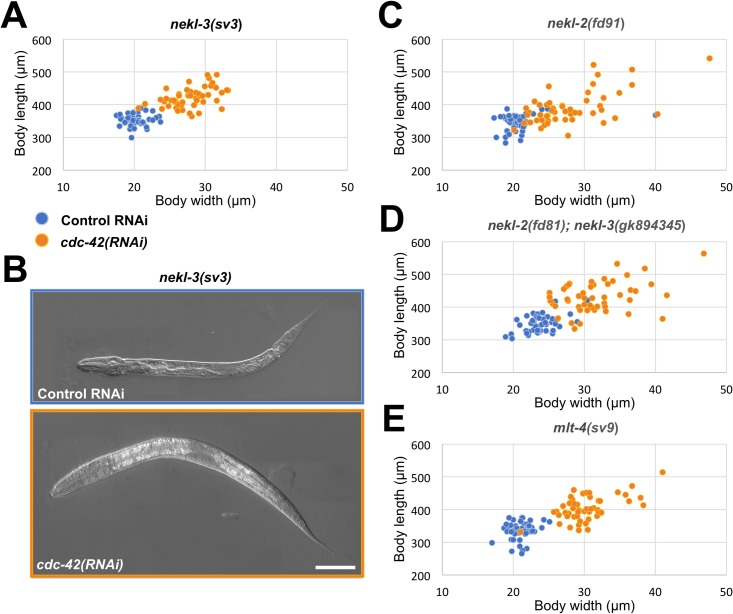
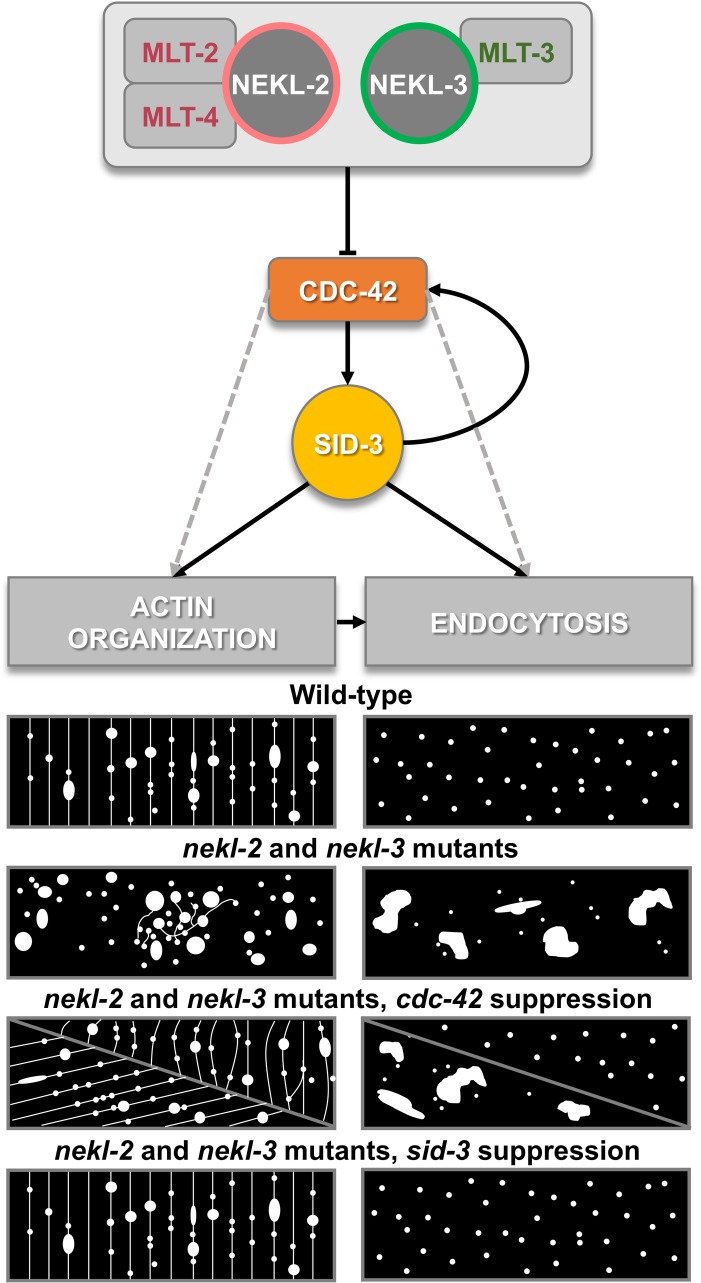
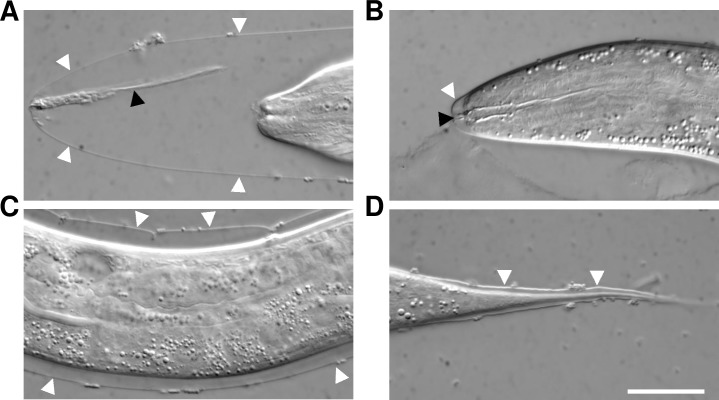
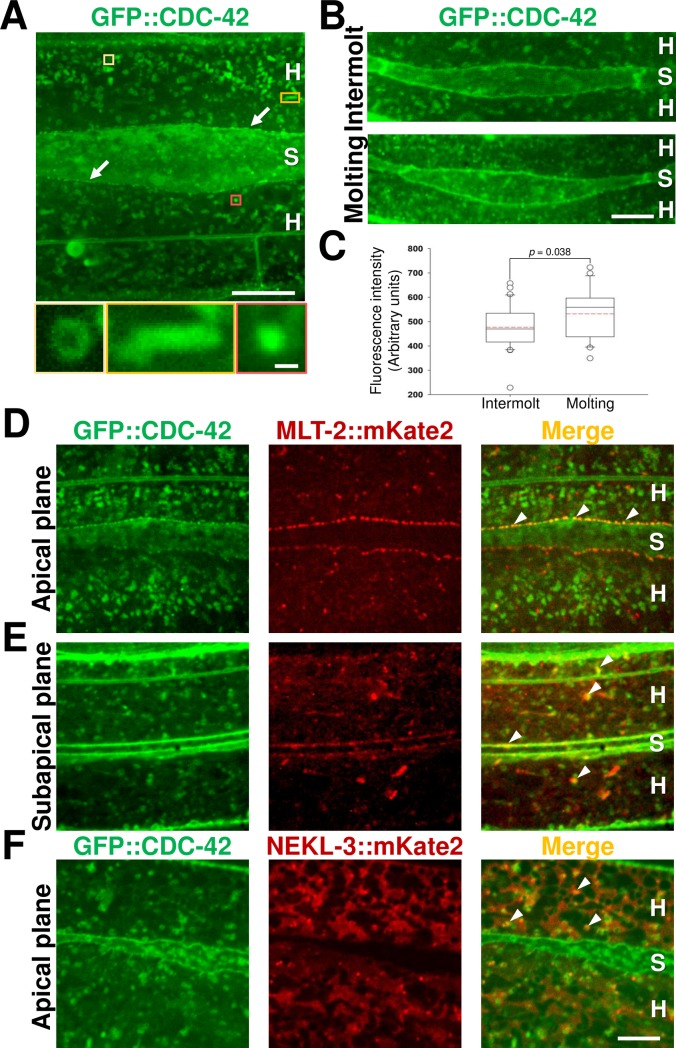
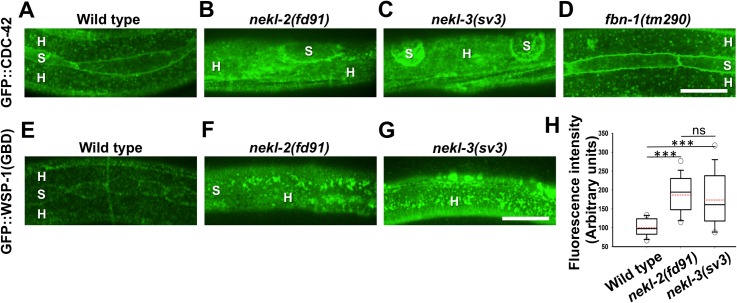
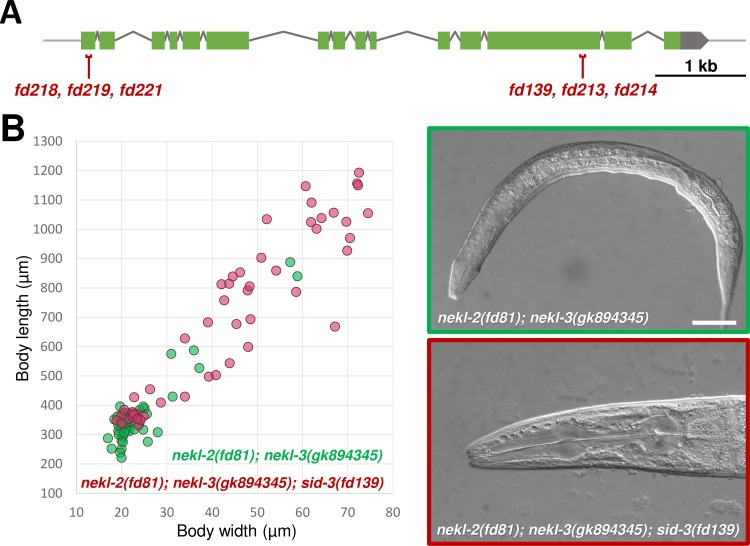
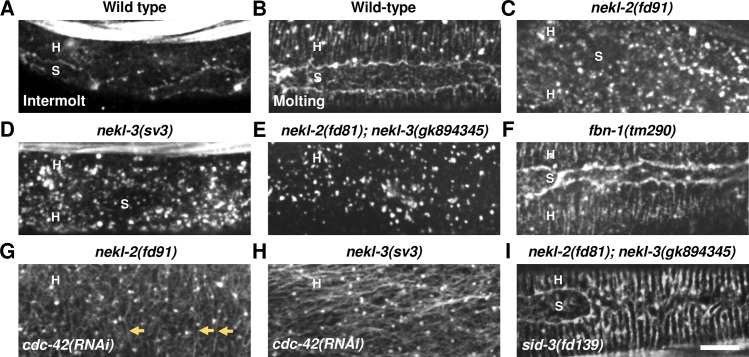
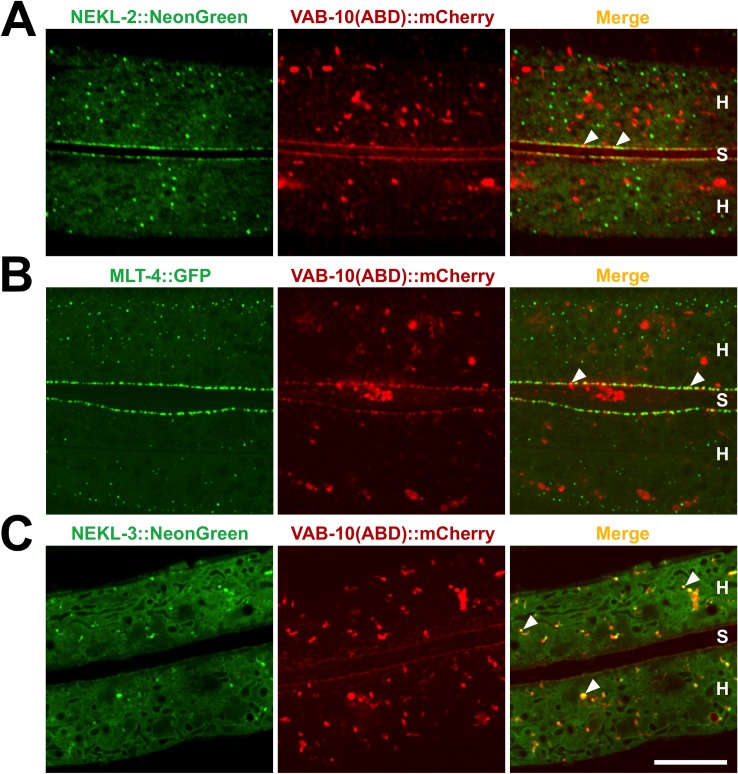
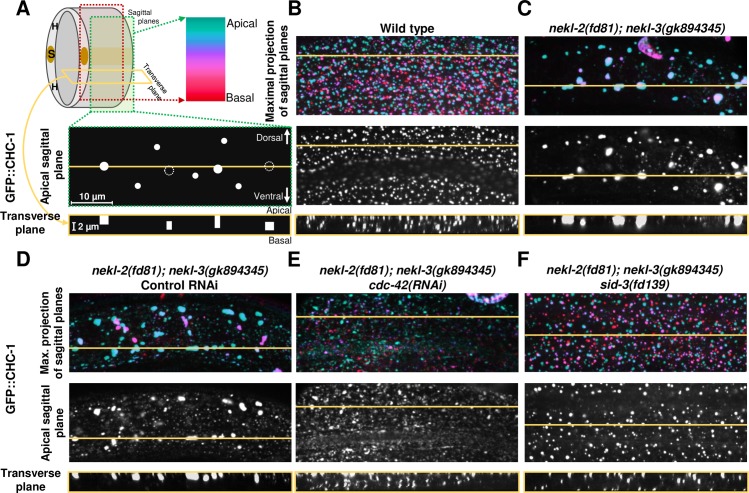
Molting is an essential process in the nematode Caenorhabditis elegans during which the epidermal apical extracellular matrix, termed the cuticle, is detached and replaced at each larval stage. The conserved NIMA-related kinases NEKL-2/NEK8/NEK9 and NEKL-3/NEK6/NEK7, together with their ankyrin repeat partners, MLT-2/ANKS6, MLT-3/ANKS3, and MLT-4/INVS, are essential for normal molting. In nekl and mlt mutants, the old larval cuticle fails to be completely shed, leading to entrapment and growth arrest. To better understand the molecular and cellular functions of NEKLs during molting, we isolated genetic suppressors of nekl molting-defective mutants. Using two independent approaches, we identified CDC-42, a conserved Rho-family GTPase, and its effector protein kinase, SID-3/ACK1. Notably, CDC42 and ACK1 regulate actin dynamics in mammals, and actin reorganization within the worm epidermis has been proposed to be important for the molting process. Inhibition of NEKL-MLT activities led to strong defects in the distribution of actin and failure to form molting-specific apical actin bundles. Importantly, this phenotype was reverted following cdc-42 or sid-3 inhibition. In addition, repression of CDC-42 or SID-3 also suppressed nekl-associated defects in trafficking, a process that requires actin assembly and disassembly. Expression analyses indicated that components of the NEKL-MLT network colocalize with both actin and CDC-42 in specific regions of the epidermis. Moreover, NEKL-MLT components were required for the normal subcellular localization of CDC-42 in the epidermis as well as wild-type levels of CDC-42 activation. Taken together, our findings indicate that the NEKL-MLT network regulates actin through CDC-42 and its effector SID-3. Interestingly, we also observed that downregulation of CDC-42 in a wild-type background leads to molting defects, suggesting that there is a fine balance between NEKL-MLT and CDC-42-SID-3 activities in the epidermis.
蜕皮是秀丽隐杆线虫(Caenorhabditis elegans)在幼虫阶段所经历的一个重要过程,在此过程中,表皮顶端细胞外基质(称为角质层)会在每个幼虫阶段被分离和替换。保守的 NIMA 相关激酶 NEKL-2/NEK8/NEK9 和 NEKL-3/NEK6/NEK7,以及它们的锚蛋白重复结合蛋白 MLT-2/ANKS6、MLT-3/ANKS3 和 MLT-4/INVS,对于正常蜕皮是必需的。在 nek1 和 mlt 突变体中,旧的幼虫角质层不能完全脱落,导致幼虫被困住并停止生长。为了更好地了解 NEKL 在蜕皮过程中的分子和细胞功能,我们分离了 nek1 蜕皮缺陷突变体的遗传抑制子。我们使用两种独立的方法,鉴定出了 CDC-42,一种保守的 Rho 家族 GTPase,及其效应蛋白激酶 SID-3/ACK1。值得注意的是,CDC42 和 ACK1 在哺乳动物中调节肌动蛋白动力学,并且已经提出虫体表皮内的肌动蛋白重排对于蜕皮过程很重要。抑制 NEKL-MLT 活性会导致肌动蛋白分布严重缺陷,并导致无法形成蜕皮特异性的顶端肌动蛋白束。重要的是,在抑制 cdc-42 或 sid-3 后,这种表型得到了逆转。此外,抑制 CDC-42 或 SID-3 也抑制了与 nek1 相关的运输缺陷,这个过程需要肌动蛋白的组装和拆卸。表达分析表明,NEKL-MLT 网络的组成部分与肌动蛋白和 CDC-42 在表皮的特定区域共定位。此外,NEKL-MLT 成分对于 CDC-42 在表皮中的正常亚细胞定位以及 CDC-42 的激活水平均为野生型是必需的。综上所述,我们的研究结果表明,NEKL-MLT 网络通过 CDC-42 和其效应蛋白 SID-3 来调节肌动蛋白。有趣的是,我们还观察到在野生型背景下下调 CDC-42 会导致蜕皮缺陷,这表明在表皮中,NEKL-MLT 和 CDC-42-SID-3 活性之间存在微妙的平衡。