Jiangsu Key Laboratory for Biodiversity and Biotechnology, College of Life Sciences, Nanjing Normal University, China.
Division of Genetics, Department of Medicine, Brigham and Women's Hospital, Harvard Medical School, Boston, Massachusetts.
Genome Biol Evol. 2018 Mar 1;10(3):967-975. doi: 10.1093/gbe/evy062.
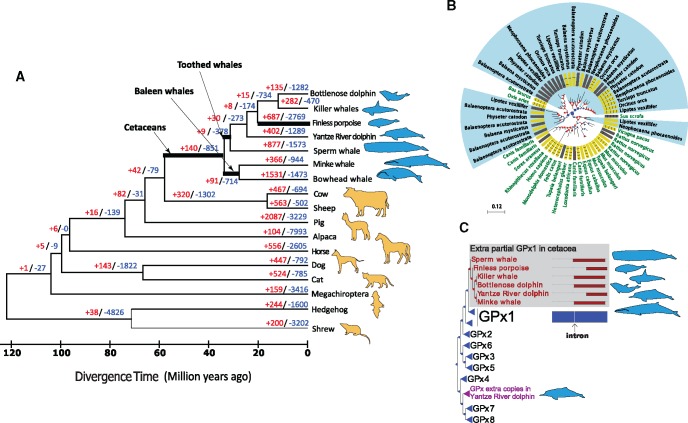
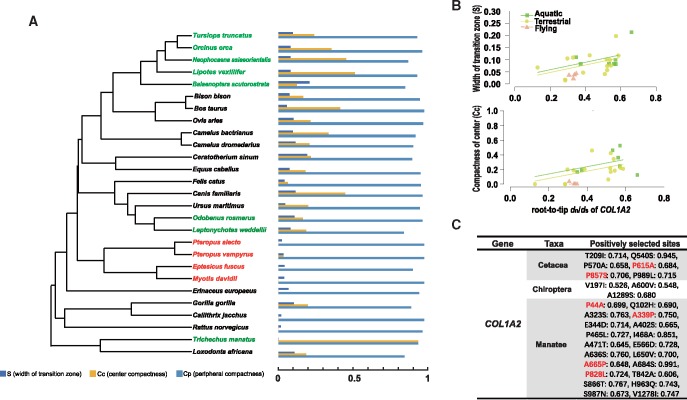
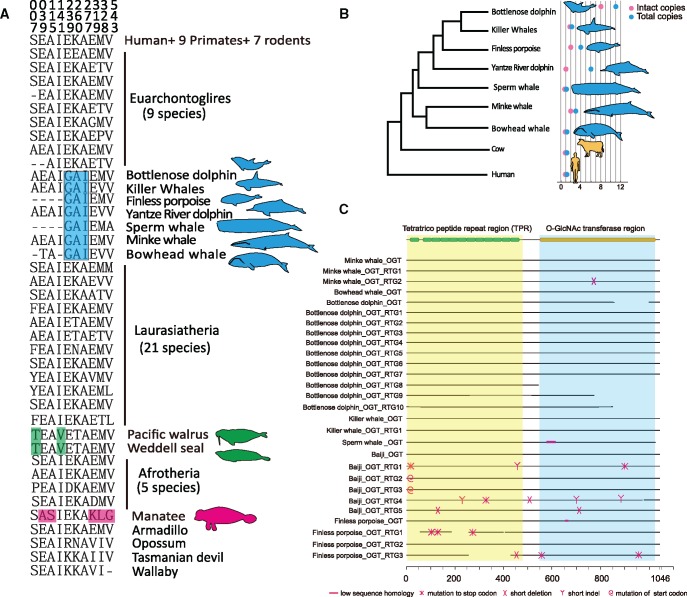
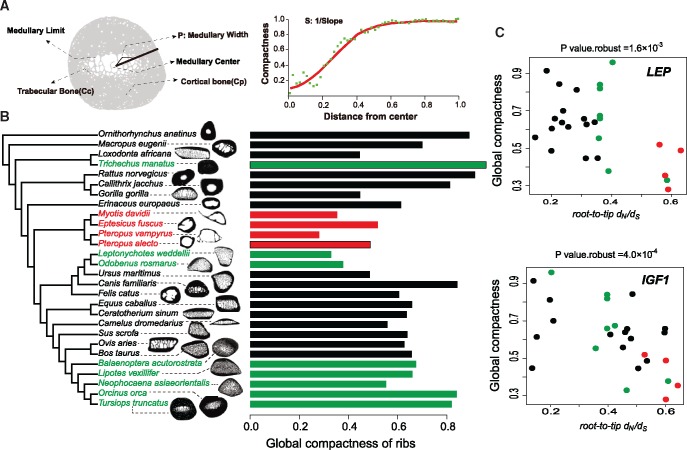
Cetaceans (whales, dolphins, and porpoises) are a group of specialized mammals that evolved from terrestrial ancestors and are fully adapted to aquatic habitats. Taking advantage of the recently sequenced finless porpoise genome, we conducted comparative analyses of the genomes of seven cetaceans and related terrestrial species to provide insight into the molecular bases of adaptation of these aquatic mammals. Changes in gene sequences were identified in main lineages of cetaceans, offering an evolutionary picture of cetacean genomes that reveal new pathways that could be associated with adaptation to aquatic lifestyle. We profiled bone microanatomical structures across 28 mammals, including representatives of cetaceans, pinnipeds, and sirenians. Subsequent phylogenetic comparative analyses revealed genes (including leptin, insulin-like growth factor 1, and collagen type I alpha 2 chain) with the root-to-tip substitution rate significantly correlated with bone compactness, implicating these genes could be involved in bone mass control. Overall, this study described adjustments of the genomes of cetaceans according to lifestyle, phylogeny, and bone mass.
鲸类动物(鲸鱼、海豚和鼠海豚)是一组经过特化的哺乳动物,它们由陆地祖先进化而来,完全适应水生环境。利用最近测序的江豚基因组,我们对 7 种鲸类动物和相关陆地物种的基因组进行了比较分析,以深入了解这些水生哺乳动物适应的分子基础。在鲸类动物的主要谱系中鉴定到了基因序列的变化,为鲸类动物基因组的进化提供了一个图景,揭示了可能与水生生活方式适应相关的新途径。我们对包括鲸类动物、鳍足类动物和海牛类动物在内的 28 种哺乳动物的骨骼微观解剖结构进行了分析。随后的系统发育比较分析显示,具有根到梢取代率与骨骼紧凑度显著相关的基因(包括瘦素、胰岛素样生长因子 1 和胶原蛋白 I 阿尔法 2 链),表明这些基因可能参与了骨量的控制。总的来说,这项研究描述了根据生活方式、系统发育和骨量对鲸类动物基因组的调整。