Department of Zoology, University of Oxford, Woodstock Road, Oxford, OX2 6GG, UK.
Malar J. 2018 Apr 2;17(1):140. doi: 10.1186/s12936-018-2288-3.
Populations of the Anopheles gambiae complex are found during the rainy season throughout West Africa, even in arid areas with long dry seasons during which mosquitoes appear to be absent. Several hypotheses have been proposed to explain this apparent paradox, including aestivation, dispersal between neighbouring settlements, and long distance migration using high-altitude wind currents.
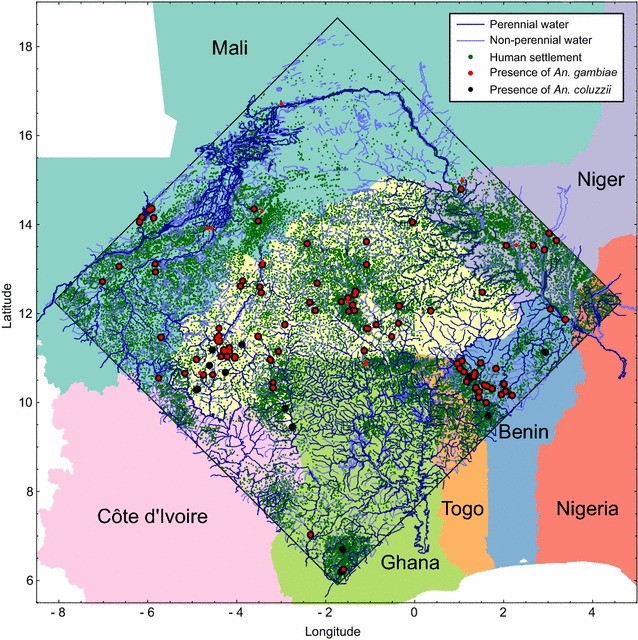
An individual-based, spatially explicit model of mosquito populations was developed for a region of West Africa centred on, and including all of, Burkina Faso. Populations associated with human settlements were linked by dispersal and the model incorporated geospatial data on the distribution of settlements, water bodies and rainfall.
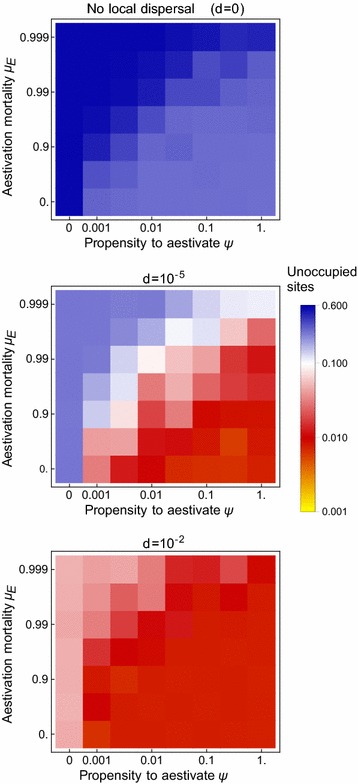
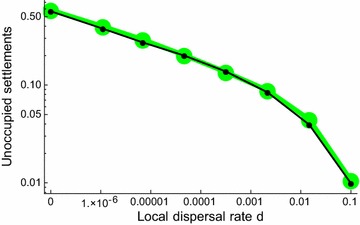
Local dispersal (at rates consistent with experimental data) was necessary to explain observed patterns of rainy season populations across all of the simulation area, but by itself failed to account for the presence of populations in the arid North (the Sahel). The presence of rare dry-season larval sites could explain these northern populations, but seems inconsistent with field surveys. Aestivation by female mosquitoes explained rainy-season populations in all but the very sparsest and driest areas of human habitation, while long-distance migration based on annual wind patterns could account for all observed populations.
Modelling studies such as this can help assess the potential validity of different hypotheses and suggest priority areas for experimental study. In particular, the results highlight a shortage of empirical research on mosquito dispersal between neighbouring settlements, which may be critically important to the continued presence of many mosquito populations in West Africa. Further research that establishes the extent to which mosquitoes aestivate, and migrate using high altitude winds, is also much needed to understand Sahelian mosquito populations.
冈比亚按蚊复合体的种群在整个西非的雨季中都有发现,即使在干旱地区,那里的旱季很长,蚊子似乎也不存在。为了解释这种明显的悖论,人们提出了几种假设,包括休眠、在邻近的定居点之间扩散,以及利用高空风的长距离迁移。
为西非一个以布基纳法索为中心并包括其在内的地区开发了一个基于个体的、空间明确的蚊子种群模型。与人类住区相关的种群通过扩散联系在一起,该模型纳入了住区、水体和降雨量的地理空间分布数据。
为了解释整个模拟区域雨季种群的观察模式,需要进行局部扩散(扩散率与实验数据一致),但仅靠自身无法解释在干旱的北部(萨赫勒地区)存在种群的现象。在旱季偶尔出现幼虫的地方,可能可以解释这些北部种群的存在,但这似乎与实地调查不一致。雌性蚊子的休眠可以解释除人类住区最稀疏和最干燥地区以外的雨季种群,而基于年度风模式的长距离迁移可以解释所有观察到的种群。
像这样的建模研究可以帮助评估不同假设的潜在有效性,并为实验研究提出重点领域。特别是,结果强调了对邻近定居点之间蚊子扩散的实证研究的不足,这对许多蚊子种群在西非的持续存在可能至关重要。进一步的研究,以确定蚊子休眠的程度,并利用高空风进行迁移,也非常需要,以了解萨赫勒地区的蚊子种群。