Yoshimoto Ayumi, Uebanso Takashi, Nakahashi Mutsumi, Shimohata Takaaki, Mawatari Kazuaki, Takahashi Akira
Department of Preventive Environment and Nutrition, Institute of Biomedical Sciences, Tokushima University, 3-18-15 Kuramoto, Tokushima 770-8503, Japan.
Graduate School of Technology, Industrial and Social Sciences, Tokushima University, 3-18-15 Kuramoto, Tokushima 770-8503, Japan.
J Clin Biochem Nutr. 2018 Mar;62(2):155-160. doi: 10.3164/jcbn.17-53. Epub 2017 Dec 29.
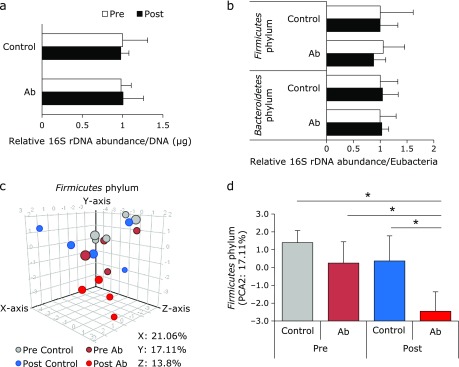
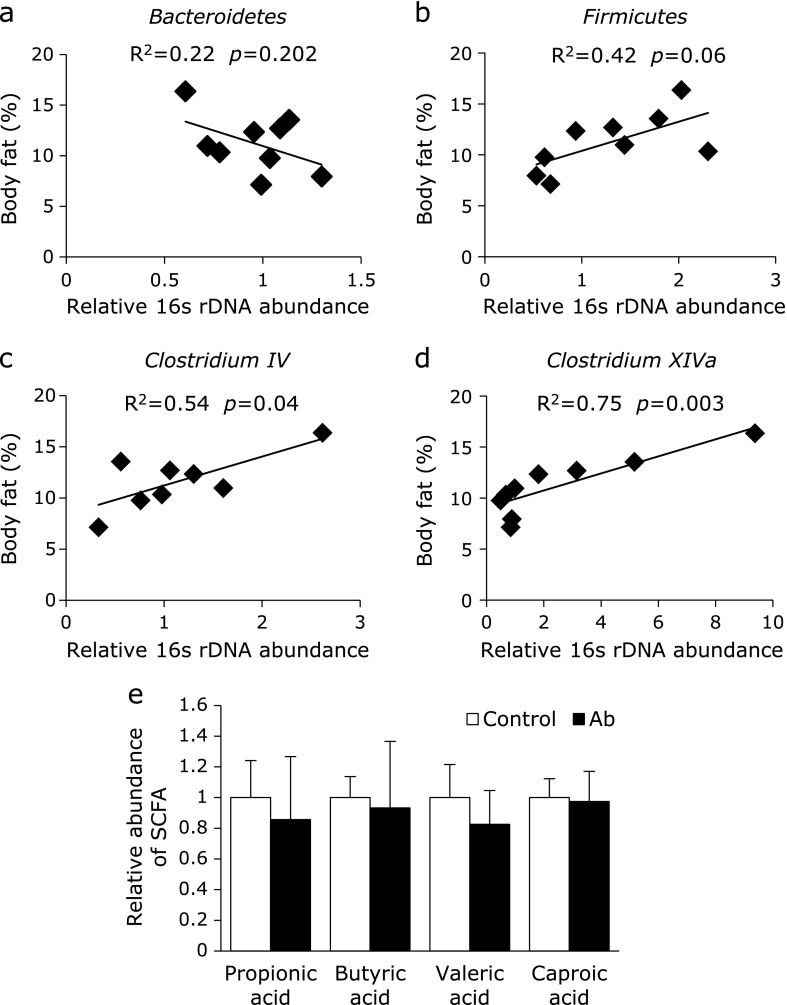
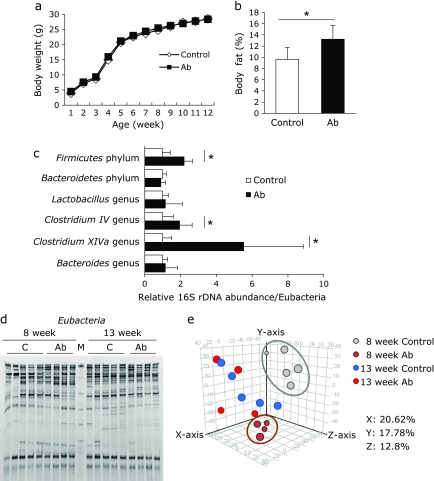
Several environmental factors during the prenatal period transgenerationally affect the health of newborns in later life. Because low-dose antibiotics have been used for promoting the growth of crops and livestock in agriculture, humans may have ingested residual antibiotics for several decades. However, the effect of prenatal administration of low-dose antibiotics on newborns' health in later life is unclear. In the present study, we found that prenatal treatment of murine mothers with low-dose antibiotics increased the abundance of bacteria of the phylum and the genera and in feces from pups. In addition, the body fat percentage of mice in the antibiotic-treated group was higher than those in the control group at 12 weeks of age even though all pups were fed a standard diet. The body fat percentage of all mice was correlated with the abundance of fecal bacteria of and . These results predict that low-dose antibiotic administration during the prenatal period affects the gut microbiota of newborns and possibly their health in later life.
孕期的多种环境因素会对后代新生儿的健康产生跨代影响。由于低剂量抗生素已被用于促进农业作物和牲畜的生长,人类可能已经摄入残留抗生素数十年了。然而,产前给予低剂量抗生素对新生儿后期健康的影响尚不清楚。在本研究中,我们发现用低剂量抗生素对母鼠进行产前治疗会增加幼崽粪便中 门以及 属和 属细菌的丰度。此外,即使所有幼崽都喂食标准饮食,抗生素治疗组小鼠在12周龄时的体脂百分比仍高于对照组。所有小鼠的体脂百分比与粪便中 和 的细菌丰度相关。这些结果预示,产前给予低剂量抗生素会影响新生儿的肠道微生物群,并可能影响其后期健康。