Nakahara Soichiro, Adachi Megumi, Ito Hiroyuki, Matsumoto Mitsuyuki, Tajinda Katsunori, van Erp Theo G M
Department of Psychiatry and Human Behavior, University of California Irvine, Irvine, CA 92617, USA.
Candidate Discovery Science Labs, Drug Discovery Research, Astellas Pharma Inc., 21 Miyukigaoka, Tsukuba, Ibaraki 305-8585, Japan.
Neurosci J. 2018 Jan 22;2018:4852359. doi: 10.1155/2018/4852359. eCollection 2018.
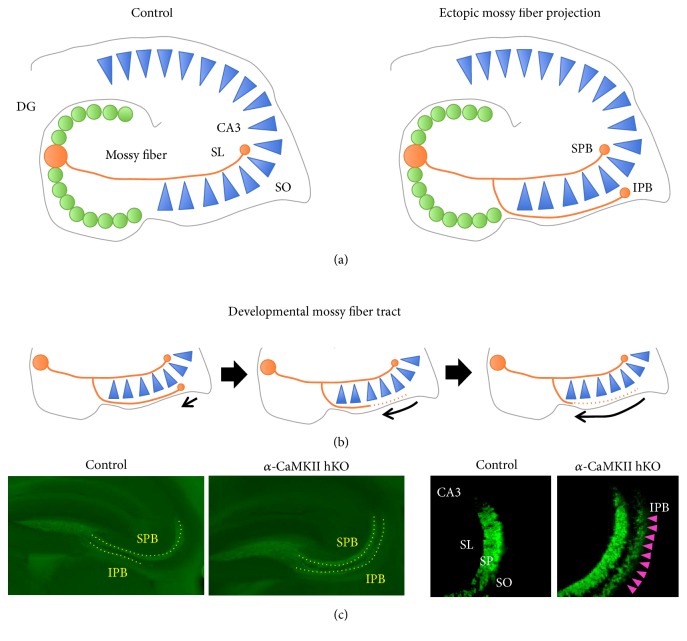
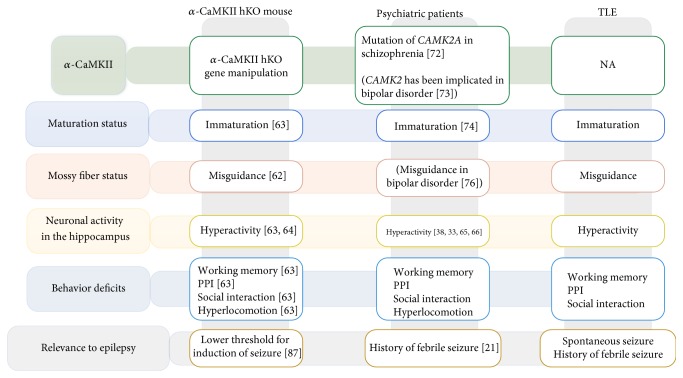
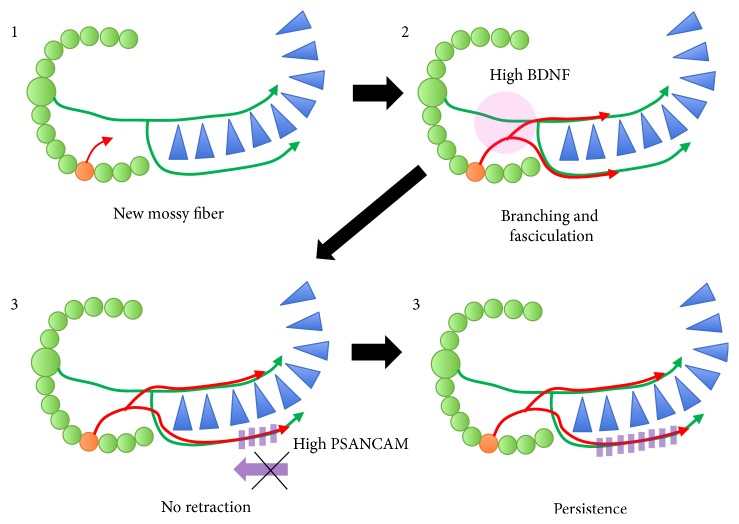
Accumulating evidence points to the association of epilepsy, particularly, temporal lobe epilepsy (TLE), with psychiatric disorders, such as schizophrenia. Among these illnesses, the hippocampus is considered the regional focal point of the brain, playing an important role in cognition, psychosis, and seizure activity and potentially suggesting common etiologies and pathophysiology of TLE and schizophrenia. In the present review, we overview abnormal network connectivity between the dentate gyrus (DG) and the Cornus Ammonis area 3 (CA3) subregions of the hippocampus relative to the induction of epilepsy and schizophrenia. In light of our recent finding on the misguidance of hippocampal mossy fiber projection in the rodent model of schizophrenia, we discuss whether ectopic mossy fiber projection is a commonality in order to evoke TLE as well as symptoms related to schizophrenia.
越来越多的证据表明癫痫,尤其是颞叶癫痫(TLE)与精神疾病如精神分裂症之间存在关联。在这些疾病中,海马体被认为是大脑的区域焦点,在认知、精神病和癫痫发作活动中发挥重要作用,并可能提示TLE和精神分裂症的共同病因和病理生理学。在本综述中,我们概述了相对于癫痫和精神分裂症的诱发,海马体齿状回(DG)和海马体阿蒙氏角3区(CA3)子区域之间的异常网络连接。鉴于我们最近在精神分裂症啮齿动物模型中发现海马苔藓纤维投射错误引导,我们讨论异位苔藓纤维投射是否是诱发TLE以及与精神分裂症相关症状的共性。