Department of Cell Biology, Emory University School of Medicine, Atlanta, GA 30322, USA; GDBBS Graduate Program, Laney Graduate School, Emory University, Atlanta, GA 30322, USA.
Department of Neurosurgery, Emory University School of Medicine, Atlanta, GA 30322, USA.
Cell Rep Methods. 2024 Jan 22;4(1):100684. doi: 10.1016/j.crmeth.2023.100684. Epub 2024 Jan 10.
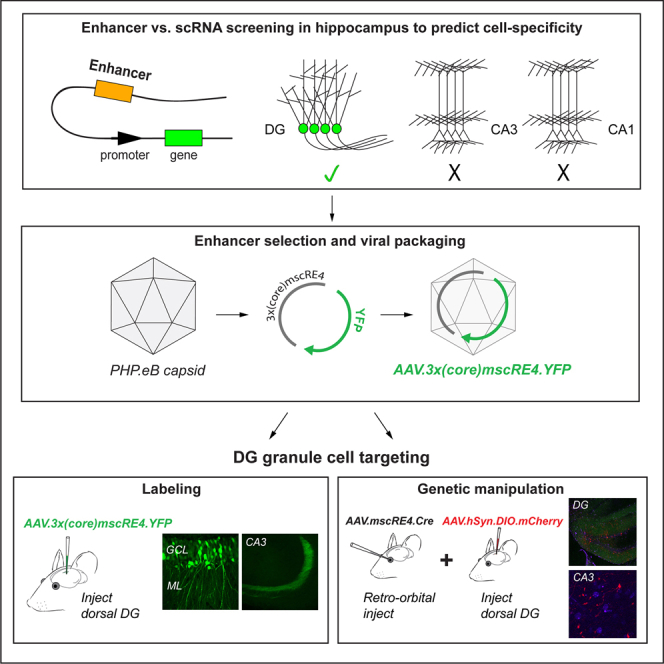
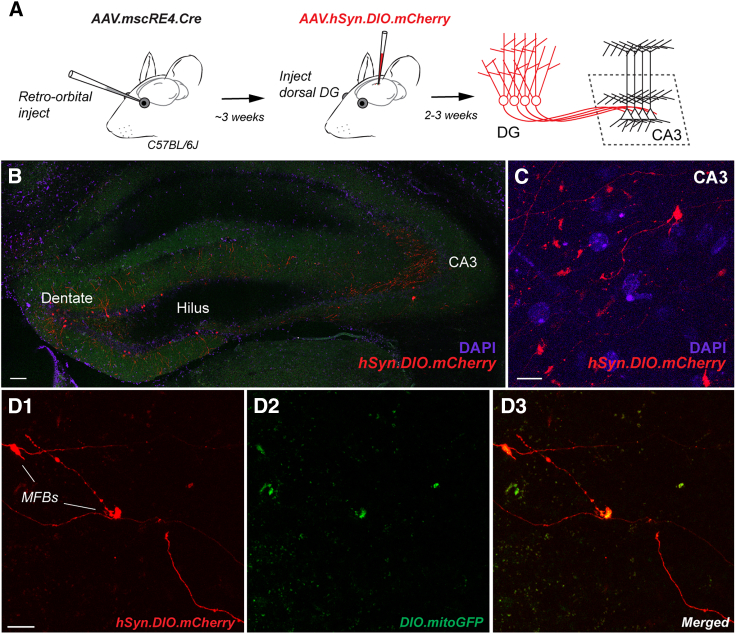
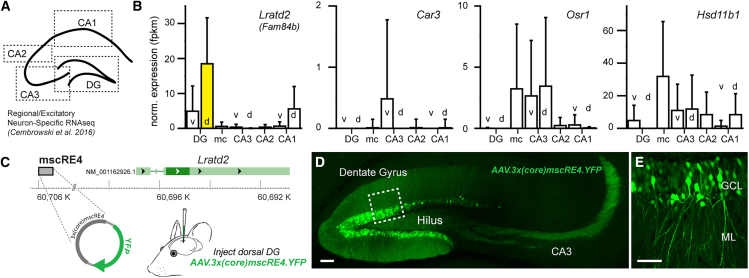
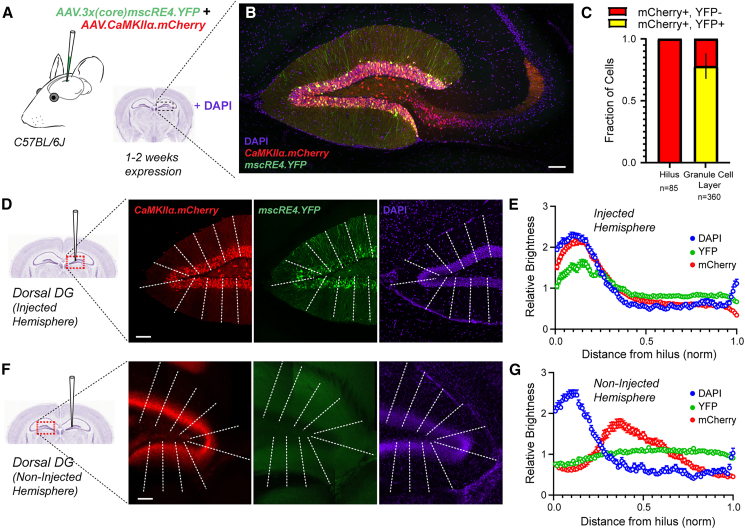
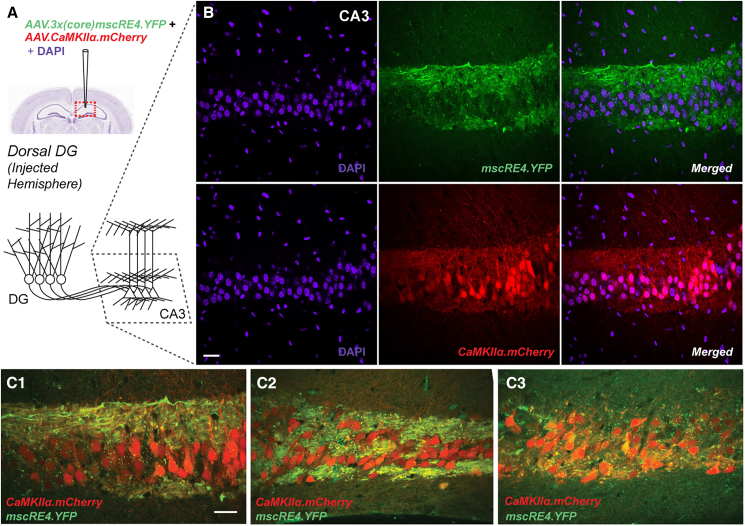
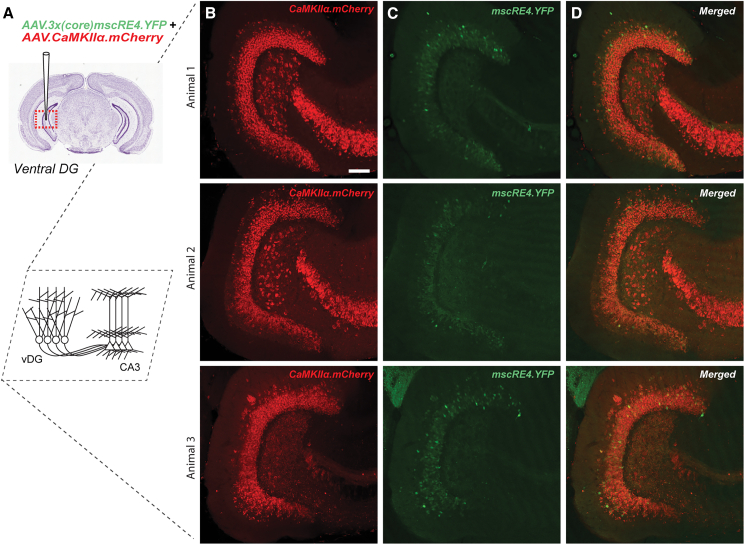
The mammalian brain contains a diverse array of cell types, including dozens of neuronal subtypes with distinct anatomical and functional characteristics. The brain leverages these neuron-type specializations to perform diverse circuit operations and thus execute different behaviors properly. Through the use of Cre lines, access to specific neuron types has improved over past decades. Despite their extraordinary utility, development and cross-breeding of Cre lines is time consuming and expensive, presenting a significant barrier to entry for investigators. Furthermore, cell-based therapeutics developed in Cre mice are not clinically translatable. Recently, several adeno-associated virus (AAV) vectors utilizing neuron-type-specific regulatory transcriptional sequences (enhancer-AAVs) were developed that overcome these limitations. Using a publicly available RNA sequencing (RNA-seq) dataset, we evaluated the potential of several candidate enhancers for neuron-type-specific targeting in the hippocampus. Here, we demonstrate that a previously identified enhancer-AAV selectively targets dentate granule cells over other excitatory neuron types in the hippocampus of wild-type adult mice.
哺乳动物的大脑包含多种细胞类型,包括数十种具有独特解剖和功能特征的神经元亚型。大脑利用这些神经元类型的特异性来执行不同的电路操作,从而正确地执行不同的行为。通过使用 Cre 线,过去几十年来,特定神经元类型的获取得到了改善。尽管 Cre 线具有非凡的用途,但 Cre 线的开发和杂交是耗时且昂贵的,这对研究人员来说是一个巨大的进入障碍。此外,在 Cre 小鼠中开发的基于细胞的治疗方法不能在临床上转化。最近,开发了几种利用神经元类型特异性调节转录序列(增强子-AAV)的腺相关病毒 (AAV) 载体,这些载体克服了这些限制。使用公开可用的 RNA 测序 (RNA-seq) 数据集,我们评估了几种候选增强子在海马体中针对神经元类型特异性靶向的潜力。在这里,我们证明了之前鉴定的增强子-AAV 选择性地靶向野生型成年小鼠海马体中的齿状回颗粒细胞,而不是其他兴奋性神经元类型。