Department of Medicine, University of Wisconsin-Madison, Madison, Wisconsin, USA.
Department of Medical Microbiology and Immunology, University of Wisconsin-Madison, Madison, Wisconsin, USA.
mBio. 2018 Apr 3;9(2):e00451-18. doi: 10.1128/mBio.00451-18.
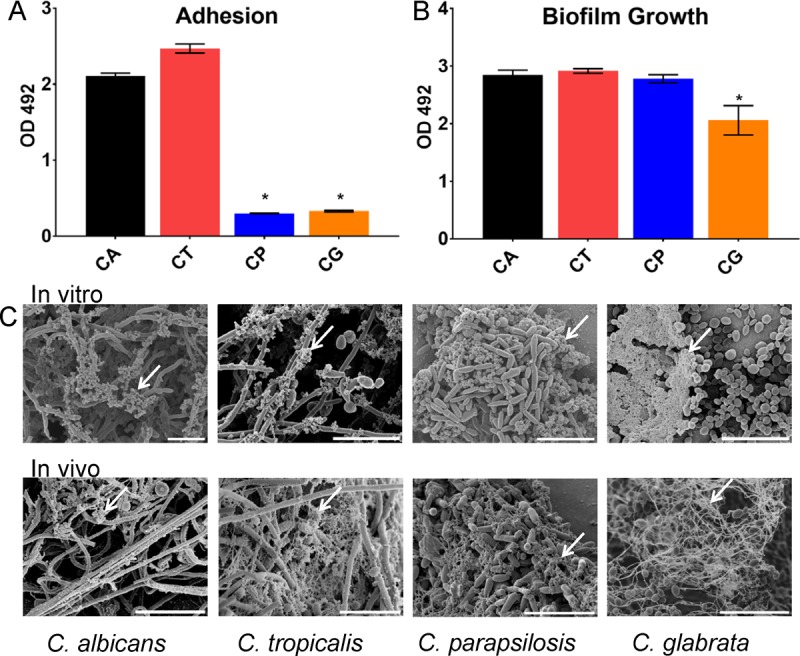
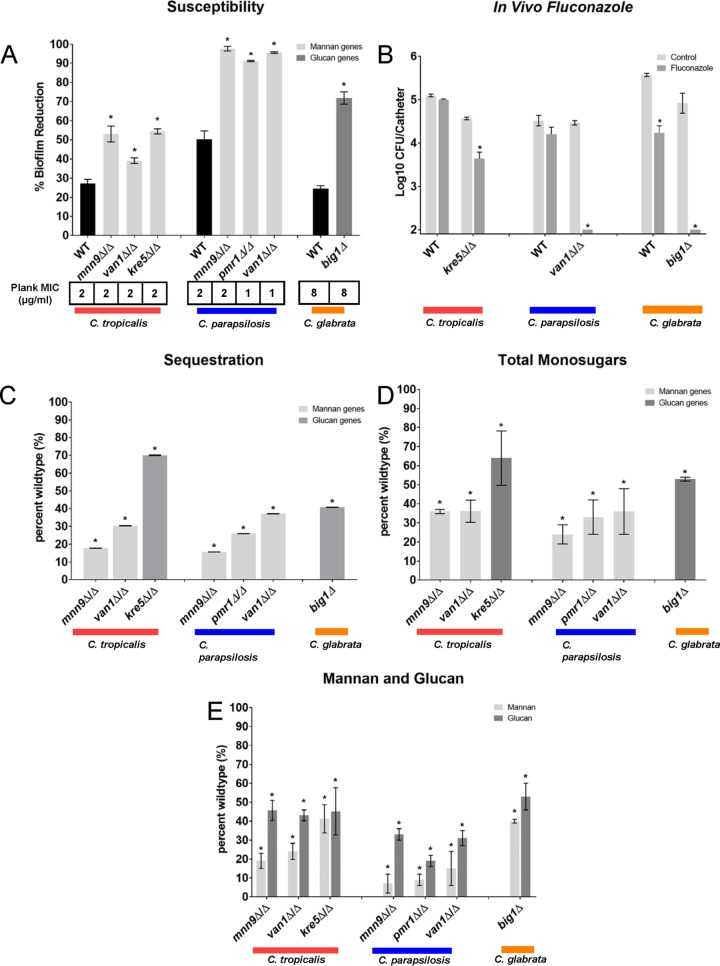
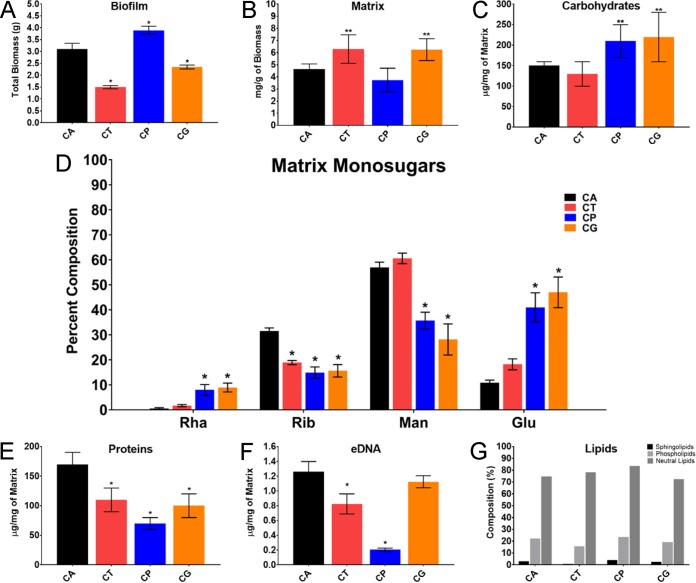
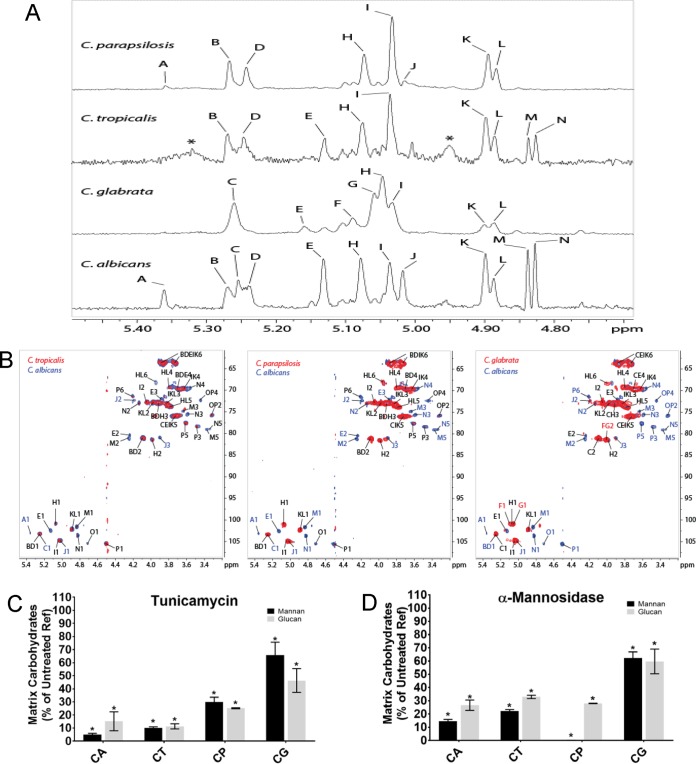
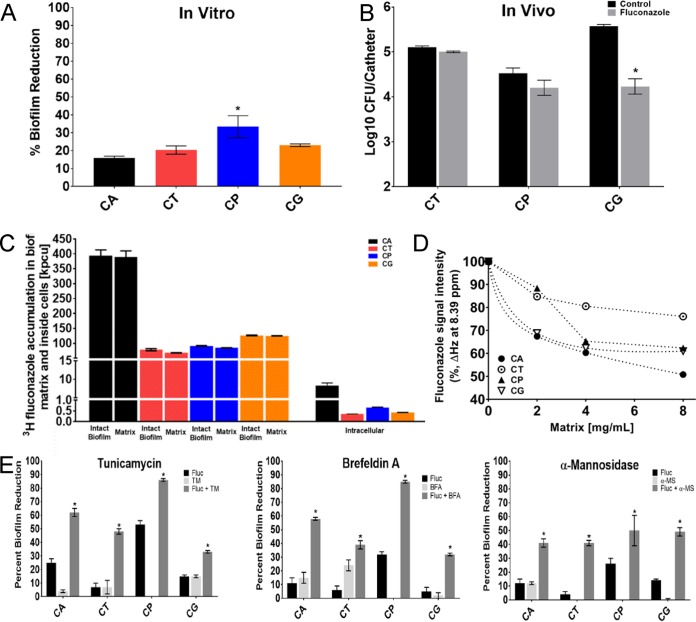
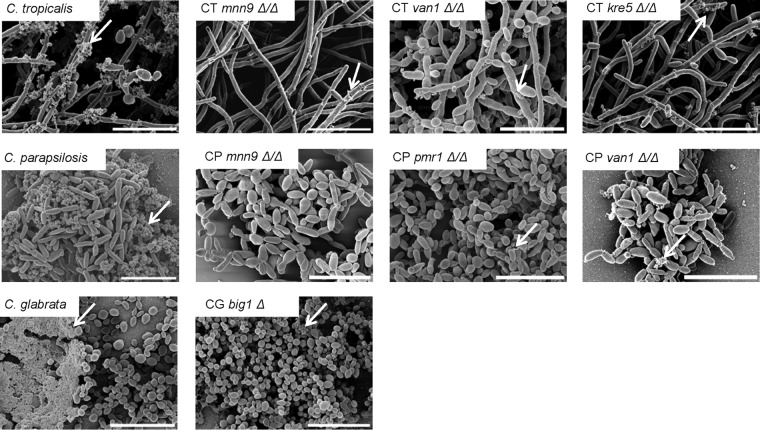
biofilms resist the effects of available antifungal therapies. Prior studies with biofilms show that an extracellular matrix mannan-glucan complex (MGCx) contributes to antifungal sequestration, leading to drug resistance. Here we implement biochemical, pharmacological, and genetic approaches to explore a similar mechanism of resistance for the three most common clinically encountered non- species (NAC). Our findings reveal that each species biofilm synthesizes a mannan-glucan complex and that the antifungal-protective function of this complex is conserved. Structural similarities extended primarily to the polysaccharide backbone (α-1,6-mannan and β-1,6-glucan). Surprisingly, biochemical analysis uncovered stark differences in the branching side chains of the MGCx among the species. Consistent with the structural analysis, similarities in the genetic control of MGCx production for each species also appeared limited to the synthesis of the polysaccharide backbone. Each species appears to employ a unique subset of modification enzymes for MGCx synthesis, likely accounting for the observed side chain diversity. Our results argue for the conservation of matrix function among spp. While biogenesis is preserved at the level of the mannan-glucan complex backbone, divergence emerges for construction of branching side chains. Thus, the MGCx backbone represents an ideal drug target for effective pan- species biofilm therapy. species, the most common fungal pathogens, frequently grow as a biofilm. These adherent communities tolerate extremely high concentrations of antifungal agents, due in large part, to a protective extracellular matrix. The present studies define the structural, functional, and genetic similarities and differences in the biofilm matrix from the four most common species. Each species synthesizes an extracellular mannan-glucan complex (MGCx) which contributes to sequestration of antifungal drug, shielding the fungus from this external assault. Synthesis of a common polysaccharide backbone appears conserved. However, subtle structural differences in the branching side chains likely rely upon unique modification enzymes, which are species specific. Our findings identify MGCx backbone synthesis as a potential pan- biofilm therapeutic target.
生物膜能抵抗现有的抗真菌疗法。先前的生物膜研究表明,细胞外基质甘露聚糖-葡聚糖复合物(MGCx)有助于抗真菌药物的隔离,导致耐药性。在这里,我们采用生化、药理和遗传方法来探索三种最常见的临床相关非物种(NAC)的类似耐药机制。我们的研究结果表明,每个物种的生物膜都合成一种甘露聚糖-葡聚糖复合物,并且该复合物的抗真菌保护功能是保守的。结构相似性主要延伸到多糖骨架(α-1,6-甘露聚糖和β-1,6-葡聚糖)。令人惊讶的是,生化分析揭示了物种间 MGCx 分支侧链存在明显差异。与结构分析一致,每种物种 MGCx 产生的遗传控制也似乎仅限于多糖骨架的合成。每个物种似乎都使用独特的修饰酶亚基来合成 MGCx,这可能解释了观察到的侧链多样性。我们的结果表明,MGCx 在 spp. 中具有保守的基质功能。虽然生物发生在甘露聚糖-葡聚糖复合物骨架水平上得到保留,但分支侧链的出现出现了分歧。因此,MGCx 骨架代表了针对有效泛物种生物膜治疗的理想药物靶点。物种是最常见的真菌病原体,它们经常以生物膜的形式生长。这些附着的群落能耐受极高浓度的抗真菌药物,这在很大程度上要归功于一种保护性的细胞外基质。本研究定义了四种最常见的 物种生物膜基质的结构、功能和遗传相似性和差异性。每个物种都合成一种细胞外甘露聚糖-葡聚糖复合物(MGCx),它有助于抗真菌药物的隔离,使真菌免受这种外部攻击。常见多糖骨架的合成似乎是保守的。然而,分支侧链的细微结构差异可能依赖于独特的修饰酶,这些酶是物种特异性的。我们的研究结果确定 MGCx 骨架合成是一种潜在的泛生物膜治疗靶点。