Microbiology and Immunology Department, Educational and Scientific Centre "Institute of Biology and Medicine", Taras Shevchenko National University of Kyiv, 2, Prospekt Hlushkov, Kyiv, 03022, Ukraine.
Department of Biochemistry, ESC "Institute of Biology and Medicine", Taras Shevchenko National University of Kyiv, 2, Prospekt Hlushkov, Kyiv, 03022, Ukraine.
Sci Rep. 2018 Apr 3;8(1):5419. doi: 10.1038/s41598-018-23664-0.
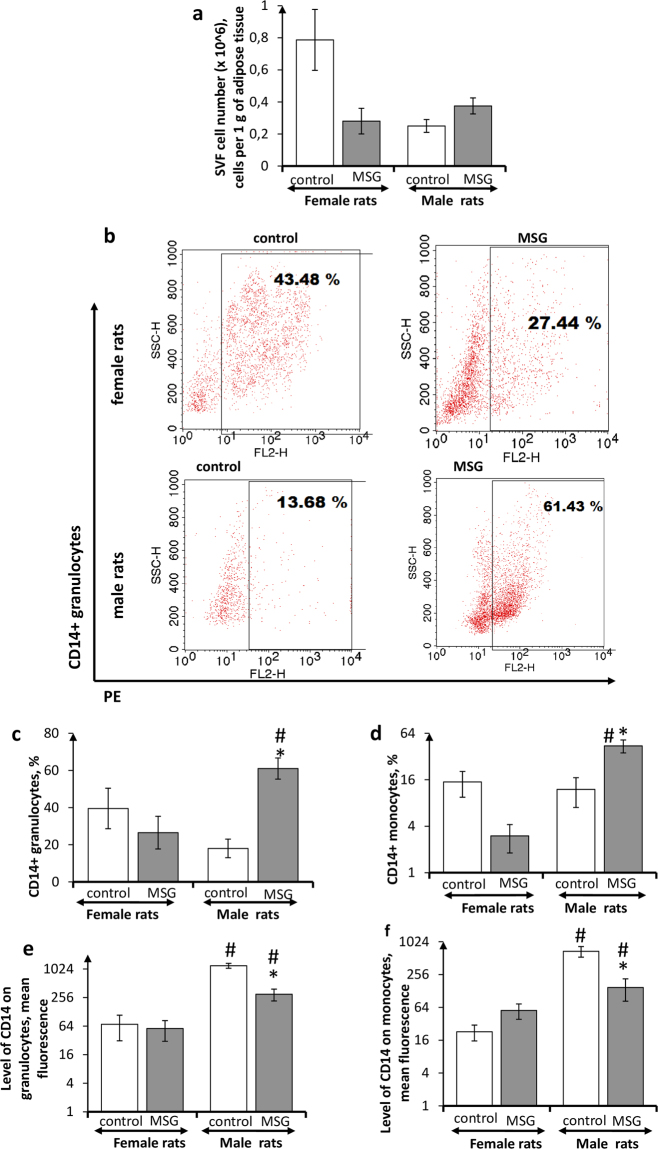
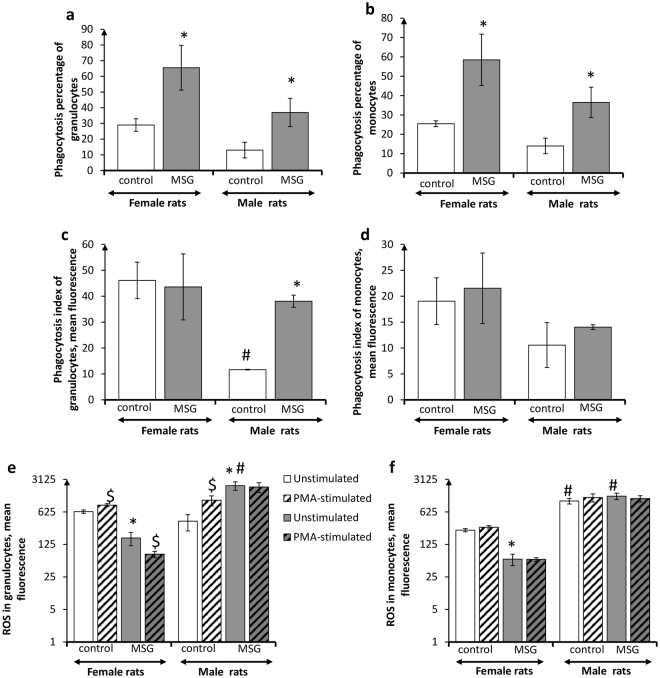
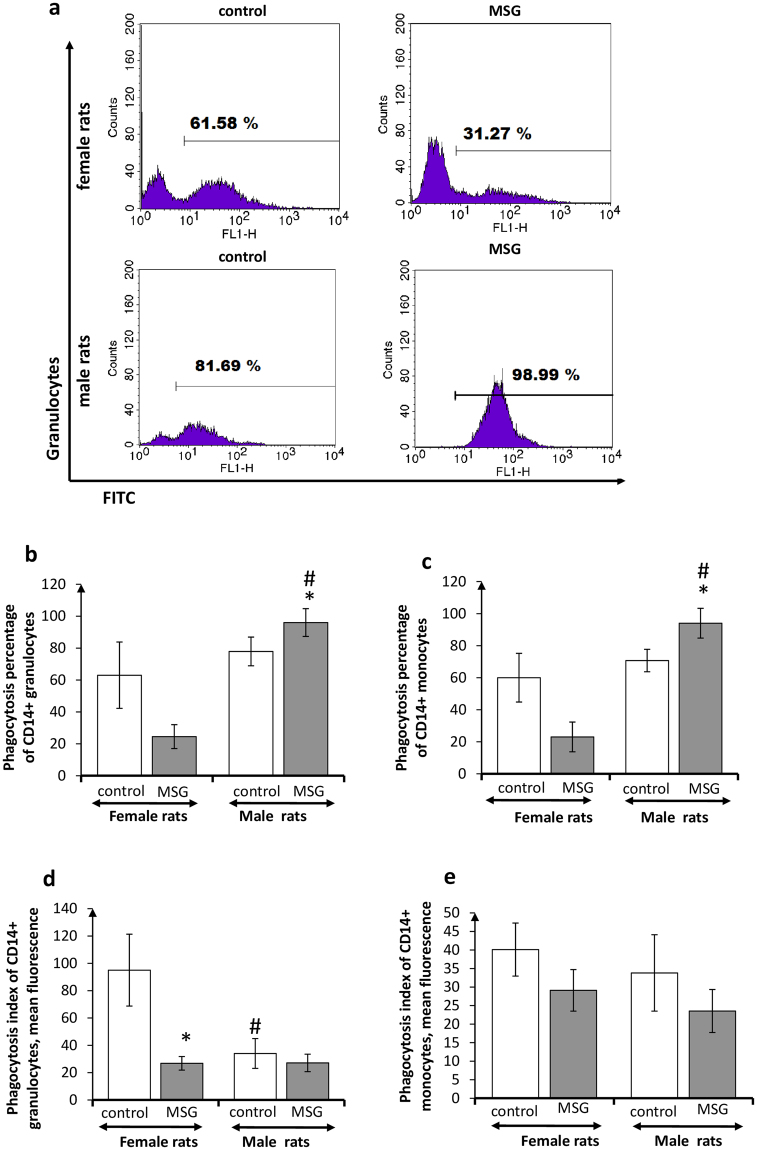
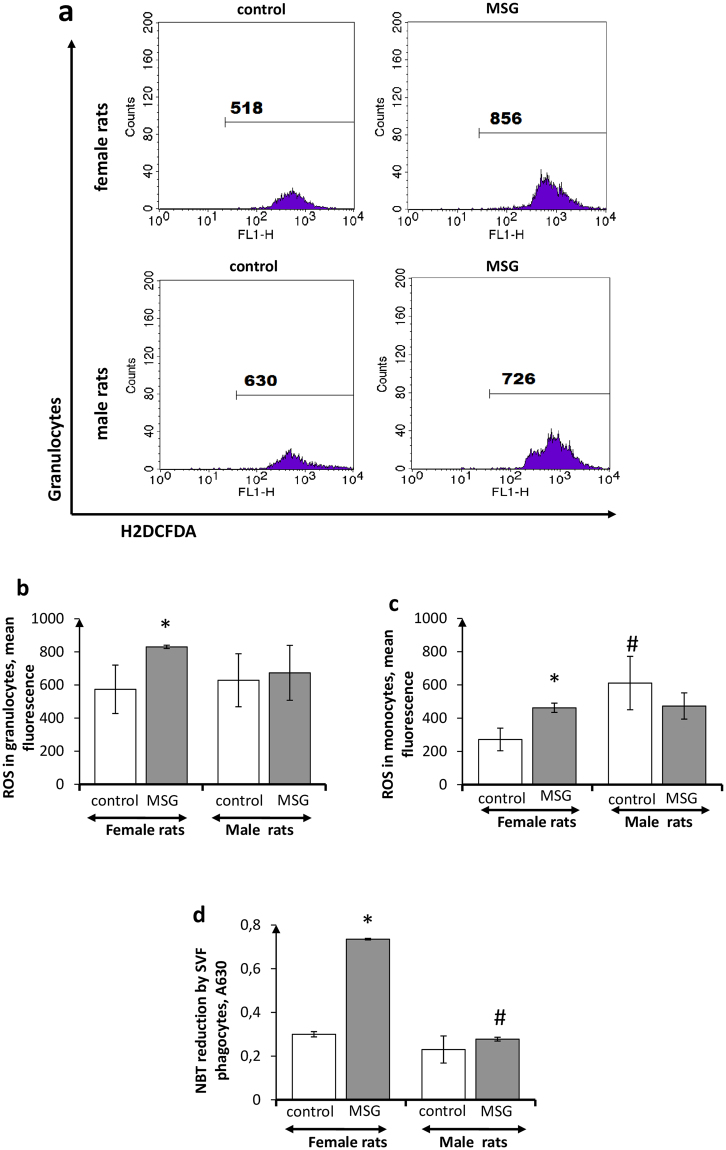
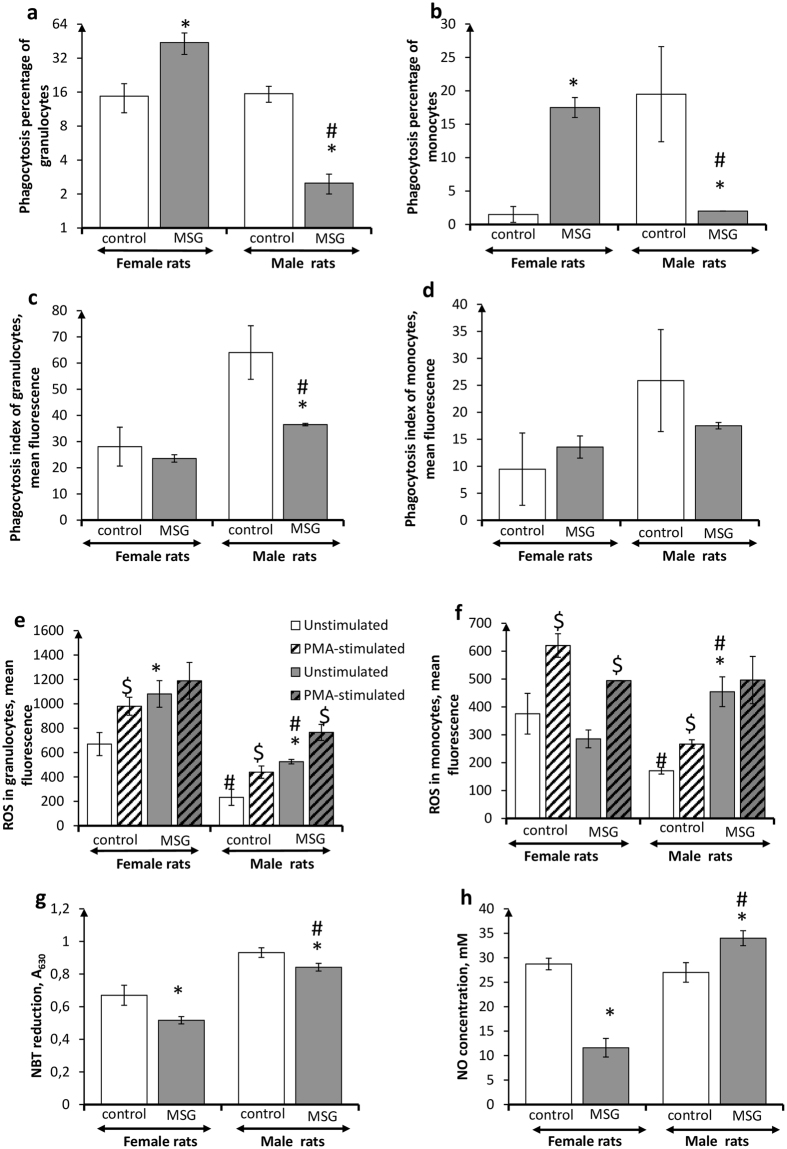
The important component of obesity pathogenesis is inflammatory activation of innate immune cells within adipose tissue and in other body locations. Both the course of obesity and innate immune reactivity are characterized by sex-associated differences. The aim of the work was a comparative investigation of metabolic profiles of phagocytes from different locations in male and female rats with MSG-induced obesity. The administration of monosodium glutamate (MSG) caused obesity, with sex-associated differences, that was more severe in male rats. Obesity was associated with pro-inflammatory activation of CD14+ phagocytes from adipose tissue in female, but not in male rats, which was demonstrated by decreased phagocytosis activity along with increased ROS generation. Phagocytes from the peritoneal cavity and peripheral blood of obese female rats exhibited neutral metabolic profile, whereas those cells from obese male rats displayed a pro-inflammatory metabolic profile. Thus, the manifestation of obesity-induced inflammation was characterized by different patterns of metabolic profile of phagocytes in male and female rats. Identified immune cell characteristics expand our knowledge of obesity immunobiology and may help to develop more effective preventive and therapeutic interventions for obese patients of different sexes.
肥胖症发病机制的重要组成部分是脂肪组织和其他身体部位中固有免疫细胞的炎症激活。肥胖的过程和固有免疫反应都具有性别相关差异的特点。本研究的目的是比较雄性和雌性 MSG 诱导肥胖大鼠不同部位吞噬细胞的代谢特征。单谷氨酸钠(MSG)的给药导致肥胖,雄性大鼠的肥胖更为严重,存在性别相关差异。肥胖与雌性而非雄性大鼠脂肪组织中 CD14+吞噬细胞的促炎激活有关,这表现为吞噬作用活性降低以及 ROS 生成增加。肥胖雌性大鼠腹腔和外周血中的吞噬细胞表现出中性代谢特征,而肥胖雄性大鼠的这些细胞则表现出促炎代谢特征。因此,肥胖诱导的炎症表现出雄性和雌性大鼠吞噬细胞代谢特征的不同模式。所鉴定的免疫细胞特征扩展了我们对肥胖免疫生物学的认识,并可能有助于为不同性别的肥胖患者开发更有效的预防和治疗干预措施。