Jackson Kristy L, Marques Francine Z, Lim Kyungjoon, Davern Pamela J, Head Geoffrey A
Neuropharmacology Laboratory, Baker Heart and Diabetes Research Institute, Melbourne, VIC, Australia.
Department of Pharmacology, Monash University, Victoria, VIC, Australia.
Front Physiol. 2018 Mar 19;9:231. doi: 10.3389/fphys.2018.00231. eCollection 2018.
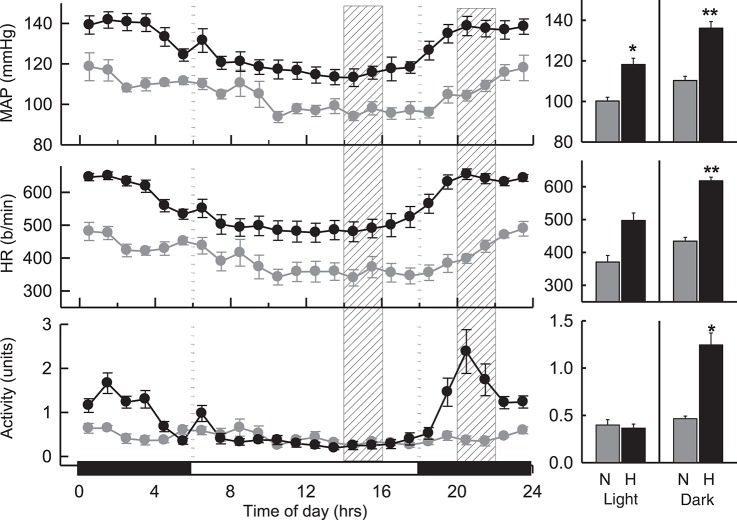
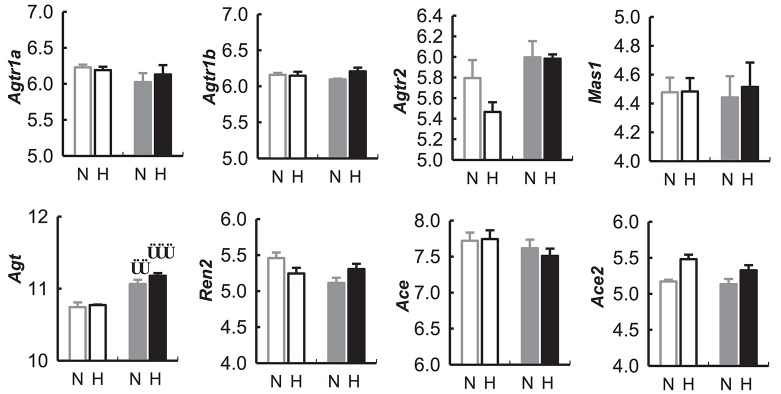
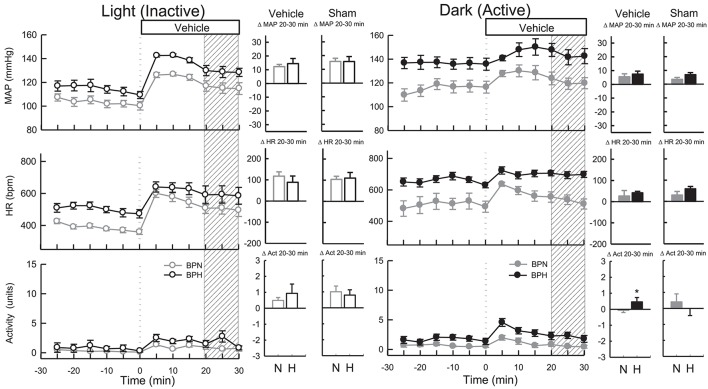
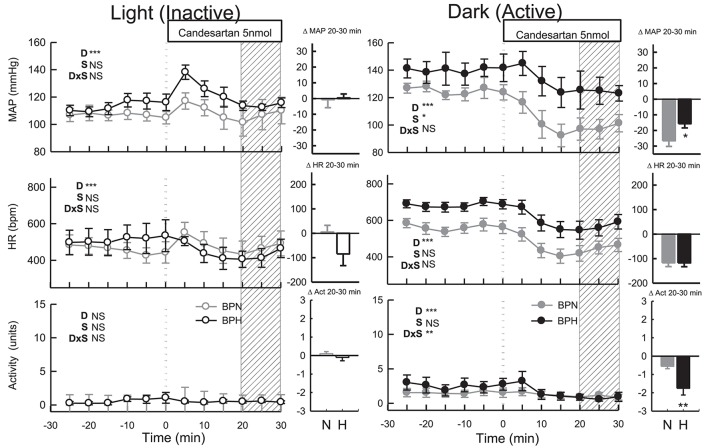
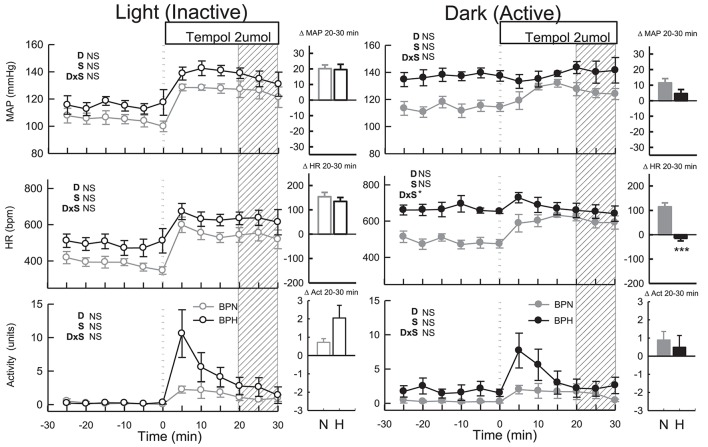
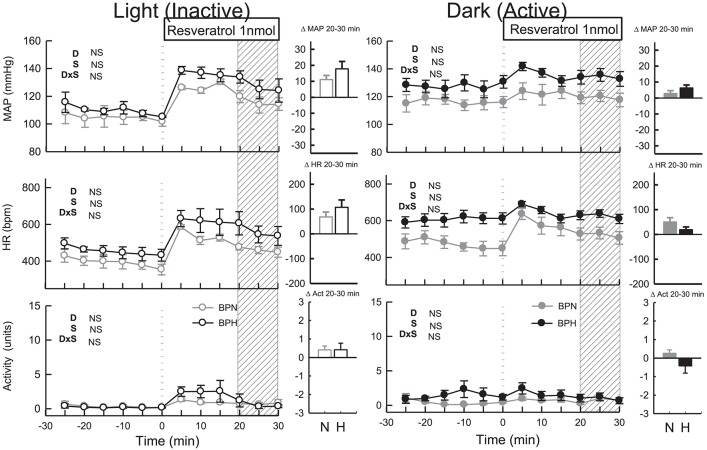
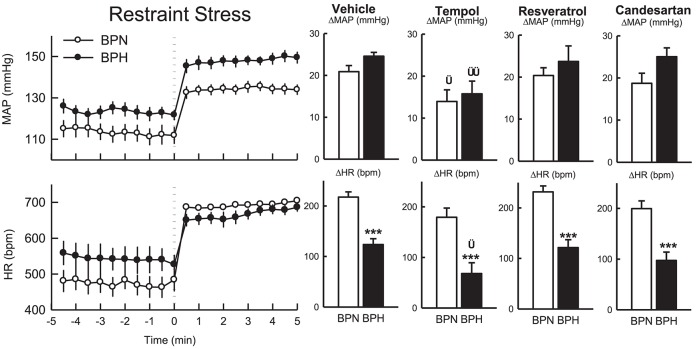
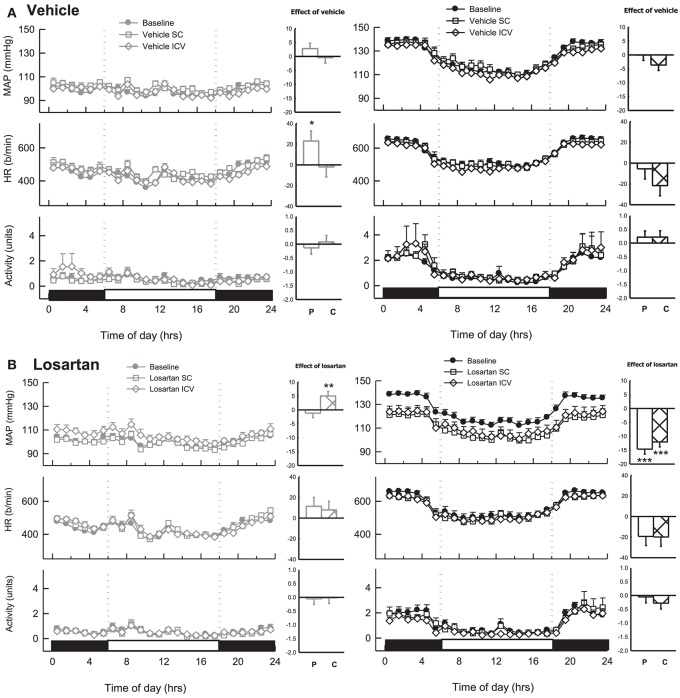
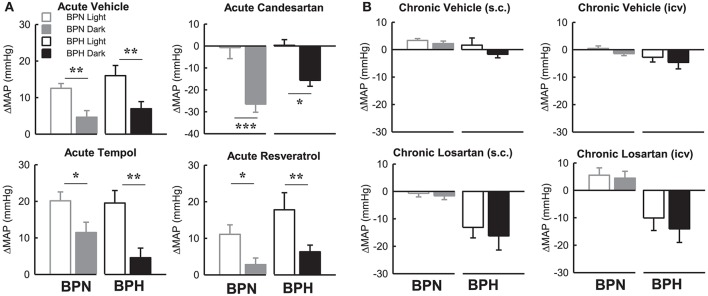
Genetically hypertensive BPH/2J mice are recognized as a neurogenic model of hypertension, primarily based on sympathetic overactivity and greater neuronal activity in cardiovascular regulatory brain regions. Greater activity of the central renin angiotensin system (RAS) and reactive oxygen species (ROS) reportedly contribute to other models of hypertension. Importantly the peripheral RAS contributes to the hypertension in BPH/2J mice, predominantly during the dark period of the 24 h light cycle. The aim of the present study was to determine whether central AT receptor stimulation and the associated ROS signaling contribute to hypertension in BPH/2J mice in a circadian dependent manner. Blood pressure (BP) was measured in BPH/2J and normotensive BPN/3J mice ( = 7-8) via pre-implanted telemetry devices. Acute intracerebroventricular (ICV) microinjections of AT receptor antagonist, candesartan, and the superoxide dismutase (SOD) mimetic, tempol, were administered during the dark and light period of the 24 h light cycle via a pre-implanted ICV guide cannula. In separate mice, the BP effect of ICV infusion of the AT receptor antagonist losartan for 7 days was compared with subcutaneous infusion to determine the contribution of the central RAS to hypertension in BPH/2J mice. Candesartan administered ICV during the dark period induced depressor responses which were 40% smaller in BPH/2J than BPN/3J mice ( < 0.05), suggesting AT receptor stimulation may contribute less to BP maintenance in BPH/2J mice. During the light period candesartan had minimal effect on BP in either strain. ICV tempol had comparable effects on BP between strains during the light and dark period ( > 0.08), suggesting ROS signaling is also not contributing to the hypertension in BPH/2J mice. Chronic ICV administration of losartan (22 nmol/h) had minimal effect on BPN/3J mice. By contrast in BPH/2J mice, both ICV and subcutaneously administered losartan induced similar hypotensive responses (-12.1 ± 1.8 vs. -14.7 ± 1.8 mmHg, = 0.31). While central effects of peripheral losartan cannot be excluded, we suggest the hypotensive effect of chronic ICV losartan was likely peripherally mediated. Thus, based on both acute and chronic AT receptor inhibition and acute ROS inhibition, our findings suggest that greater activation of central AT receptors or ROS are unlikely to be mediating the hypertension in BPH/2J mice.
遗传性高血压BPH/2J小鼠被认为是一种高血压神经源性模型,主要基于交感神经过度活跃以及心血管调节脑区神经元活动增强。据报道,中枢肾素血管紧张素系统(RAS)和活性氧(ROS)的活性增强与其他高血压模型有关。重要的是,外周RAS促成了BPH/2J小鼠的高血压,主要在24小时光照周期的黑暗期。本研究的目的是确定中枢AT受体刺激及相关的ROS信号是否以昼夜节律依赖的方式促成BPH/2J小鼠的高血压。通过预先植入的遥测装置测量BPH/2J和血压正常的BPN/3J小鼠(n = 7 - 8)的血压。在24小时光照周期的黑暗期和光照期,通过预先植入的脑室内(ICV)引导套管,急性脑室内微注射AT受体拮抗剂坎地沙坦和超氧化物歧化酶(SOD)模拟物替莫泊尔。在另外的小鼠中,比较脑室内输注AT受体拮抗剂氯沙坦7天与皮下输注对血压的影响,以确定中枢RAS对BPH/2J小鼠高血压的作用。黑暗期脑室内注射坎地沙坦诱导的降压反应在BPH/2J小鼠中比BPN/3J小鼠小40%(P < 0.05),表明AT受体刺激对BPH/2J小鼠血压维持的作用可能较小。在光照期,坎地沙坦对两种品系的血压影响均最小。脑室内注射替莫泊尔在光照期和黑暗期对两种品系血压的影响相当(P > 0.08),表明ROS信号也未促成BPH/2J小鼠的高血压。慢性脑室内给予氯沙坦(22 nmol/h)对BPN/3J小鼠影响最小。相比之下,在BPH/2J小鼠中,脑室内和皮下给予氯沙坦均诱导了相似的降压反应(-12.1 ± 1.8 vs. -14.7 ± 1.8 mmHg,P = 0.31)。虽然不能排除外周氯沙坦的中枢作用,但我们认为慢性脑室内给予氯沙坦的降压作用可能是由外周介导的。因此,基于急性和慢性AT受体抑制以及急性ROS抑制,我们的研究结果表明,中枢AT受体或ROS的更大激活不太可能介导BPH/2J小鼠的高血压。