Department of Biological Sciences, Sunway University, Bandar Sunway, Malaysia.
U.S. Geological Survey, Northern Rocky Mountain Science Center, Interagency Grizzly Bear Study Team, Bozeman, Montana, United States of America.
PLoS One. 2018 Apr 4;13(4):e0194217. doi: 10.1371/journal.pone.0194217. eCollection 2018.
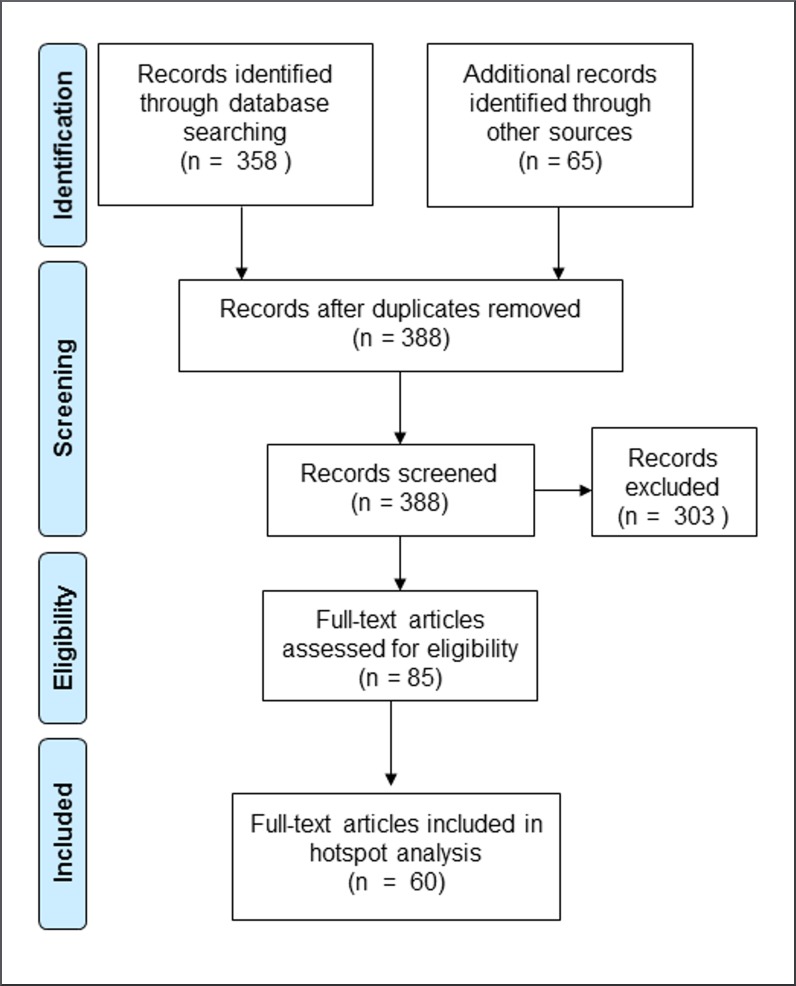
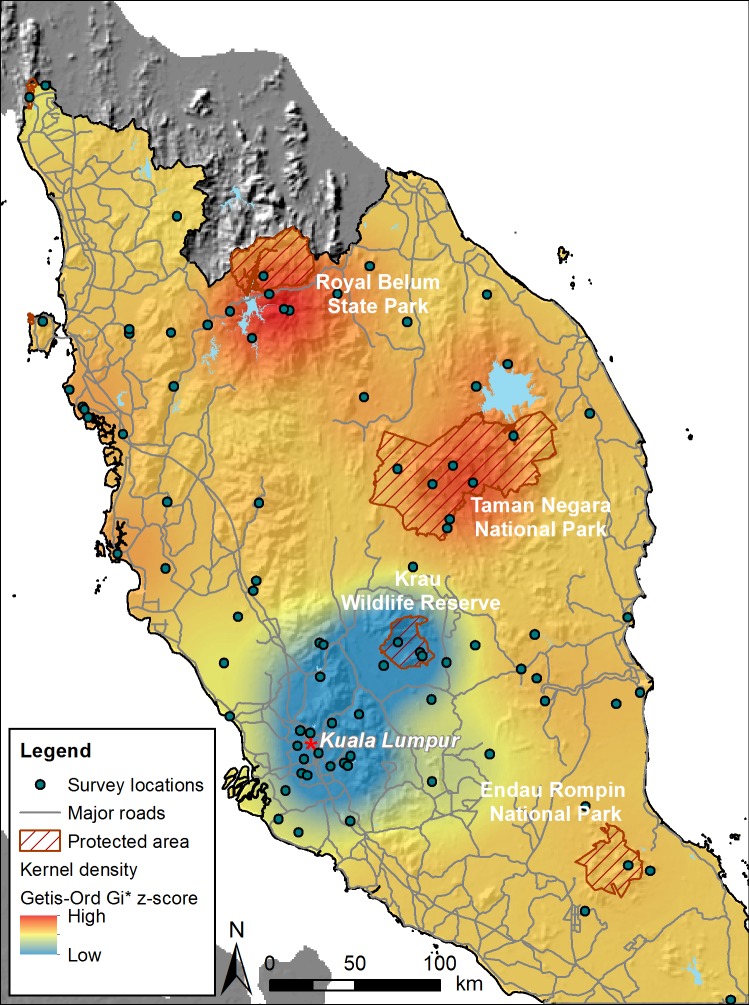
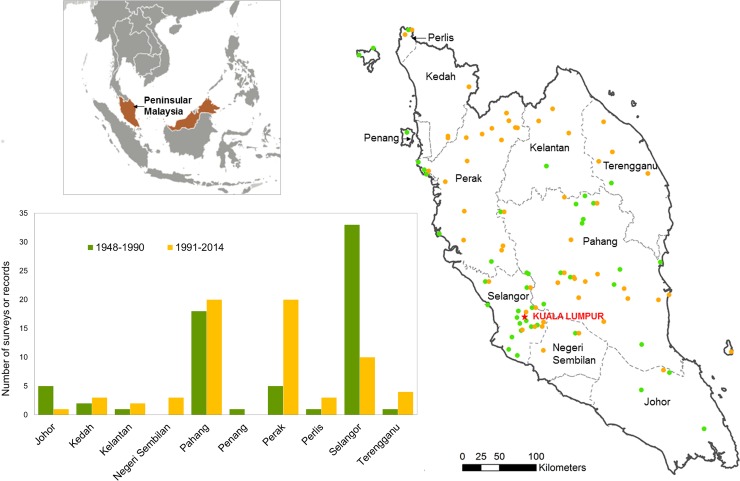
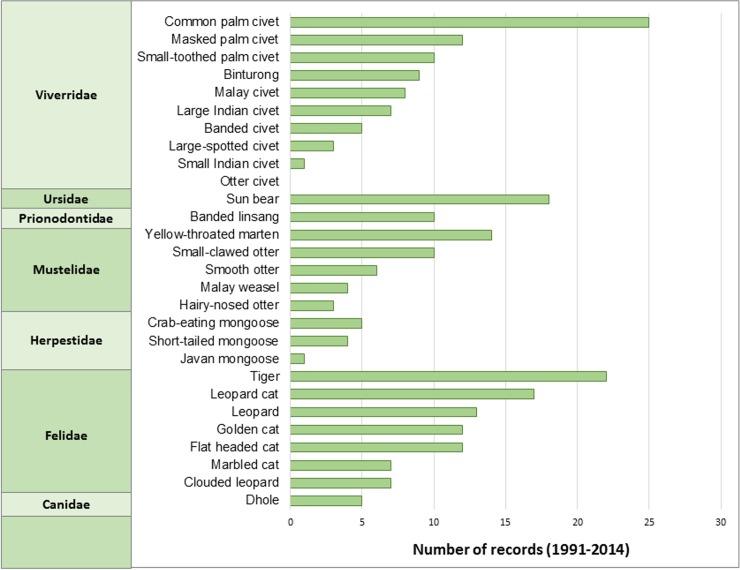
Mammalian carnivores play a vital role in ecosystem functioning. However, they are prone to extinction because of low population densities and growth rates, and high levels of persecution or exploitation. In tropical biodiversity hotspots such as Peninsular Malaysia, rapid conversion of natural habitats threatens the persistence of this vulnerable group of animals. Here, we carried out the first comprehensive literature review on 31 carnivore species reported to occur in Peninsular Malaysia and updated their probable distribution. We georeferenced 375 observations of 28 species of carnivore from 89 unique geographic locations using records spanning 1948 to 2014. Using the Getis-Ord Gistatistic and weighted survey records by IUCN Red List status, we identified hotspots of species that were of conservation concern and built regression models to identify environmental and anthropogenic landscape factors associated with Getis-Ord Gi z scores. Our analyses identified two carnivore hotspots that were spatially concordant with two of the peninsula's largest and most contiguous forest complexes, associated with Taman Negara National Park and Royal Belum State Park. A cold spot overlapped with the southwestern region of the Peninsula, reflecting the disappearance of carnivores with higher conservation rankings from increasingly fragmented natural habitats. Getis-Ord Gi* z scores were negatively associated with elevation, and positively associated with the proportion of natural land cover and distance from the capital city. Malaysia contains some of the world's most diverse carnivore assemblages, but recent rates of forest loss are some of the highest in the world. Reducing poaching and maintaining large, contiguous tracts of lowland forests will be crucial, not only for the persistence of threatened carnivores, but for many mammalian species in general.
哺乳动物食肉动物在生态系统功能中起着至关重要的作用。然而,由于种群密度和增长率低,以及受到高度迫害或开发,它们容易灭绝。在马来西亚半岛等热带生物多样性热点地区,自然栖息地的快速转换威胁着这一脆弱动物群体的生存。在这里,我们对据报道在马来西亚半岛发生的 31 种食肉动物进行了首次全面文献综述,并更新了它们可能的分布情况。我们使用 1948 年至 2014 年的记录,对 89 个独特地理位置的 28 种食肉动物的 375 个观察结果进行了地理参考。使用 Getis-Ord Gi统计量和 IUCN 红色名录状态加权调查记录,我们确定了受保护关注的物种热点,并建立了回归模型,以确定与 Getis-Ord Gi z 分数相关的环境和人为景观因素。我们的分析确定了两个食肉动物热点,这两个热点与半岛上最大和最连续的两个森林复合体的空间一致,与国家公园和皇家百乐门州立公园相关。一个冷点与半岛的西南部重叠,反映了具有较高保护等级的食肉动物从日益碎片化的自然栖息地中消失。Getis-Ord Gi* z 分数与海拔高度呈负相关,与自然土地覆盖比例和距离首府呈正相关。马来西亚拥有一些世界上最多样化的食肉动物组合,但最近的森林损失率是世界上最高的之一。减少偷猎和保持大面积、连续的低地森林将是至关重要的,不仅对受威胁的食肉动物的生存,而且对一般哺乳动物物种的生存都是至关重要的。