Department of Internal Medicine and Radboud Center for Infectious Diseases, Radboud University Medical Center, Nijmegen.
University of Groningen, University Medical Center Groningen, The Netherlands.
J Infect Dis. 2018 Jun 5;218(1):165-170. doi: 10.1093/infdis/jiy173.
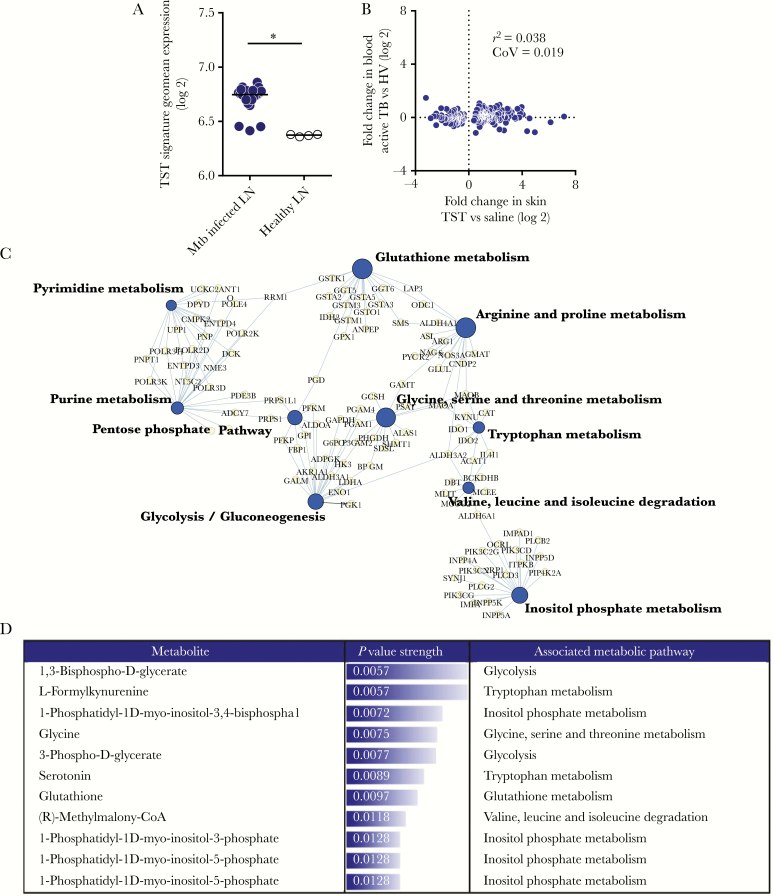
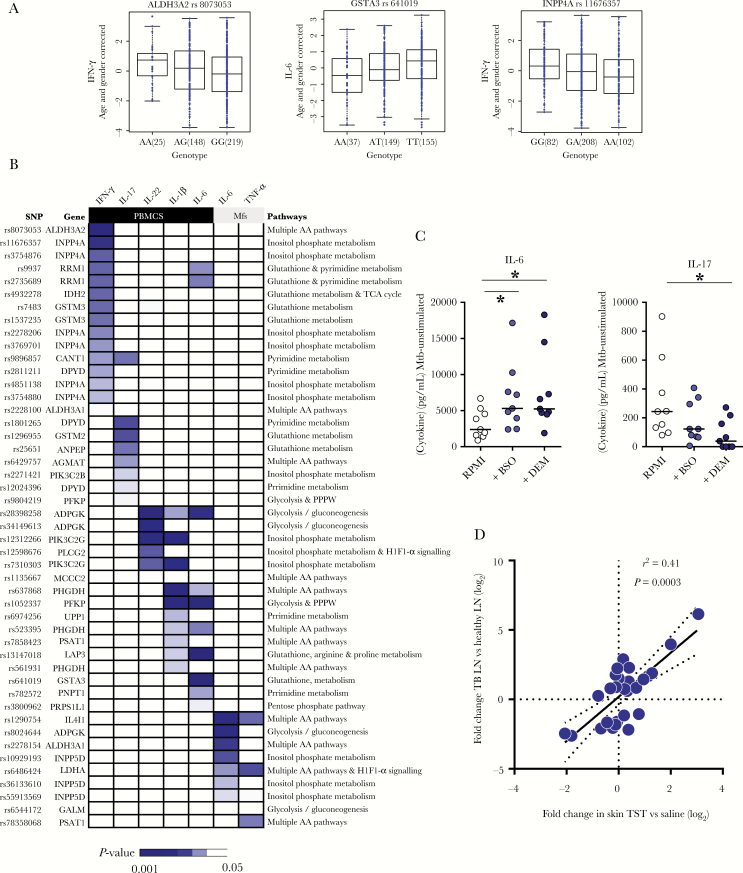
Cellular metabolism can influence host immune responses to Mycobacterium tuberculosis. Using a systems biology approach, differential expression of 292 metabolic genes involved in glycolysis, glutathione, pyrimidine, and inositol phosphate pathways was evident at the site of a human tuberculin skin test challenge in patients with active tuberculosis infection. For 28 metabolic genes, we identified single nucleotide polymorphisms that were trans-acting for in vitro cytokine responses to M. tuberculosis stimulation, including glutathione and pyrimidine metabolism genes that alter production of Th1 and Th17 cytokines. Our findings identify novel therapeutic targets in host metabolism that may shape protective immunity to tuberculosis.
细胞代谢可以影响宿主对结核分枝杆菌的免疫反应。采用系统生物学方法,在活动性结核感染患者的结核菌素皮肤试验挑战部位,明显观察到涉及糖酵解、谷胱甘肽、嘧啶和肌醇磷酸途径的 292 个代谢基因的差异表达。对于 28 个代谢基因,我们鉴定了单核苷酸多态性,这些多态性对结核分枝杆菌刺激的体外细胞因子反应具有反式作用,包括改变 Th1 和 Th17 细胞因子产生的谷胱甘肽和嘧啶代谢基因。我们的发现确定了宿主代谢中的新的治疗靶点,这些靶点可能影响对结核病的保护性免疫。