Department of Hepatobiliary Surgery, Xijing Hospital, Fourth Military Medical University, Xi'an, People's Republic of China.
Department of Hepatobiliary Surgery, Hainan Branch of Chinese PLA General Hospital, Sanya, People's Republic of China.
Int J Nanomedicine. 2018 Mar 26;13:1851-1865. doi: 10.2147/IJN.S155537. eCollection 2018.
A safe and effective in vivo siRNA delivery system is a prerequisite for liver tumor treatment based on siRNA cancer therapeutics. Nanoparticles based on superparamagnetic iron oxide (SPIO) provide a promising delivery system. In this study, we aimed to explore a novel nanoparticle, which is composed of SPIO.
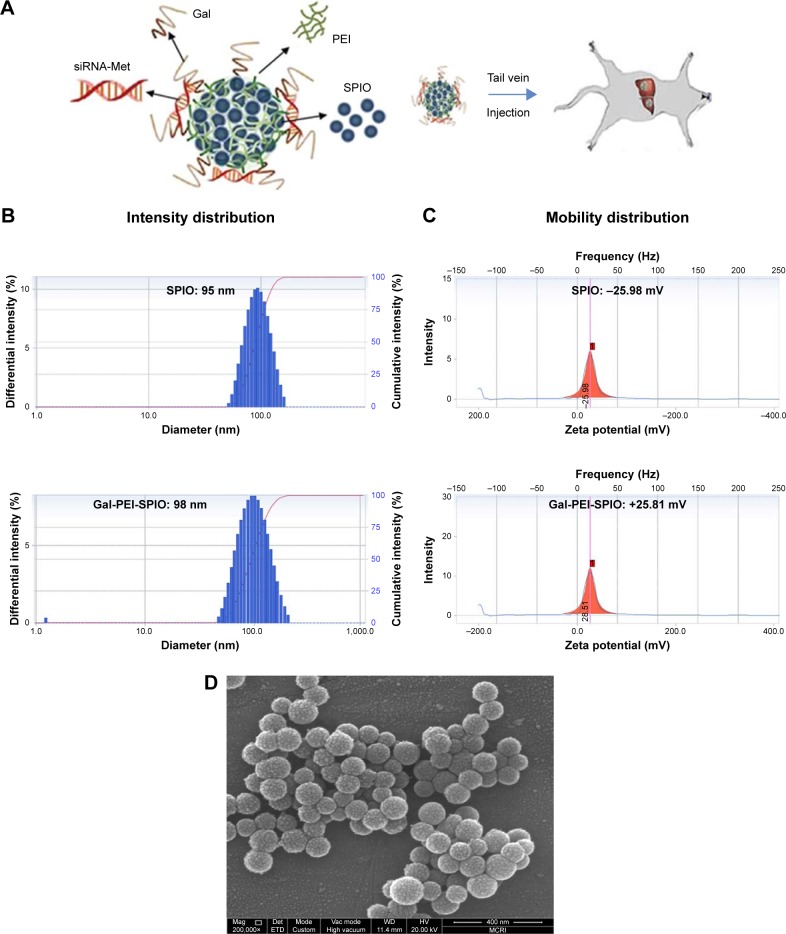
The particles have a core of iron oxide that is modified by galactose (Gal) and polyethylenimine (PEI), which act as shells, providing targeted delivery of therapeutic siRNA to the liver cancer. Gal-PEI-SPIO nanoparticles were synthesized, and the characteristics of the Gal-PEI-SPIO encapsulated with siRNA were analyzed.
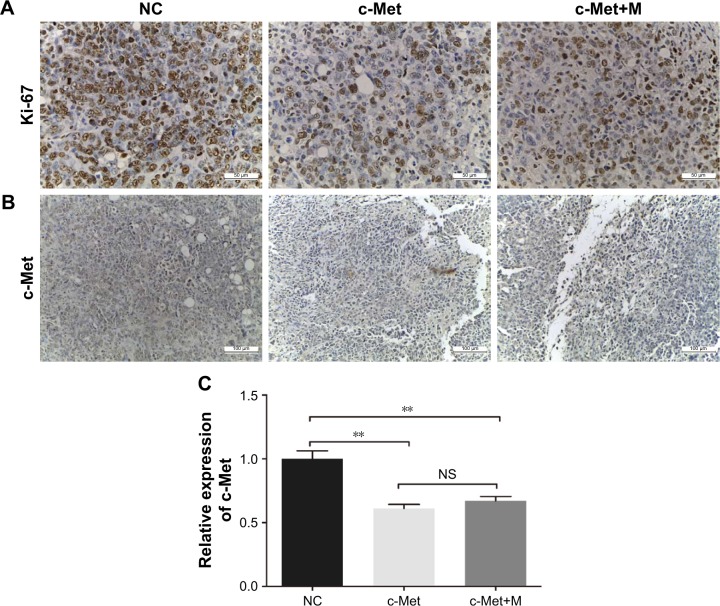
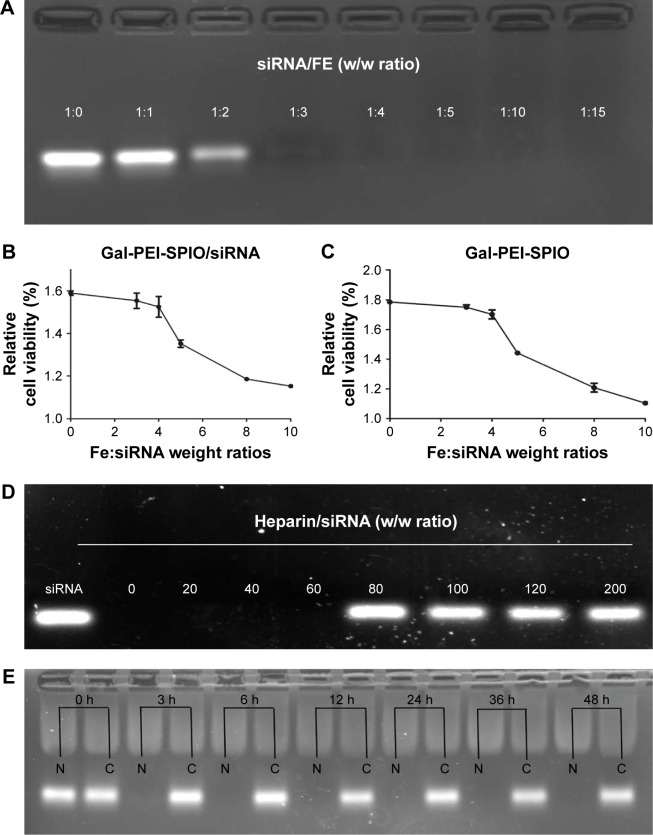
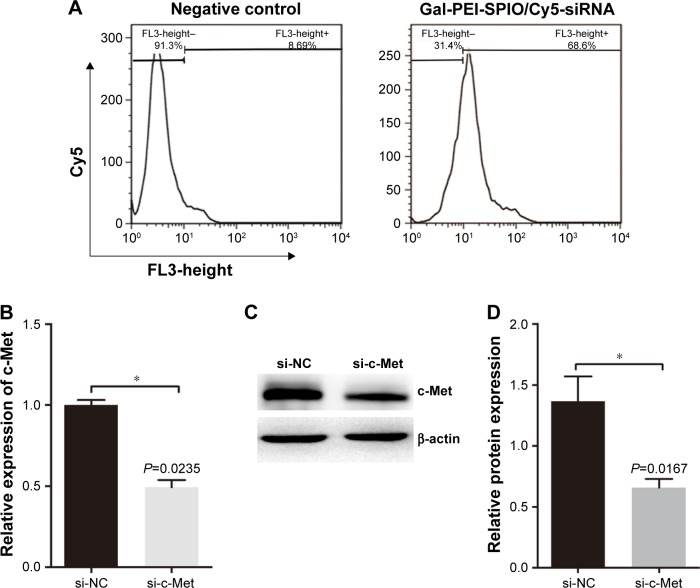
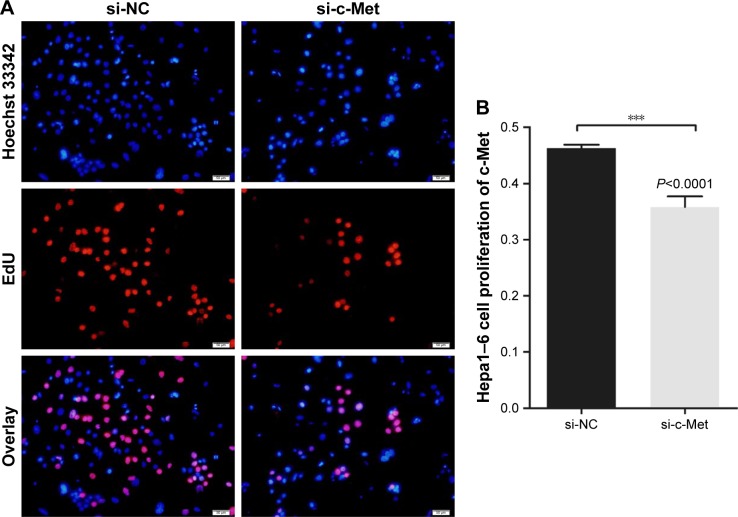
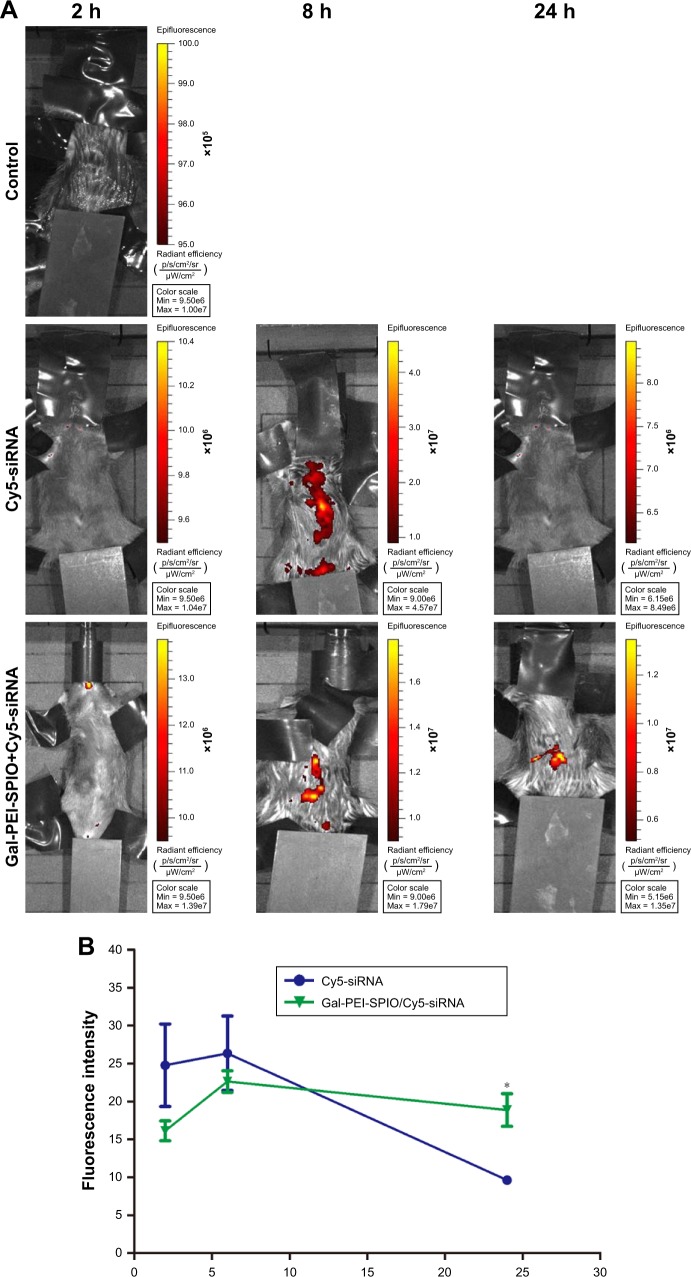
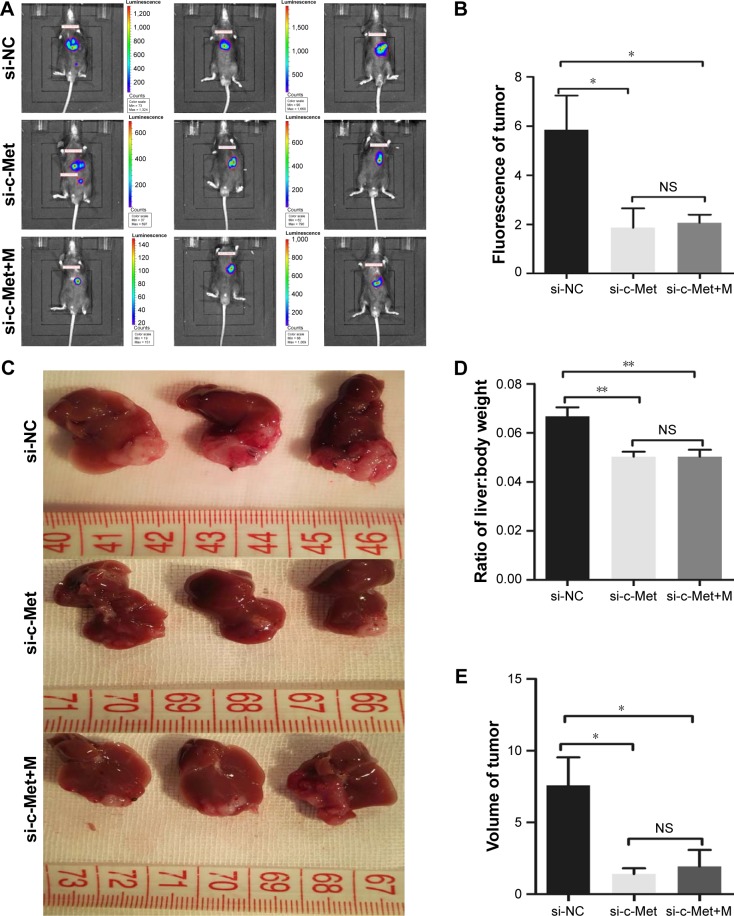
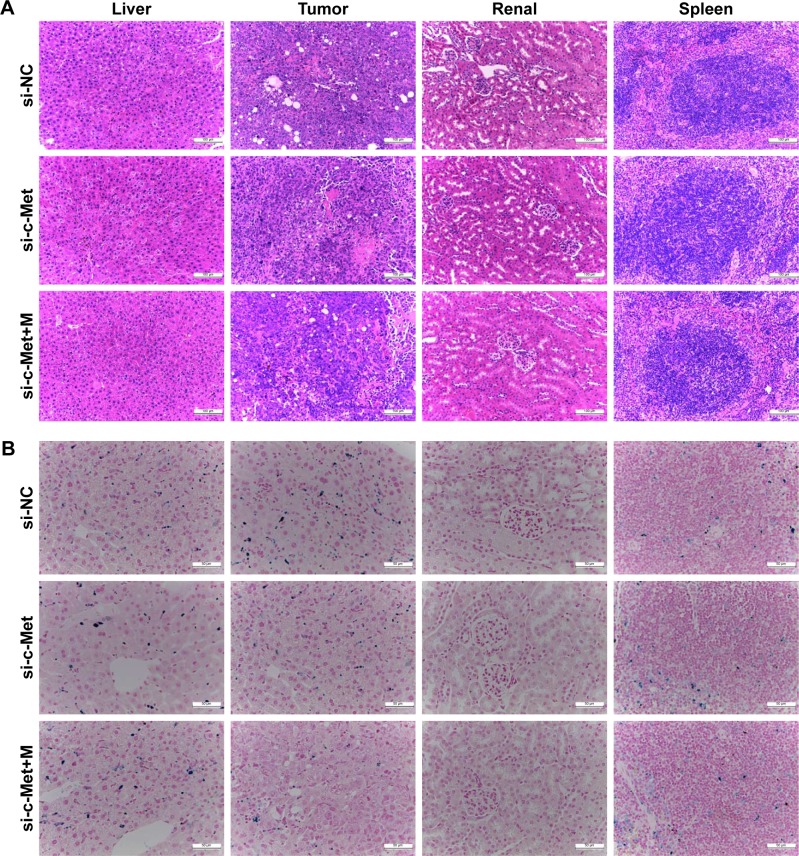
The particles remained nanoparticles and displayed negligible cytotoxicity when loaded with siRNA. In a serum stability assay, the Gal-PEI-SPIO nanoparticles could shield the siRNA from serum degradation and prolong the half-life of the siRNA in the system. Simultaneously, we found that the mixture could be efficiently taken up by Hepa1-6 cells in a flow cytometry assay. To study the anticancer effect, quantitative polymerase chain reaction and Western blotting were used to validate the silencing efficacy of the complexes in vitro. Subsequently, the nanoparticle mixtures were administered intravenously to tumor-bearing mice to explore the tissue distribution and the effect of the siRNA against cancer. We found that the nanoparticles could provide targeted siRNA delivery, accumulate easily in orthotopic tumors, enhance siRNA accumulation in the tumor tissues for 24 h and protect the siRNA from serum nuclease degradation in comparison with the control group. After these study procedures, the mice were sacrificed, and the tumors were removed to compare the tumor size and analyze the therapeutic effect on tumor growth. The tumor volume and the liver/body weight ratio were significantly reduced in the si-c-Met therapy groups. Additionally, the levels were also lower than those observed in the controls.
Based on these results, we concluded that Gal-PEI-SPIO represents a promising and efficient platform for siRNA delivery in tumor therapy.
基于 siRNA 癌症疗法的肝癌治疗需要安全有效的体内 siRNA 递药系统。基于超顺磁性氧化铁(SPIO)的纳米粒子提供了一种有前途的递药系统。本研究旨在探索一种新型纳米粒子,由 SPIO 组成。
该粒子的内核为氧化铁,其表面修饰有半乳糖(Gal)和聚乙烯亚胺(PEI)作为外壳,可将治疗性 siRNA 靶向递送至肝癌。合成了 Gal-PEI-SPIO 纳米粒子,并对包载 siRNA 的 Gal-PEI-SPIO 的特性进行了分析。
当负载 siRNA 时,粒子保持纳米颗粒状态且显示出可忽略的细胞毒性。在血清稳定性测定中,Gal-PEI-SPIO 纳米粒子可屏蔽 siRNA 免受血清降解并延长系统中 siRNA 的半衰期。同时,我们发现混合物可通过流式细胞术测定被 Hepa1-6 细胞有效摄取。为了研究抗癌作用,使用定量聚合酶链反应和 Western blot 验证了复合物在体外的沉默效果。随后,将纳米粒子混合物静脉注射至荷瘤小鼠以研究其在组织中的分布和对癌症的 siRNA 作用。我们发现,纳米粒子可提供靶向 siRNA 递药,容易在原位肿瘤中聚集,与对照组相比,可在 24 h 时增加肿瘤组织中 siRNA 的蓄积并保护 siRNA 免受血清核酸酶降解。进行这些研究程序后,处死小鼠并切除肿瘤以比较肿瘤大小并分析对肿瘤生长的治疗效果。与对照组相比,si-c-Met 治疗组的肿瘤体积和肝/体重比显著降低,并且水平也较低。
基于这些结果,我们得出结论,Gal-PEI-SPIO 代表了用于肿瘤治疗的 siRNA 递药的一种有前途且有效的平台。