Paolini Marion, Poul Laurence, Berjaud Céline, Germain Matthieu, Darmon Audrey, Bergère Maxime, Pottier Agnès, Levy Laurent, Vibert Eric
Nanobiotix, Paris.
UMR-S 1193 INSERM/Paris-Sud University, Centre Hépato-Biliaire, Hôpital Paul Brousse, Villejuif, France.
Int J Nanomedicine. 2017 Aug 2;12:5537-5556. doi: 10.2147/IJN.S141145. eCollection 2017.
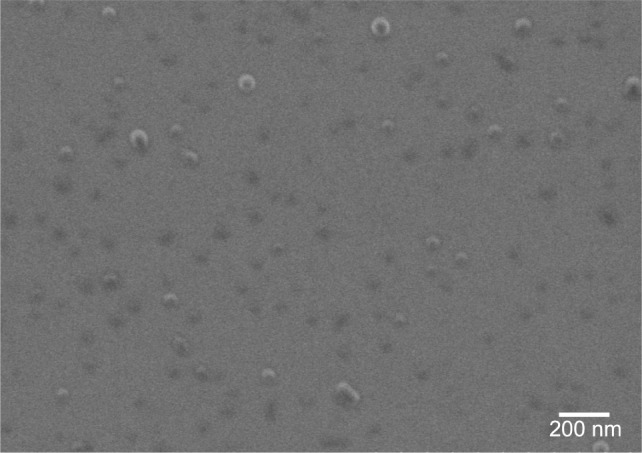
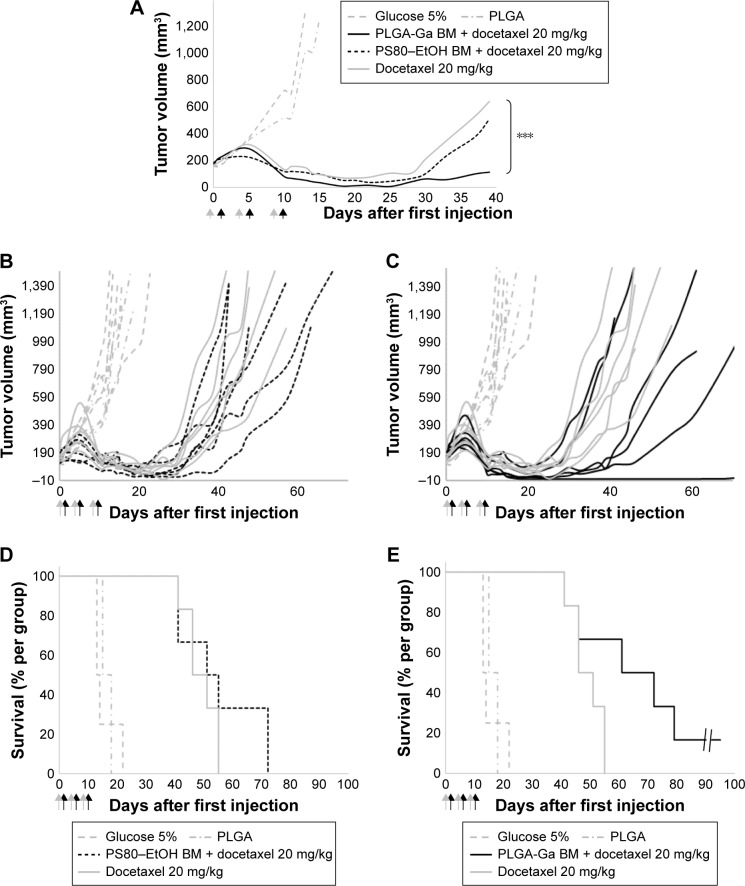
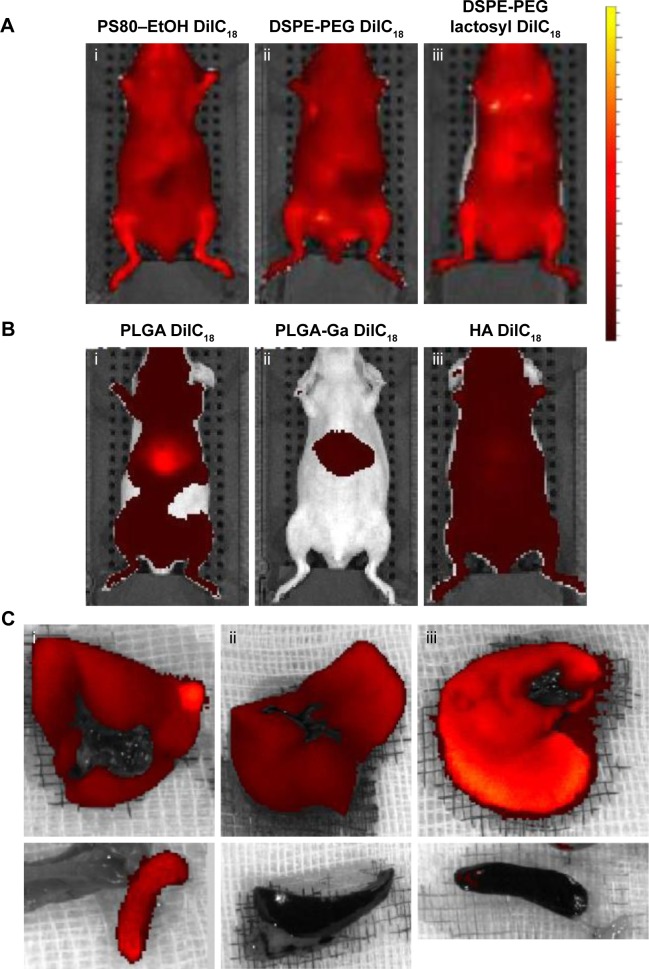
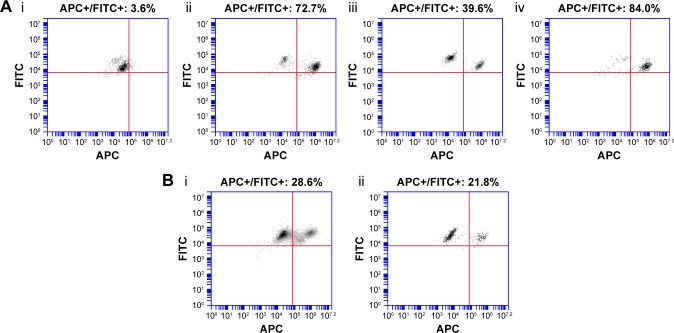
Most drugs are metabolized by hepatic cytochrome P450 3A4 (CYP3A4), resulting in their reduced bioavailability. In this study, we present the design and evaluation of bio-compatible nanocarriers trapping a natural CYP3A4-inhibiting compound. Our aim in using nanocarriers was to target the natural CYP3A4-inhibiting agent to hepatic CYP3A4 and leave drug-metabolizing enzymes in other organs undisturbed. In the design of such nanocarriers, we took advantage of the nonspecific accumulation of small nanoparticles in the liver. Specific targeting functionalization was added to direct nanocarriers toward hepatocytes. Nanocarriers were evaluated in vitro for their CYP3A4 inhibition capacity and in vivo for their biodistribution, and finally injected 24 hours prior to the drug docetaxel, for their ability to improve the efficiency of the drug docetaxel. Nanoparticles of poly(lactic--glycolic) acid (PLGA) with a hydrodynamic diameter of 63 nm, functionalized with galactosamine, showed efficient in vitro CYP3A4 inhibition and the highest accumulation in hepatocytes. When compared to docetaxel alone, in nude mice bearing the human breast cancer, MDA-MB-231 model, they significantly improved the delay in tumor growth (treated group versus docetaxel alone, percent treated versus control ratio [%T/C] of 32%) and demonstrated a major improvement in overall survival (survival rate of 67% versus 0% at day 55).
大多数药物由肝细胞色素P450 3A4(CYP3A4)代谢,导致其生物利用度降低。在本研究中,我们展示了捕获天然CYP3A4抑制化合物的生物相容性纳米载体的设计与评估。我们使用纳米载体的目的是将天然CYP3A4抑制剂靶向肝脏中的CYP3A4,而不干扰其他器官中的药物代谢酶。在设计此类纳米载体时,我们利用了小纳米颗粒在肝脏中的非特异性积累。添加了特异性靶向功能化基团,以引导纳米载体靶向肝细胞。对纳米载体进行了体外CYP3A4抑制能力评估、体内生物分布评估,最后在注射多西他赛药物前24小时注射纳米载体,以评估其提高多西他赛药物疗效的能力。水动力直径为63 nm、用半乳糖胺功能化的聚乳酸-乙醇酸共聚物(PLGA)纳米颗粒在体外显示出高效的CYP3A4抑制能力,并且在肝细胞中的积累量最高。在携带人乳腺癌MDA-MB-231模型的裸鼠中,与单独使用多西他赛相比,它们显著延长了肿瘤生长延迟时间(治疗组与单独使用多西他赛组相比,治疗组与对照组的比例[%T/C]为32%),并在总体生存率方面有了显著提高(第55天时生存率为67%,而单独使用多西他赛组为0%)。