Nogueira Karoline M V, de Paula Renato Graciano, Antoniêto Amanda Cristina Campos, Dos Reis Thaila F, Carraro Cláudia Batista, Silva Alinne Costa, Almeida Fausto, Rechia Carem Gledes Vargas, Goldman Gustavo H, Silva Roberto N
1Department of Biochemistry and Immunology, Ribeirão Preto Medical School, University of São Paulo, Ribeirão Preto, SP Brazil.
2Department of Pharmaceutical Sciences, Faculty of Pharmaceutical Sciences of Ribeirão Preto, University of São Paulo, Ribeirão Preto, SP Brazil.
Biotechnol Biofuels. 2018 Apr 2;11:84. doi: 10.1186/s13068-018-1084-1. eCollection 2018.
is a saprophytic fungus implicated in the degradation of polysaccharides present in the cell wall of plants. has been recognized as the most important industrial fungus that secretes and produces cellulase enzymes that are employed in the production of second generation bioethanol. A few of the molecular mechanisms involved in the process of biomass deconstruction by ; in particular, the effect of sugar transporters and induction of xylanases and cellulases expression are yet to be known.
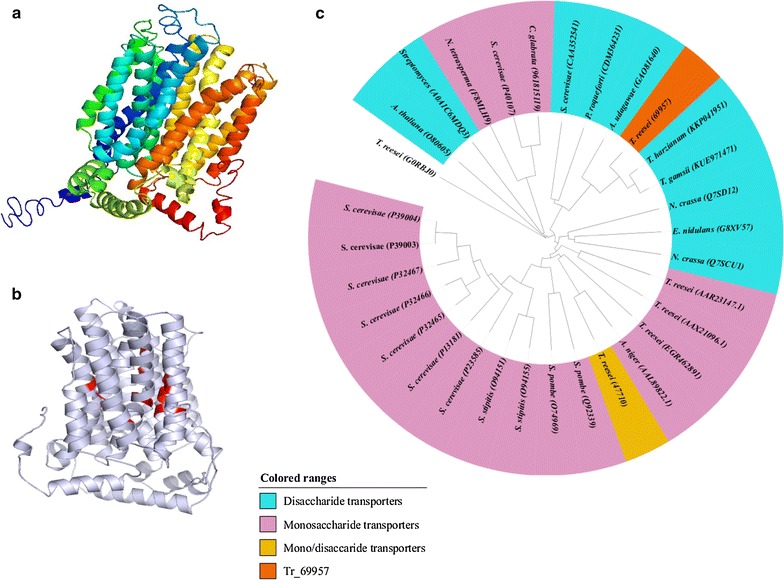
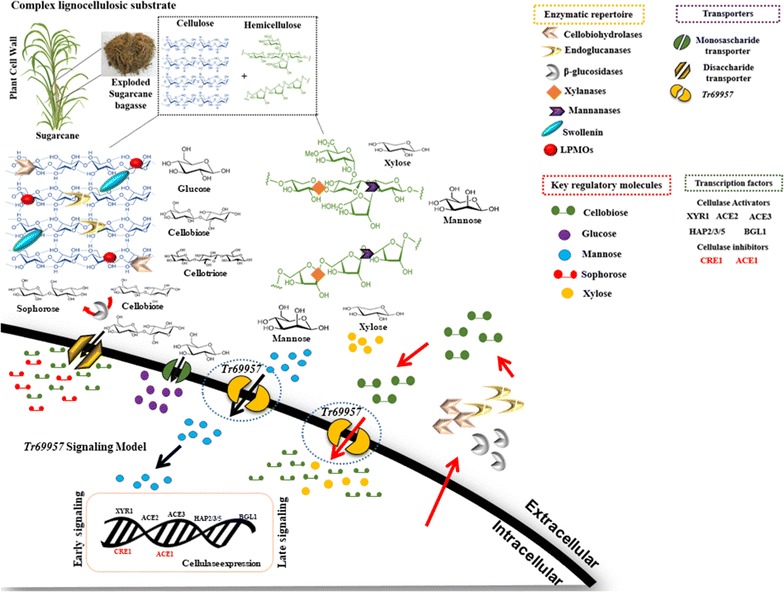
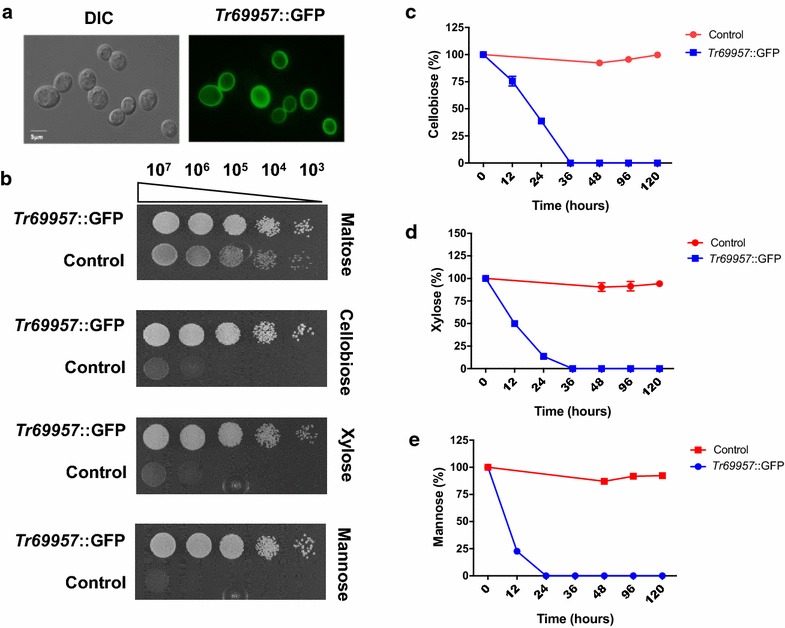
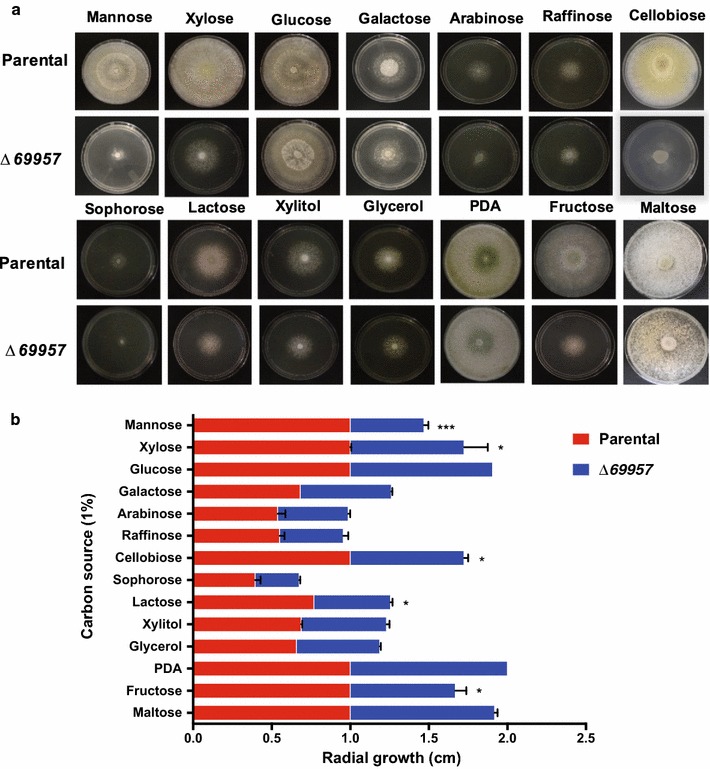
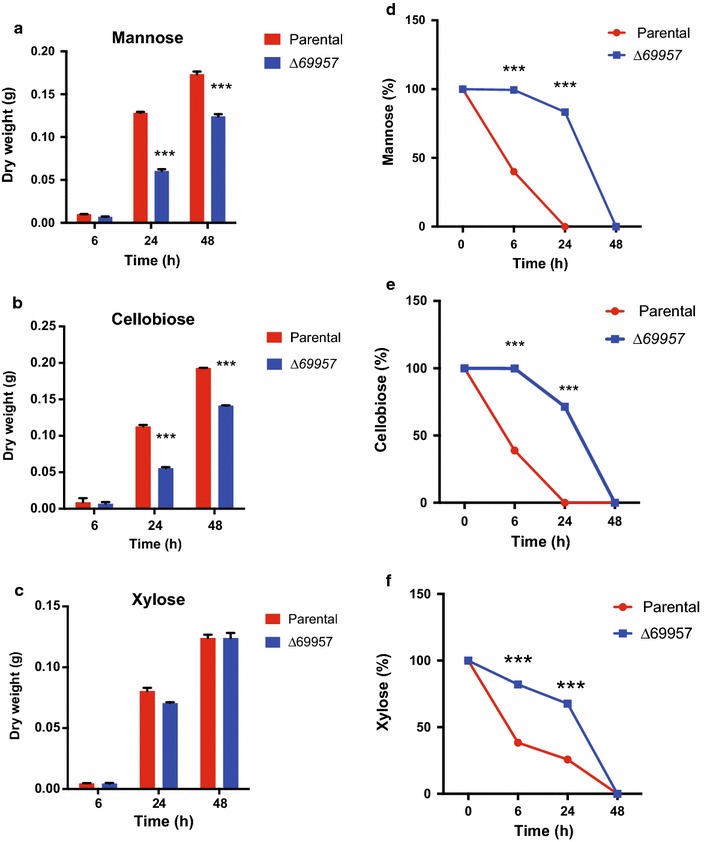
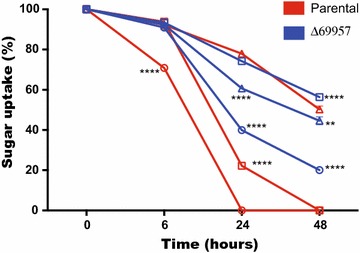
In our study, we characterized a novel sugar transporter, which was previously identified by our group through in silico analysis of RNA-seq data. The novel 69957-sugar transport system () is capable of transporting xylose, mannose, and cellobiose using a 69957-sugar transport system in . The deletion of in affected the fungal growth and biomass accumulation, and the sugar uptake in the presence of mannose, cellobiose, and xylose. Molecular docking studies revealed that shows reduced protein-ligand binding energy for interactions towards disaccharides in comparison with monosaccharides. Furthermore, the deletion of affected the gene expression of cellobiohydrolases ( and ), β-glucosidases ( and ), and xylanases ( and ) in the cultures of parental and mutant strains in the presence of cellobiose and sugarcane bagasse (SCB).
The transporter of can transport cellobiose, xylose, and mannose, and can affect the expression of a few genes encoding enzymes, such as cellulases and xylanases, in the presence of SCB. We showed for the first time that a filamentous fungus () contains a potential mannose transporter that may be involved in the degradation of cellulose.
是一种腐生真菌,与植物细胞壁中多糖的降解有关。已被公认为是分泌和产生纤维素酶的最重要工业真菌,这些纤维素酶用于生产第二代生物乙醇。参与生物质解构过程的一些分子机制,特别是糖转运蛋白的作用以及木聚糖酶和纤维素酶表达的诱导作用尚不清楚。
在我们的研究中,我们鉴定了一种新型糖转运蛋白,该蛋白先前由我们的团队通过对RNA测序数据的计算机分析确定。新型69957-糖转运系统()能够在中使用69957-糖转运系统转运木糖、甘露糖和纤维二糖。中该基因的缺失影响了真菌的生长和生物量积累,以及在甘露糖、纤维二糖和木糖存在下的糖摄取。分子对接研究表明,与单糖相比,在与二糖相互作用时显示出降低的蛋白质-配体结合能。此外,在纤维二糖和甘蔗渣(SCB)存在的情况下,该基因的缺失影响了亲本菌株和突变菌株培养物中纤维二糖水解酶(和)、β-葡萄糖苷酶(和)以及木聚糖酶(和)的基因表达。
的转运蛋白能够转运纤维二糖、木糖和甘露糖,并且在SCB存在的情况下会影响一些编码酶(如纤维素酶和木聚糖酶)的基因表达。我们首次表明丝状真菌()含有一种潜在的甘露糖转运蛋白,可能参与纤维素的降解。