Jiang Li, Zhang Bodong, Médard Guillaume, Seitsonen Ari Paavo, Haag Felix, Allegretti Francesco, Reichert Joachim, Kuster Bernhard, Barth Johannes V, Papageorgiou Anthoula C
Chair of Molecular Nanoscience and Chemical Physics of Interfaces (E20) , Department of Physics , Technical University of Munich , D-85748 Garching , Germany . Email:
Chair of Proteomics and Bioanalytics , Technical University of Munich , Emil-Erlenmeyer-Forum 5 , D-85354 Freising , Germany.
Chem Sci. 2017 Dec 1;8(12):8301-8308. doi: 10.1039/c7sc03777e. Epub 2017 Sep 28.
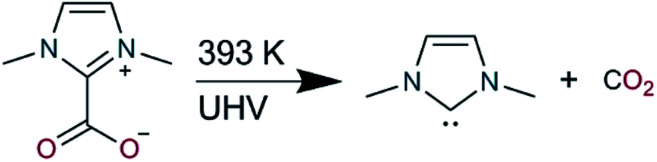
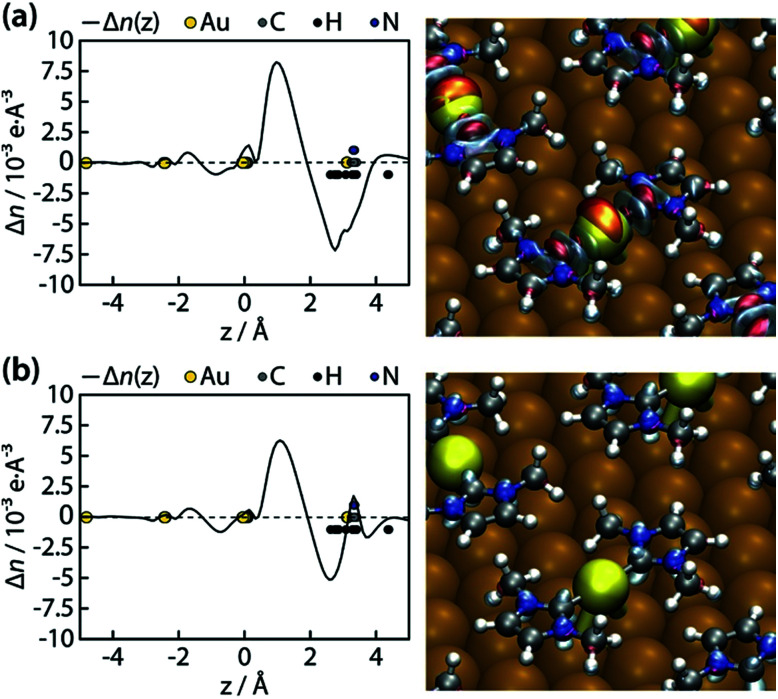
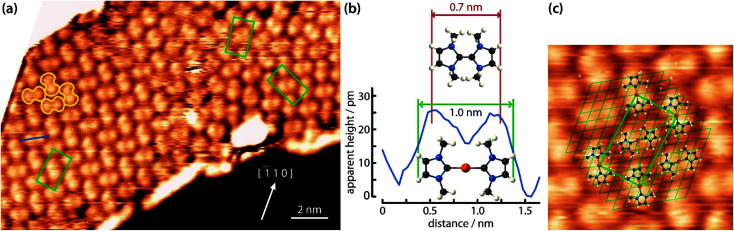
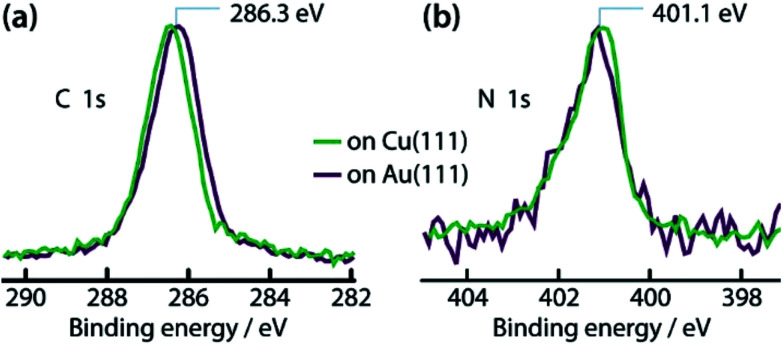
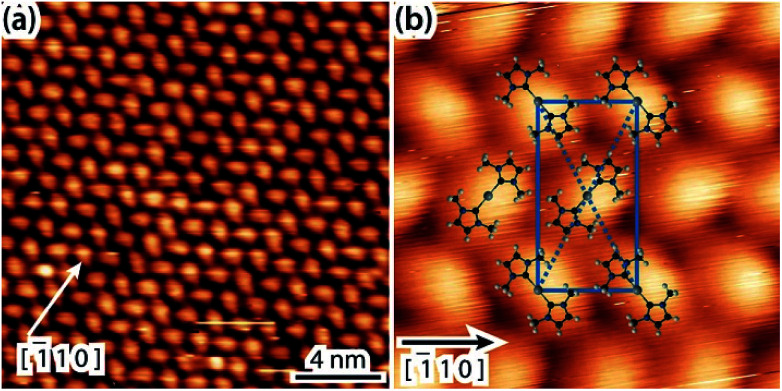
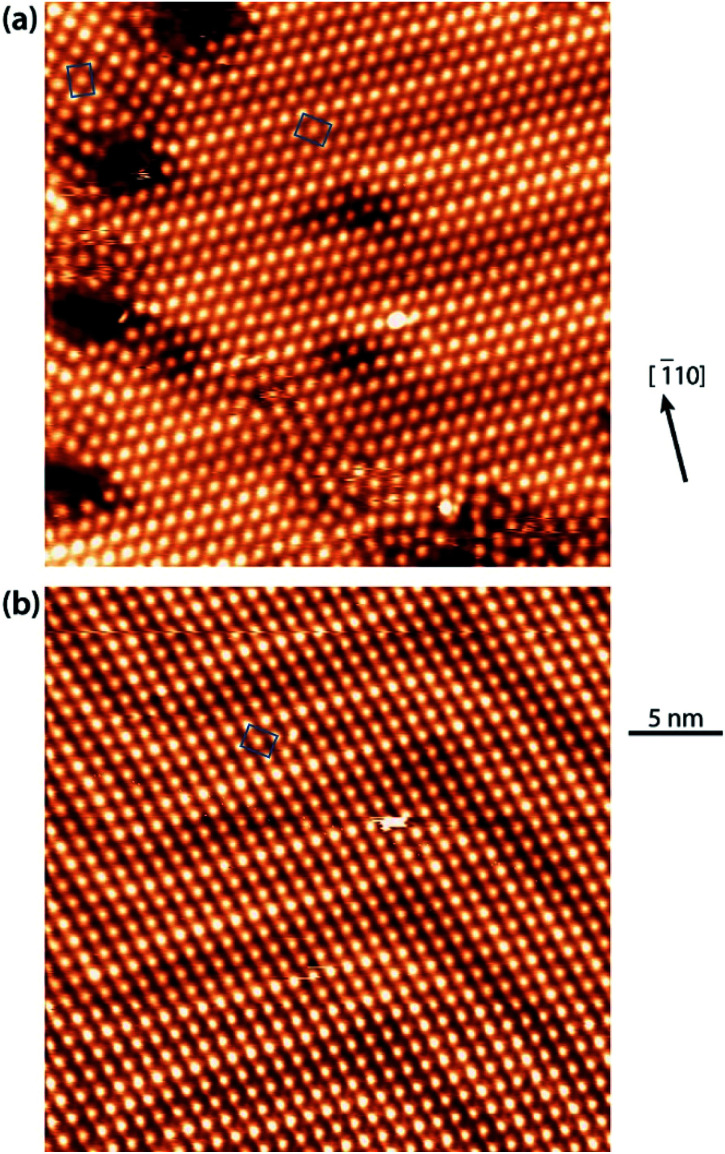
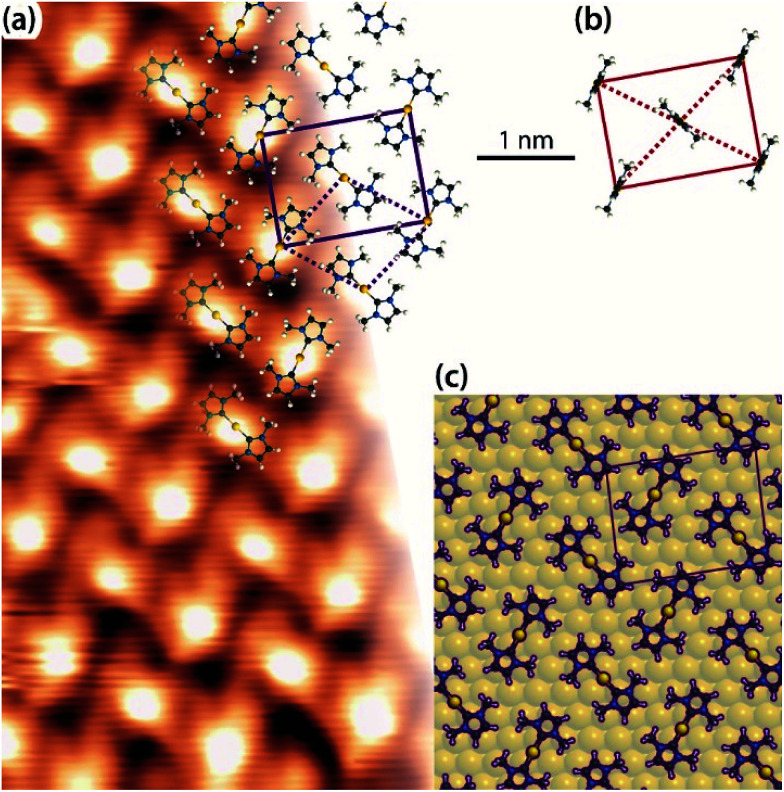
By means of scanning tunnelling microscopy (STM), complementary density functional theory (DFT) and X-ray photoelectron spectroscopy (XPS) we investigate the binding and self-assembly of a saturated molecular layer of model -heterocyclic carbene (NHC) on Cu(111), Ag(111) and Au(111) surfaces under ultra-high vacuum (UHV) conditions. XPS reveals that at room temperature, coverages up to a monolayer exist, with the molecules engaged in metal carbene bonds. On all three surfaces, we resolve similar arrangements, which can be interpreted only in terms of mononuclear M(NHC) (M = Cu, Ag, Au) complexes, reminiscent of the paired bonding of thiols to surface gold adatoms. Theoretical investigations for the case of Au unravel the charge distribution of a Au(111) surface covered by Au(NHC) and reveal that this is the energetically preferential adsorption configuration.
借助扫描隧道显微镜(STM)、互补密度泛函理论(DFT)和X射线光电子能谱(XPS),我们研究了在超高真空(UHV)条件下,模型杂环卡宾(NHC)的饱和分子层在Cu(111)、Ag(111)和Au(111)表面上的键合和自组装情况。XPS显示,在室温下,存在高达单层的覆盖度,分子形成金属卡宾键。在所有这三个表面上,我们解析出了相似的排列方式,这只能解释为单核M(NHC)(M = Cu、Ag、Au)配合物,这让人联想到硫醇与表面金吸附原子的成对键合。针对金的情况进行的理论研究揭示了被Au(NHC)覆盖的Au(111)表面的电荷分布,并表明这是能量上优先的吸附构型。