Neuroscience and Aphasia Research Unit, Division of Neuroscience & Experimental Psychology, Manchester Academic Health Science Centre, University of Manchester, United Kingdom; King Fahad Medical City, Riyadh, Saudi Arabia.
Neuroscience and Aphasia Research Unit, Division of Neuroscience & Experimental Psychology, Manchester Academic Health Science Centre, University of Manchester, United Kingdom.
Neuroimage Clin. 2017 Dec 6;17:811-825. doi: 10.1016/j.nicl.2017.12.009. eCollection 2018.
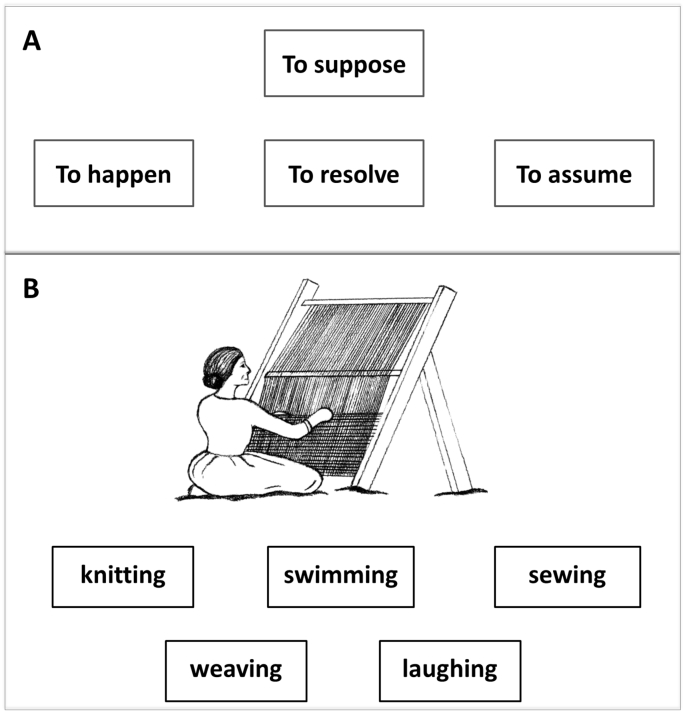
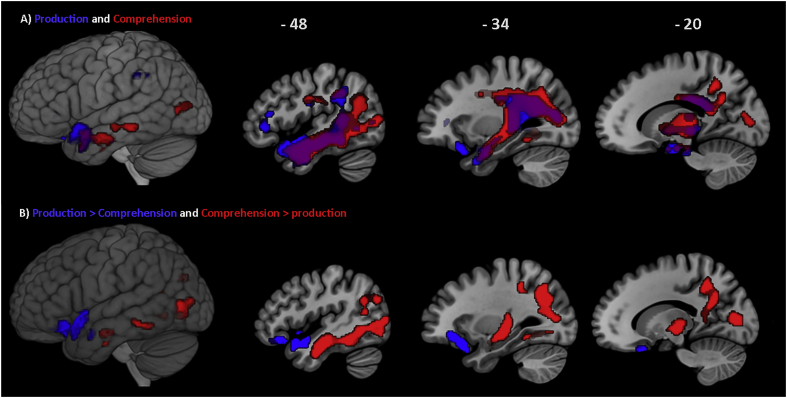
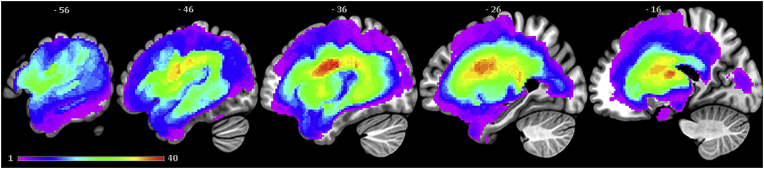
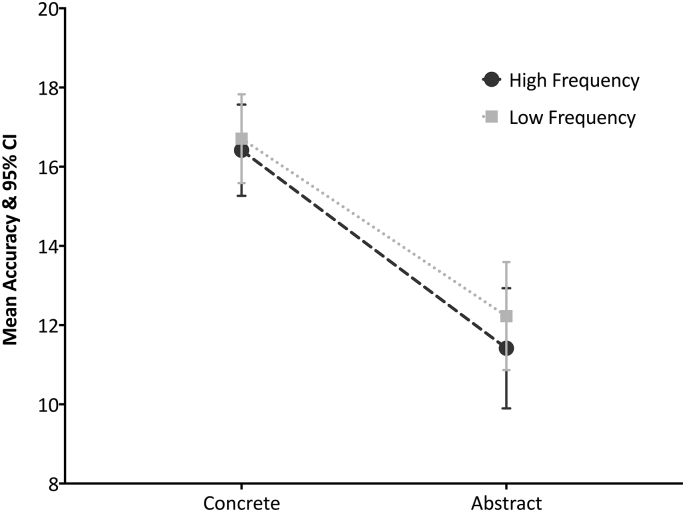
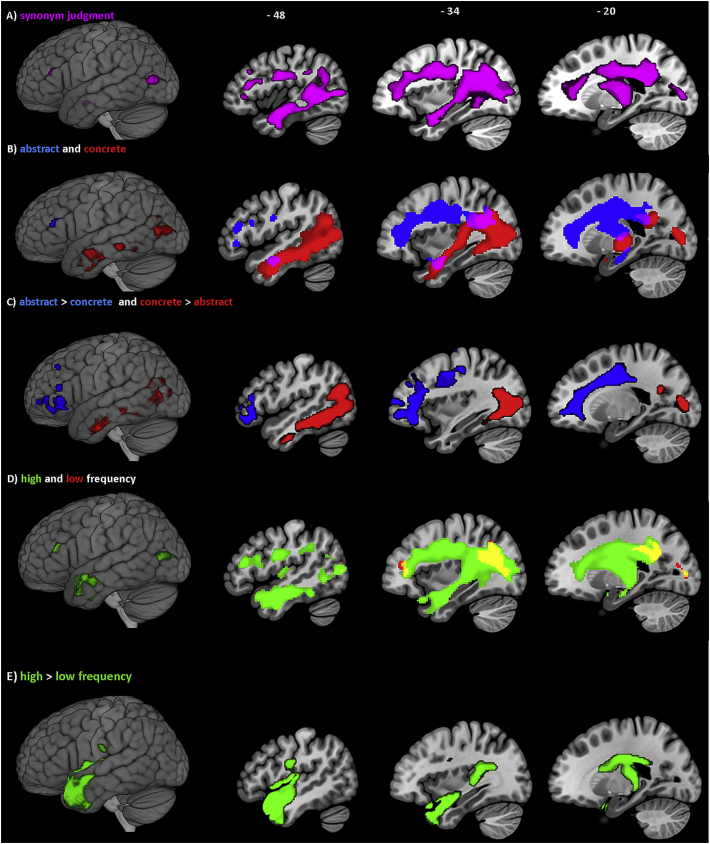
Typically, processing is more accurate and efficient for concrete than abstract concepts in both healthy adults and individuals with aphasia. While, concreteness effects have been thoroughly documented with respect to noun processing, other words classes have received little attention despite tending to be less concrete than nouns. The aim of the current study was to explore concrete-abstract differences in verbs and identify their neural correlates in post-stroke aphasia. Given the dearth of comprehension tests for verbs, a battery of neuropsychological tests was developed in this study to assess the comprehension of concrete and abstract verbs. Specifically, a sensitive verb synonym judgment test was generated that varied both the items' imageability and frequency, and a picture-to-word matching test with numerous concrete verbs. Normative data were then collected and the tests were administered to a cohort of 48 individuals with chronic post-stroke aphasia to explore the behavioural patterns and neural correlates of verb processing. The results revealed significantly better comprehension of concrete than abstract verbs, aligning with the existing aphasiological literature on noun processing. In addition, the patients performed better during verb comprehension than verb production. Lesion-symptom correlational analyses revealed common areas that support processing of concrete and abstract verbs, including the left anterior temporal lobe, posterior supramarginal gyrus and superior lateral occipital cortex. A direct contrast between them revealed additional regions with graded differences. Specifically, the left frontal regions were associated with processing abstract verbs; whereas, the left posterior temporal and occipital regions were associated with processing concrete verbs. Moreover, overlapping and distinct neural correlates were identified in association with the comprehension and production of concrete verbs. These patient findings align with data from functional neuroimaging and neuro-stimulation, and existing models of language organisation.
通常情况下,无论是在健康成年人还是失语症患者中,处理具体概念比处理抽象概念更为准确和高效。虽然名词加工的具象性效应已经得到了充分的证明,但其他词类的具象性效应却很少受到关注,尽管它们比名词的具象性要低。本研究旨在探索动词的具象-抽象差异,并确定其在卒中后失语症中的神经相关性。鉴于缺乏动词理解测试,本研究开发了一套神经心理学测试来评估具体和抽象动词的理解。具体来说,生成了一种敏感的动词同义词判断测试,该测试同时改变了项目的可想象性和频率,以及一种具有大量具体动词的图片到单词匹配测试。然后收集了规范数据,并对 48 名患有慢性卒中后失语症的患者进行了测试,以探索动词加工的行为模式和神经相关性。结果表明,患者对具体动词的理解明显好于抽象动词,这与现有的名词处理失语症文献一致。此外,患者在动词理解方面的表现优于动词产生。病变-症状相关性分析显示,支持具体和抽象动词处理的共同区域,包括左前颞叶、后上缘上回和上外侧枕叶。对它们的直接对比显示了具有分级差异的额外区域。具体来说,左侧额叶区域与处理抽象动词有关;而左侧颞叶和枕叶区域与处理具体动词有关。此外,还确定了与具体动词理解和产生相关的重叠和独特的神经相关性。这些患者的发现与功能神经影像学和神经刺激以及现有的语言组织模型的数据一致。