Department of Gastroenterology, Renmin Hospital of Wuhan University, Wuhan, Hubei 430060, P.R. China.
Hepatic Disease Institute, Hubei Provincial Hospital of Traditional Chinese Medicine, Wuhan, Hubei 430061, P.R. China.
Int J Oncol. 2018 Jul;53(1):59-72. doi: 10.3892/ijo.2018.4333. Epub 2018 Mar 27.
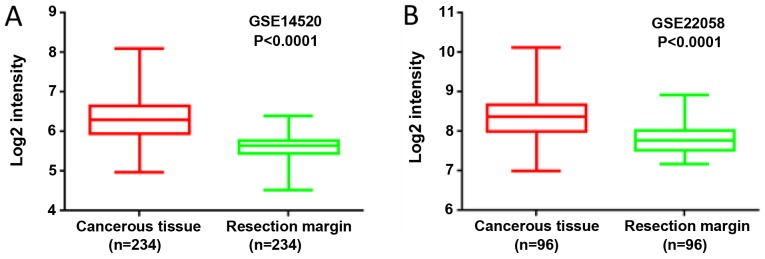
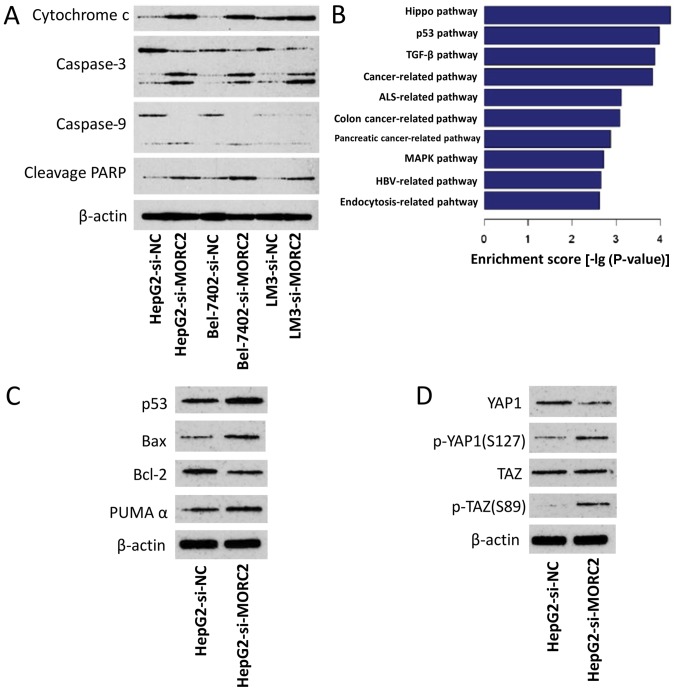
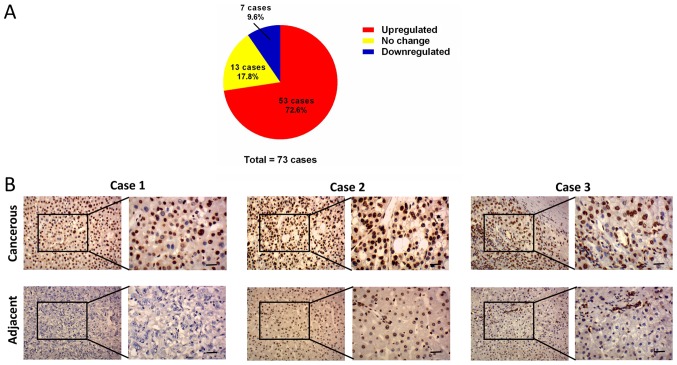
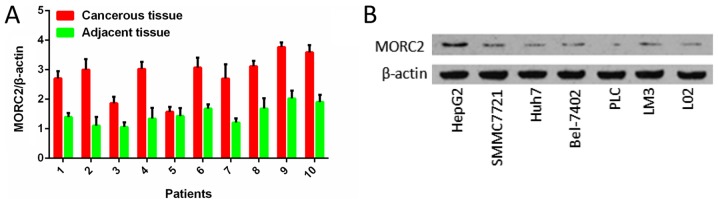
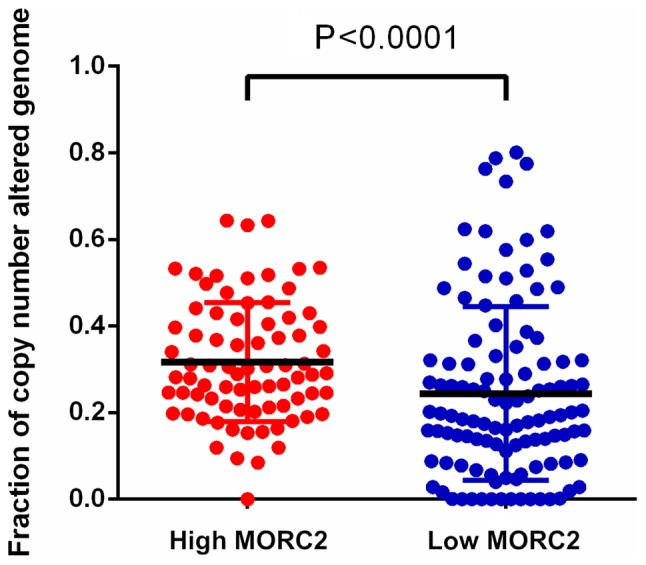
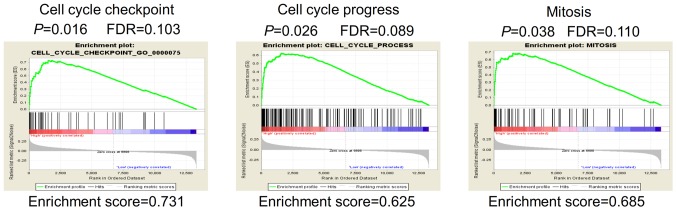
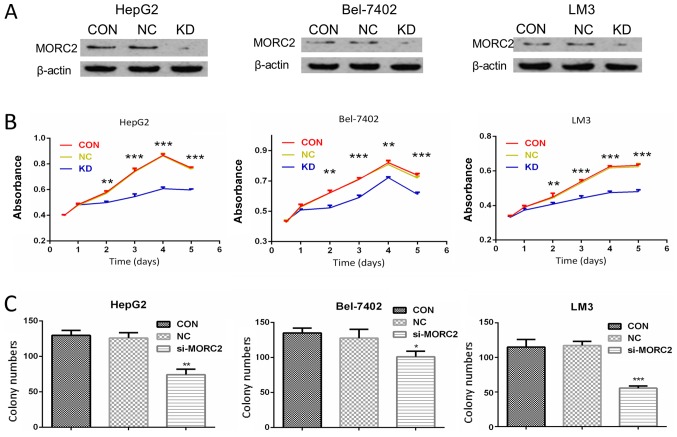
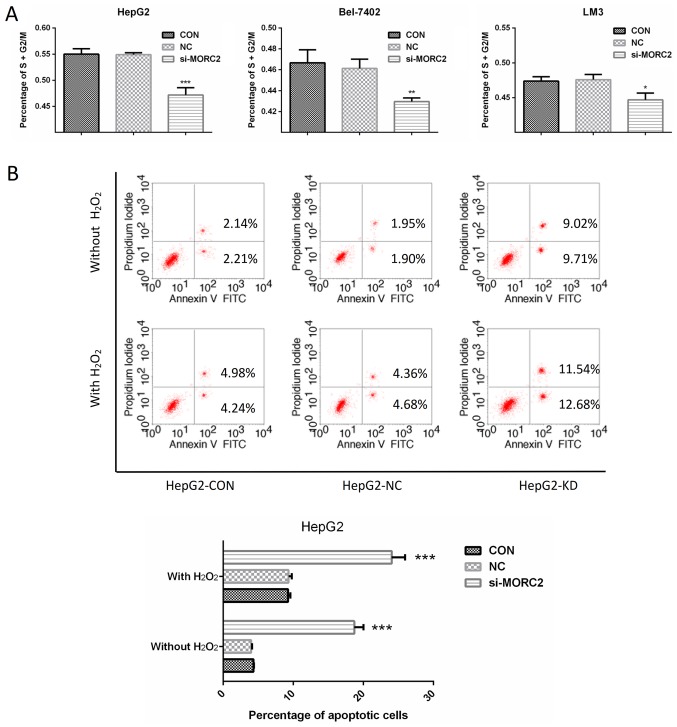
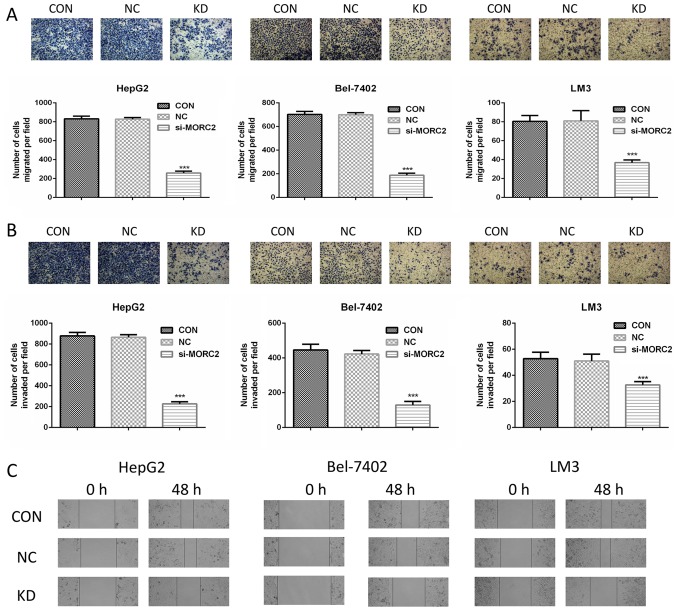
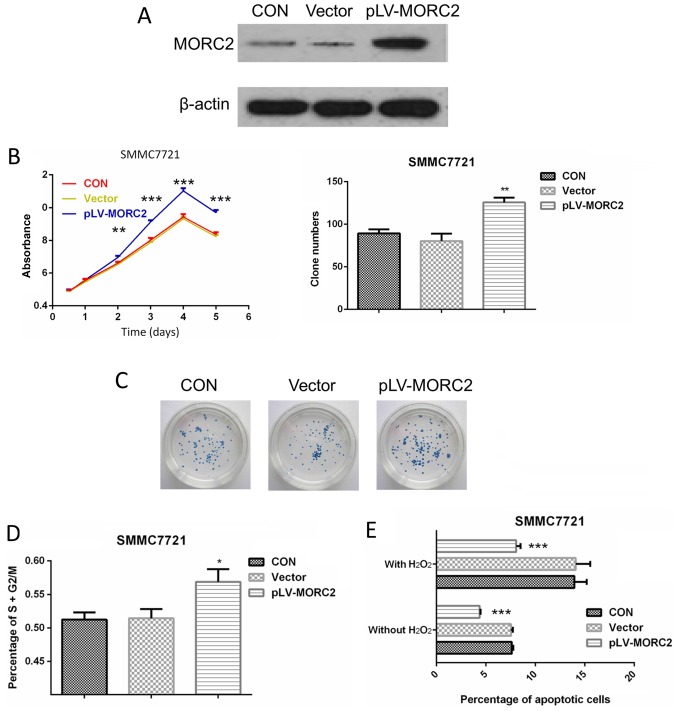
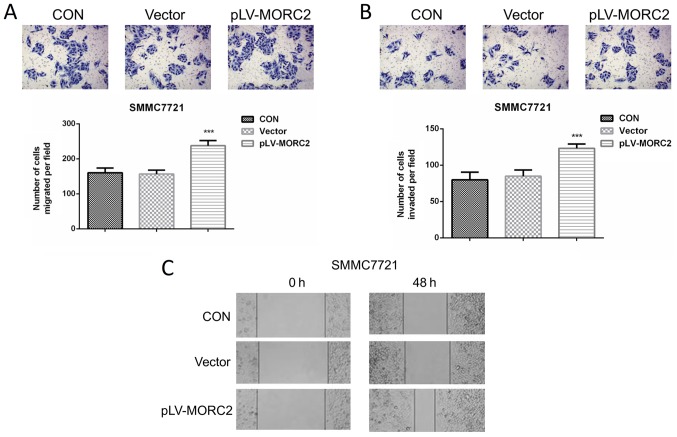
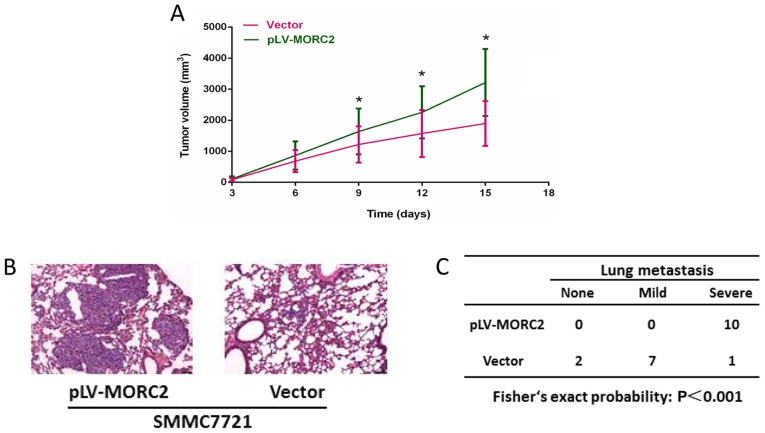
Microrchidia 2 (MORC2) is important in DNA damage repair and lipogenesis, however, the clinical and functional role of MORC2 in liver cancer remains to be fully elucidated. The aim the present study was to clarify the role of MORC2 in liver cancer. Expression profile analysis, immunohistochemical staining, reverse transcription-quantitative polymerase chain reaction analysis and western blot analysis were performed to evaluate the levels of MORC2 in liver cancer patient specimens and cell lines; subsequently the expression of MORC2 was suppressed or increased in liver cancer cells and the effects of MORC2 on the cancerous transformation of liver cancer cells were examined in vitro and in vivo. MORC2 was upregulated in liver cancer tissues, and the upregulation was associated with certain clinicopathologic features of patients with liver cancer. MORC2 knockdown caused marked inhibition of liver cancer cell proliferation and clonogenicity, whereas the overexpression of MORC2 substantially promoted liver cancer cell proliferation. In addition, the knockdown of MORC2 inhibited the migratory and invasive ability of liver cancer cells, whereas increased migration and invasion rates were observed in cells with ectopic expression of MORC2. In a model of nude mice, the overexpression of MORC2 promoted tumorigenicity and markedly enhanced pulmonary metastasis of liver cancer. Furthermore, MORC2 regulated apoptosis and its expression level had an effect on the sensitivity of liver cancer cells to doxorubicin, 5-fluorouracil and cisplatin. Mechanically, MORC2 modulated the mitochondrial apoptotic pathway, possibly in a p53-dependent manner, and its dysregulation also resulted in the abnormal activation of the Hippo pathway. For the first time, to the best of our knowledge, the present study confirmed that MORC2 was a novel oncogene in liver cancer. These results provide useful insight into the mechanism underlying the tumorigenesis and progression of liver cancer, and offers clues into potential novel liver cancer therapies.
微体相关蛋白 2(MORC2)在 DNA 损伤修复和脂肪生成中发挥重要作用,然而,MORC2 在肝癌中的临床和功能作用仍有待充分阐明。本研究旨在阐明 MORC2 在肝癌中的作用。通过表达谱分析、免疫组织化学染色、逆转录定量聚合酶链反应分析和蛋白质印迹分析来评估肝癌患者标本和细胞系中 MORC2 的水平;随后在肝癌细胞中抑制或增加 MORC2 的表达,并在体外和体内研究 MORC2 对肝癌细胞癌变的影响。MORC2 在肝癌组织中上调,上调与肝癌患者的某些临床病理特征相关。MORC2 敲低显著抑制肝癌细胞的增殖和克隆形成能力,而 MORC2 的过表达则显著促进肝癌细胞的增殖。此外,MORC2 敲低抑制肝癌细胞的迁移和侵袭能力,而在过表达 MORC2 的细胞中观察到迁移和侵袭率增加。在裸鼠模型中,MORC2 的过表达促进了肿瘤发生,并显著增强了肝癌的肺转移。此外,MORC2 调节细胞凋亡,其表达水平影响肝癌细胞对阿霉素、5-氟尿嘧啶和顺铂的敏感性。在机制上,MORC2 调节线粒体凋亡途径,可能依赖于 p53,其失调也导致 Hippo 途径的异常激活。据我们所知,这是首次证实 MORC2 是肝癌的一种新的癌基因。这些结果为肝癌发生和进展的机制提供了有用的见解,并为潜在的肝癌新疗法提供了线索。