Department of Biophysics, University of Michigan, Ann Arbor, United States.
Department of Chemistry, University of Michigan, Ann Arbor, United States.
Elife. 2018 Apr 5;7:e33549. doi: 10.7554/eLife.33549.
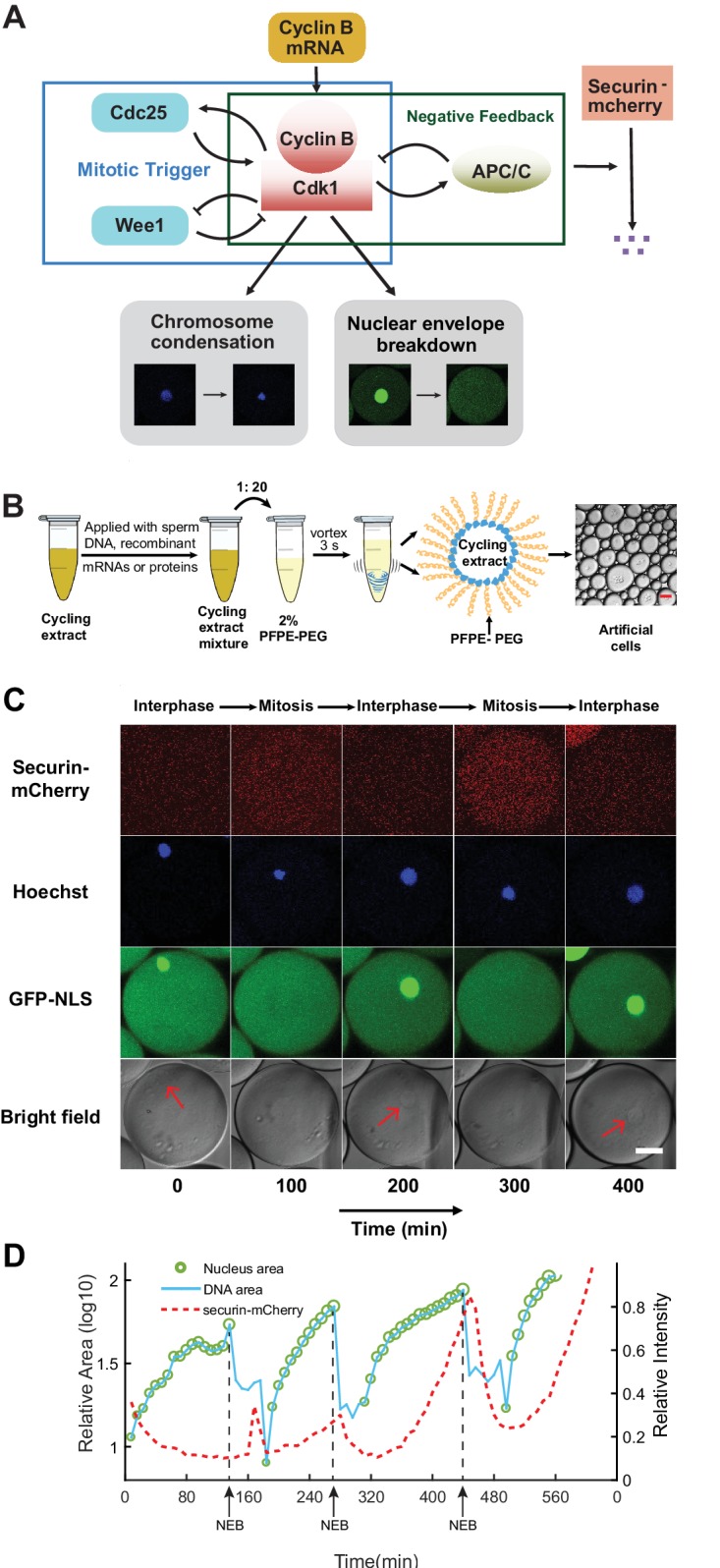
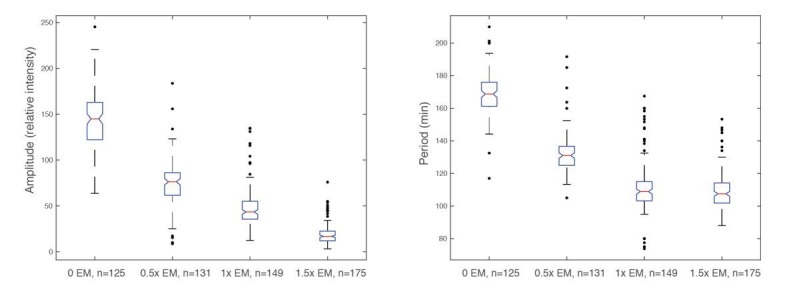
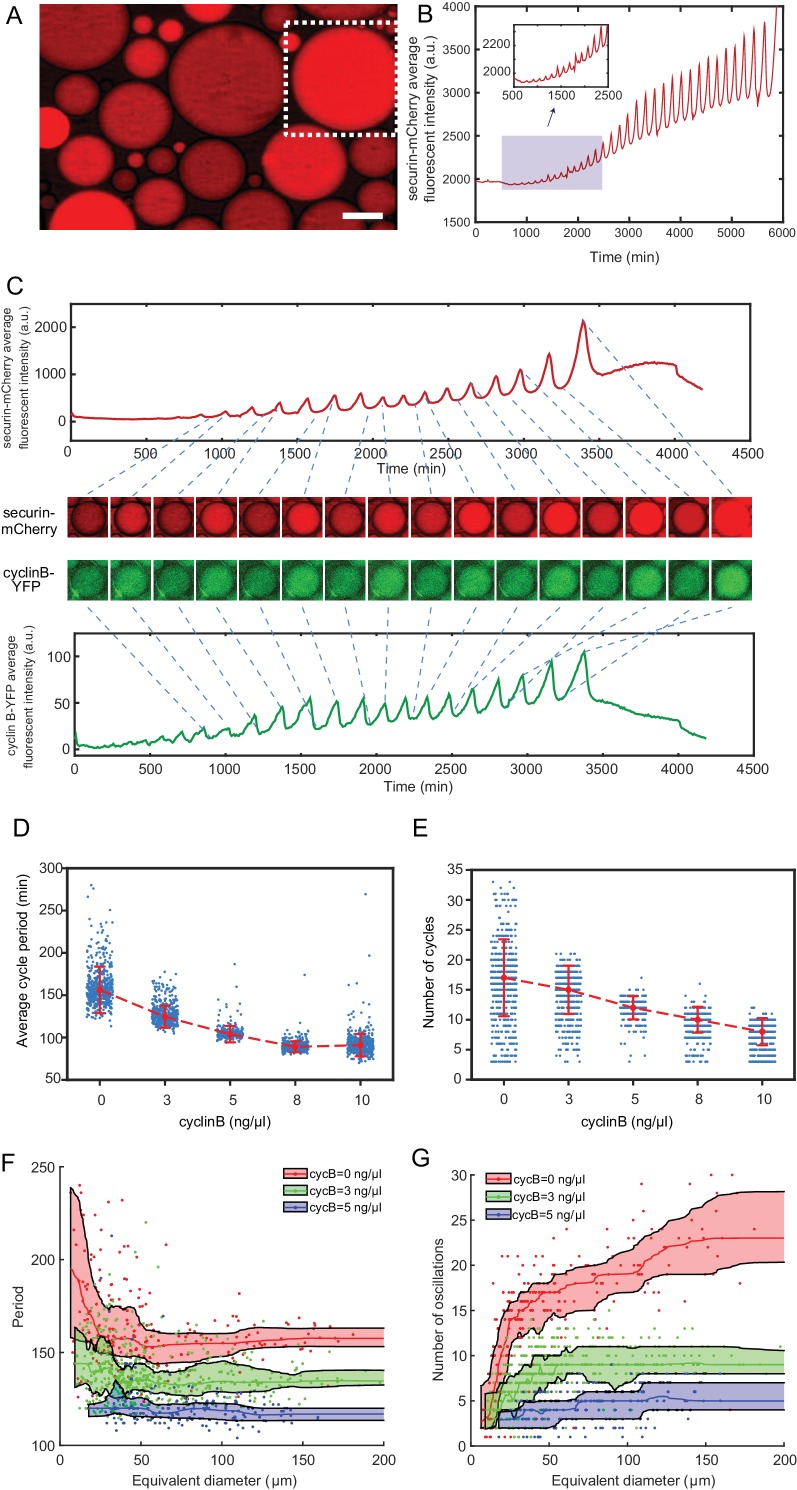
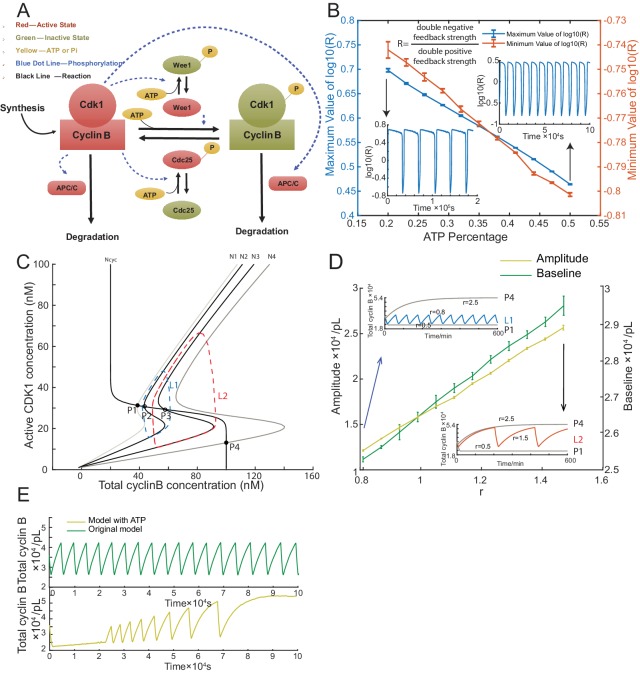
Single-cell analysis is pivotal to deciphering complex phenomena like heterogeneity, bistability, and asynchronous oscillations, where a population ensemble cannot represent individual behaviors. Bulk cell-free systems, despite having unique advantages of manipulation and characterization of biochemical networks, lack the essential single-cell information to understand a class of out-of-steady-state dynamics including cell cycles. Here, by encapsulating egg extracts in water-in-oil microemulsions, we developed artificial cells that are adjustable in sizes and periods, sustain mitotic oscillations for over 30 cycles, and function in forms from the simplest cytoplasmic-only to the more complicated ones involving nuclear dynamics, mimicking real cells. Such innate flexibility and robustness make it key to studying clock properties like tunability and stochasticity. Our results also highlight energy as an important regulator of cell cycles. We demonstrate a simple, powerful, and likely generalizable strategy of integrating strengths of single-cell approaches into conventional in vitro systems to study complex clock functions.
单细胞分析对于解析复杂现象至关重要,例如异质性、双稳定性和异步振荡,其中群体集合不能代表个体行为。尽管无细胞的批量系统具有操纵和表征生化网络的独特优势,但缺乏理解包括细胞周期在内的一类非稳态动力学的基本单细胞信息。在这里,通过将卵提取物包裹在油包水微乳液中,我们开发了可调节大小和周期的人工细胞,支持有丝分裂振荡超过 30 个周期,并以最简单的细胞质形式到更复杂的涉及核动力学的形式发挥作用,模拟真实细胞。这种固有的灵活性和鲁棒性使其成为研究时钟特性(如可调性和随机性)的关键。我们的结果还强调了能量是细胞周期的重要调节剂。我们展示了一种简单、强大且可能具有普遍适用性的策略,即将单细胞方法的优势整合到传统的体外系统中,以研究复杂的时钟功能。