Planchon Sarah M, Lingas Karen T, Reese Koç Jane, Hooper Brittney M, Maitra Basabi, Fox Robert M, Imrey Peter B, Drake Kylie M, Aldred Micheala A, Lazarus Hillard M, Cohen Jeffrey A
Mellen Center, Neurological Institute, USA.
Case Comprehensive Cancer Center and National Center for Regenerative Medicine, Case Western Reserve University and Seidman Cancer Center, USA.
Mult Scler J Exp Transl Clin. 2018 Mar 26;4(1):2055217318765288. doi: 10.1177/2055217318765288. eCollection 2018 Jan-Mar.
Multiple sclerosis is an inflammatory, neurodegenerative disease of the central nervous system for which therapeutic mesenchymal stem cell transplantation is under study. Published experience of culture-expanding multiple sclerosis patients' mesenchymal stem cells for clinical trials is limited.
To determine the feasibility of culture-expanding multiple sclerosis patients' mesenchymal stem cells for clinical use.
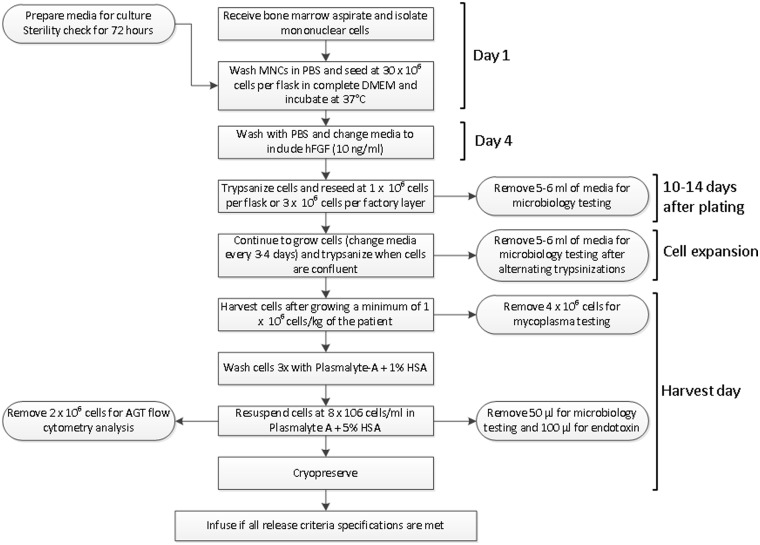
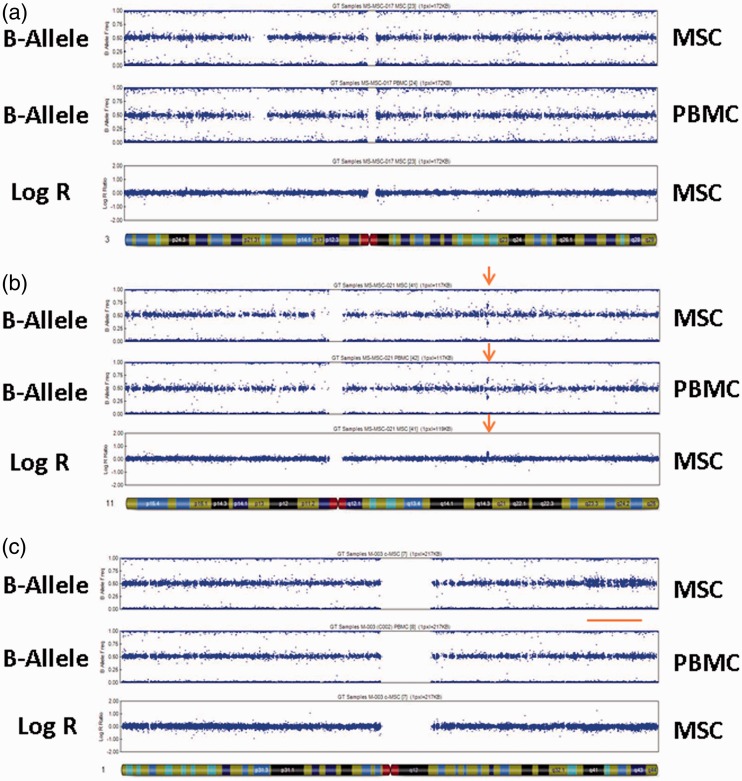
In a phase I trial, autologous, bone marrow-derived mesenchymal stem cells were isolated from 25 trial participants with multiple sclerosis and eight matched controls, and culture-expanded to a target single dose of 1-2 × 10 cells/kg. Viability, cell product identity and sterility were assessed prior to infusion. Cytogenetic stability was assessed by single nucleotide polymorphism analysis of mesenchymal stem cells from 18 multiple sclerosis patients and five controls.
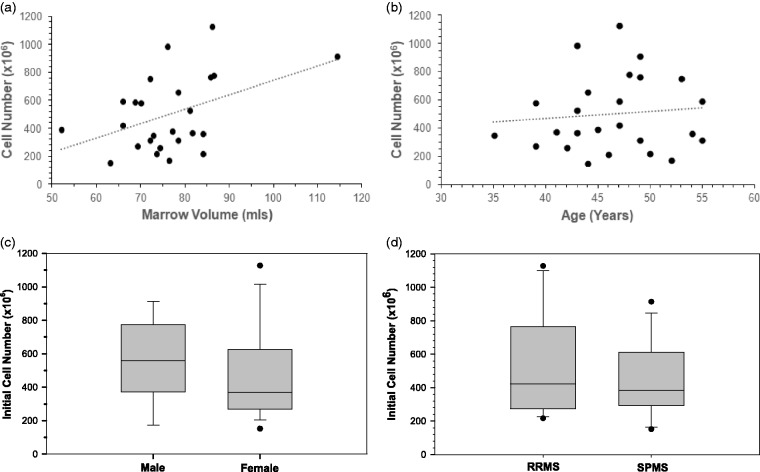
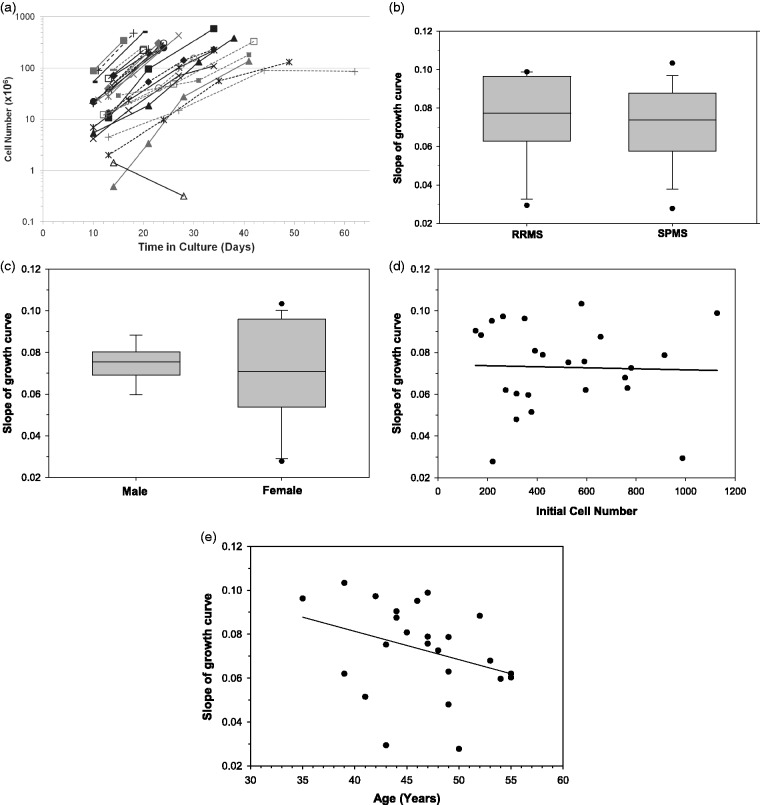
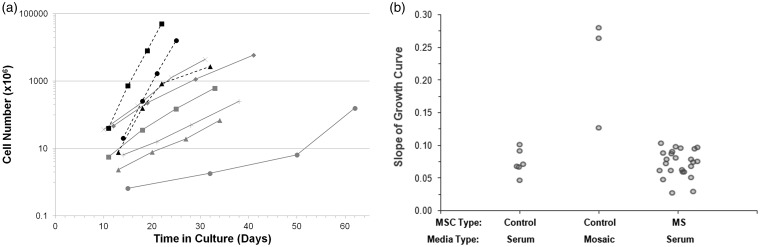
One patient failed screening. Mesenchymal stem cell culture expansion was successful for 24 of 25 multiple sclerosis patients and six of eight controls. The target dose was achieved in 16-62 days, requiring two to three cell passages. Growth rate and culture success did not correlate with demographic or multiple sclerosis disease characteristics. Cytogenetic studies identified changes on one chromosome of one control (4.3%) after extended time in culture.
Culture expansion of mesenchymal stem cells from multiple sclerosis patients as donors is feasible. However, culture time should be minimized for cell products designated for therapeutic administration.
多发性硬化症是一种中枢神经系统的炎症性神经退行性疾病,治疗性间充质干细胞移植正在研究中。已发表的关于为临床试验培养扩增多发性硬化症患者间充质干细胞的经验有限。
确定培养扩增多发性硬化症患者间充质干细胞以供临床使用的可行性。
在一项I期试验中,从25名患有多发性硬化症的试验参与者和8名匹配的对照中分离出自体骨髓来源的间充质干细胞,并培养扩增至目标单剂量1-2×10⁶细胞/千克。在输注前评估细胞活力、细胞产品特性和无菌性。通过对18名多发性硬化症患者和5名对照的间充质干细胞进行单核苷酸多态性分析来评估细胞遗传学稳定性。
一名患者筛查未通过。25名多发性硬化症患者中的24名和8名对照中的6名间充质干细胞培养扩增成功。在16-62天内达到目标剂量,需要进行两到三次细胞传代。生长速率和培养成功率与人口统计学或多发性硬化症疾病特征无关。细胞遗传学研究发现一名对照在延长培养时间后一条染色体上发生了变化(4.3%)。
以多发性硬化症患者作为供体培养扩增间充质干细胞是可行的。然而,对于指定用于治疗给药的细胞产品,应尽量缩短培养时间。