Department for virology, Scientific Veterinary Institute "Novi Sad", Novi Sad, Serbia.
Specialized Veterinary Institute "Kraljevo", Kraljevo, Serbia.
PLoS One. 2018 Apr 6;13(4):e0195439. doi: 10.1371/journal.pone.0195439. eCollection 2018.
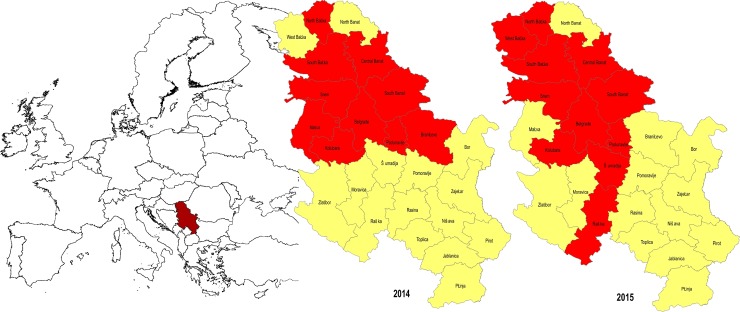
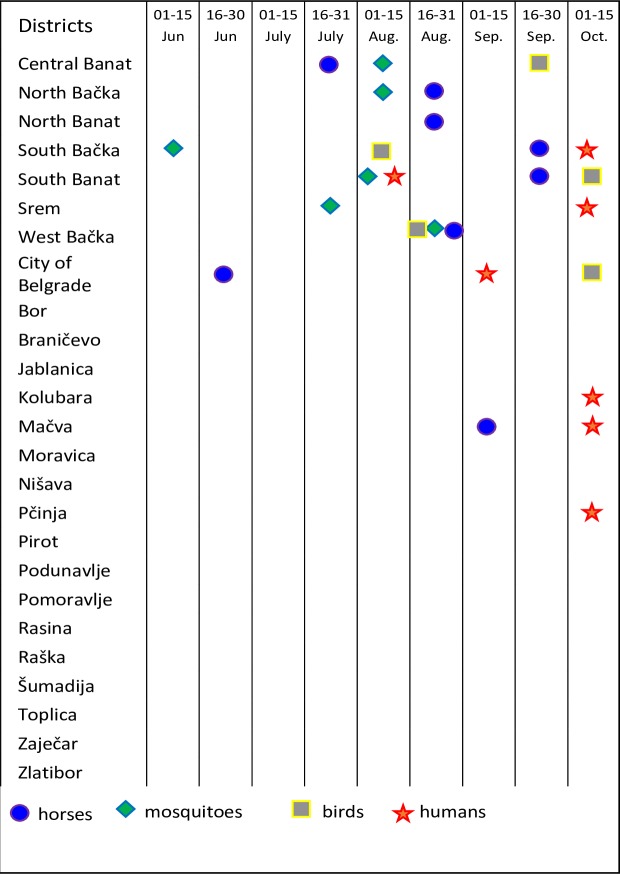
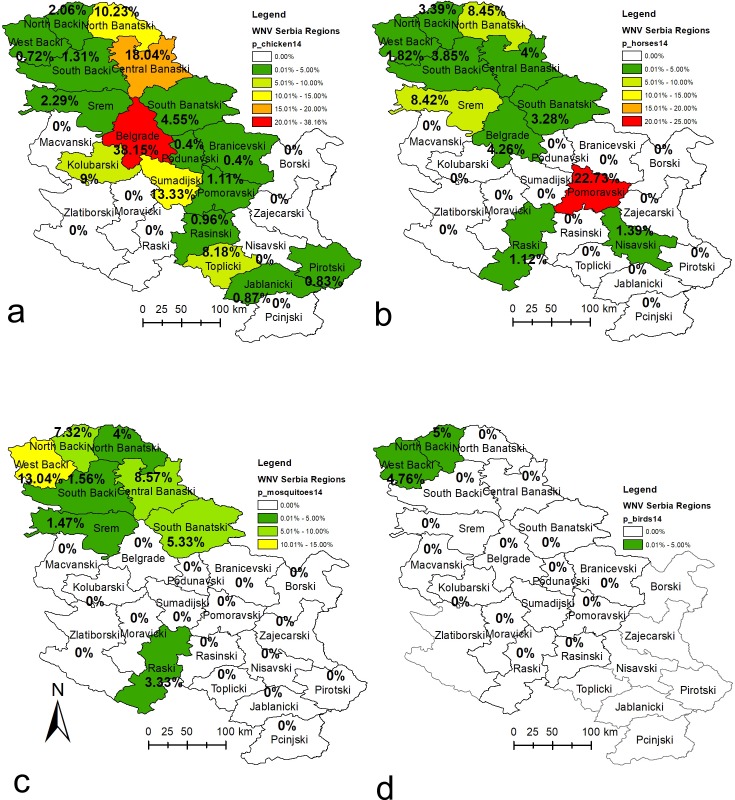
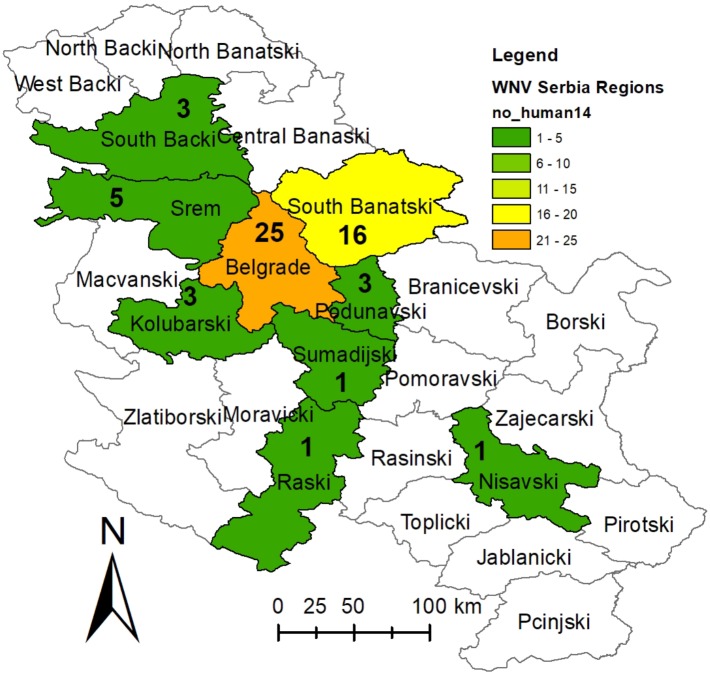
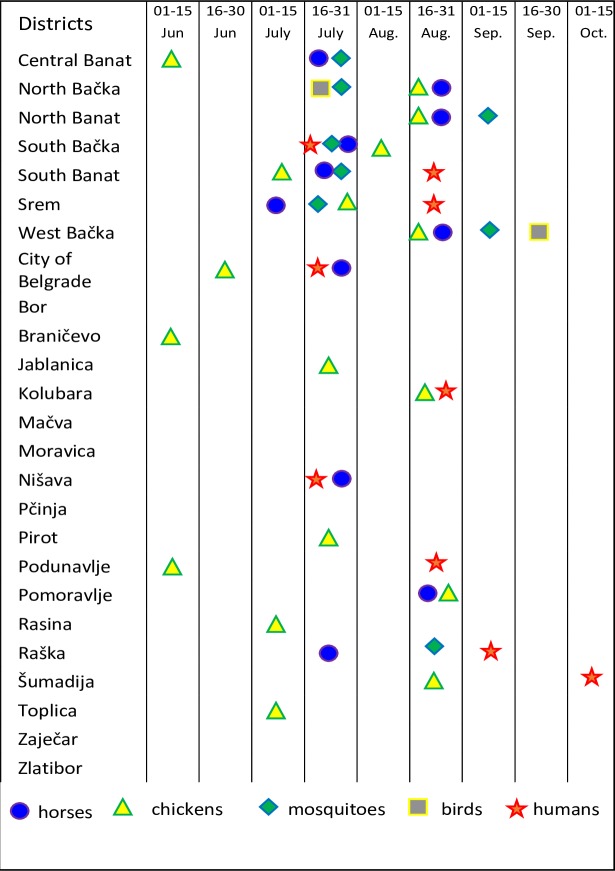
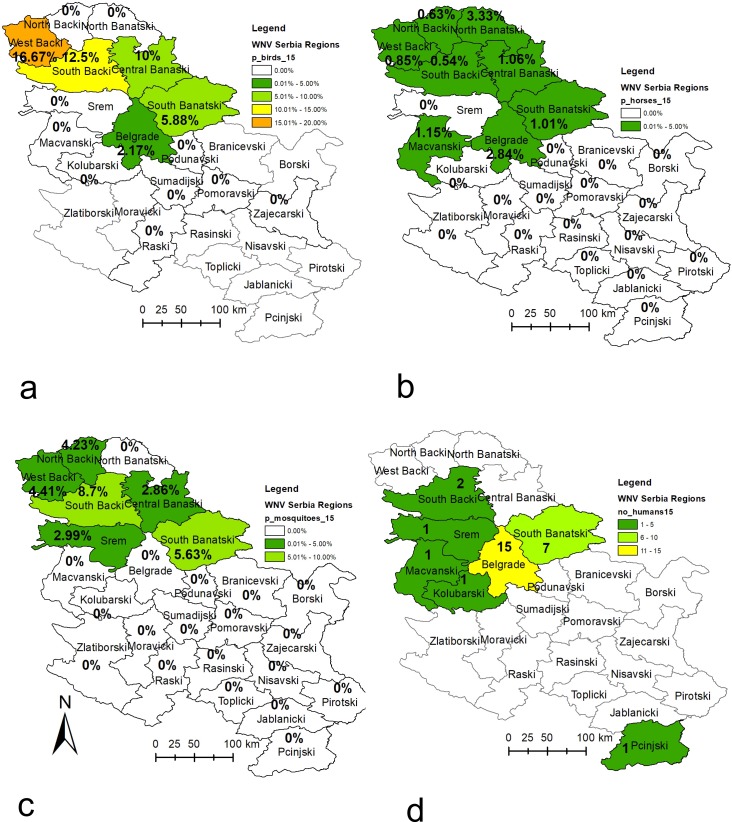
Studies conducted during the past few years have confirmed active West Nile virus (WNV) circulation in Serbia. Based on these studies and the epidemiological situation, the Veterinary Directorate of the Ministry of Agriculture and Environmental Protection launched national WNV surveillance programmes in 2014 and 2015. The programmes encompassed the territory of Serbia and were conducted by the veterinary service in collaboration with entomologists and ornithologists. The objective of the programmes was early detection of WNV and timely reporting to the public health service and local authorities to increase both clinical and mosquito control preparedness. The WNV surveillance programmes were based on direct and indirect surveillance of the presence of WNV by the serological testing of initially seronegative sentinel horses and chickens as well as through viral detection in pooled mosquito and wild bird samples. The most intense WNV circulation was observed in all seven districts of Vojvodina Province (northern Serbia) and Belgrade City, where most of the positive samples were detected among sentinel animals, mosquitoes and wild birds. The West Nile virus surveillance programmes in 2014 and 2015 showed satisfactory results in their capacity to indicate the spatial distribution of the risk for humans and their sensitivity to early detect viral circulation at the enzootic level. Most of the human cases were preceded by the detection of WNV circulation as part of the surveillance programmes. According to the existing data, it can be reasonably assumed that WNV infection, now an endemic infection in Serbia, will continue to present a significant problem for the veterinary service and public health.
过去几年的研究证实,西尼罗河病毒(WNV)在塞尔维亚活跃传播。基于这些研究和流行病学情况,农业和环境保护部兽医局于 2014 年和 2015 年启动了国家 WNV 监测计划。该计划涵盖塞尔维亚全境,由兽医服务部门与昆虫学家和鸟类学家合作开展。该计划的目的是及早发现 WNV,并及时向公共卫生部门和地方当局报告,以提高临床和蚊虫控制的准备水平。WNV 监测计划基于对最初血清阴性的哨兵马和鸡进行血清学检测,以及通过对蚊子和野生鸟类样本进行病毒检测,直接和间接监测 WNV 的存在。在伏伊伏丁那省(塞尔维亚北部)和贝尔格莱德市的所有七个区以及贝尔格莱德市,WNV 的传播最为活跃,大多数阳性样本是在哨兵动物、蚊子和野生鸟类中检测到的。2014 年和 2015 年的 WNV 监测计划在指示人类面临风险的空间分布方面取得了令人满意的结果,并且对在地方性水平及早发现病毒传播具有敏感性。大多数人类病例都先于监测计划中检测到 WNV 传播。根据现有数据,可以合理假设,WNV 感染现已成为塞尔维亚的地方性感染,将继续给兽医服务和公共卫生带来重大问题。