Virus and Prion Research Unit, National Animal Disease Center, USDA-ARS, Ames, IA, USA.
Influenza Other Respir Viruses. 2019 May;13(3):262-273. doi: 10.1111/irv.12559. Epub 2019 Feb 13.
Regular spatial and temporal analyses of the genetic diversity and evolutionary patterns of influenza A virus (IAV) in swine inform control efforts and improve animal health. Initiated in 2009, the USDA passively surveils IAV in U.S. swine, with a focus on subtyping clinical respiratory submissions, sequencing the hemagglutinin (HA) and neuraminidase (NA) genes at a minimum, and sharing these data publicly.
In this study, our goal was to quantify and describe regional and national patterns in the genetic diversity and evolution of IAV in U.S. swine from 2010 to 2016.
A comprehensive phylogenetic and epidemiological analysis of publicly available HA and NA genes generated by the USDA surveillance system collected from January 2010 to December 2016 was conducted.
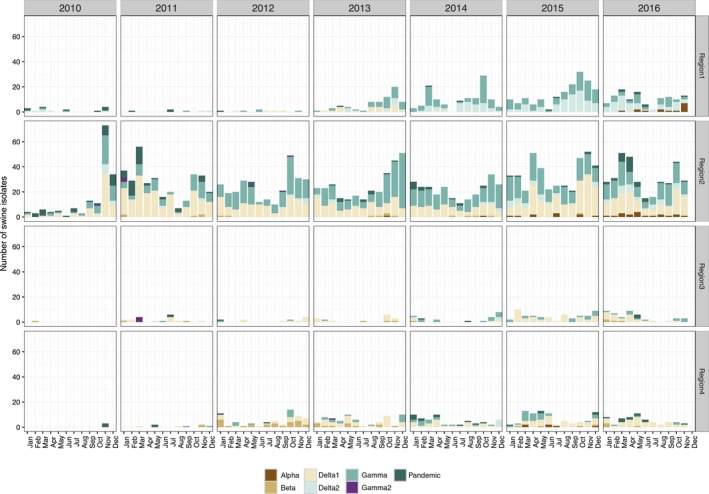
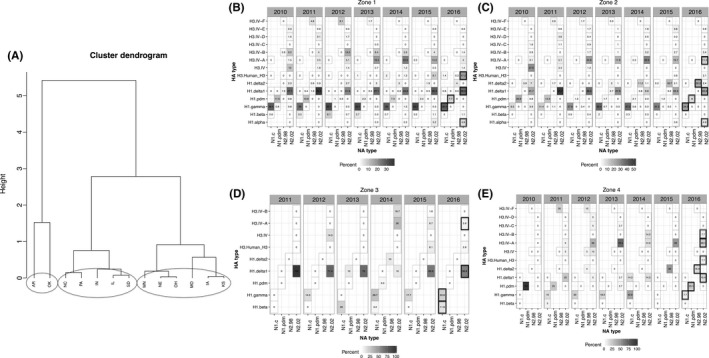
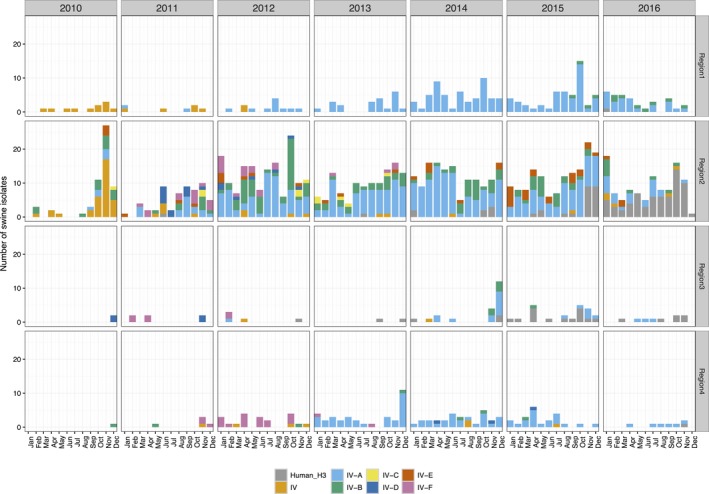
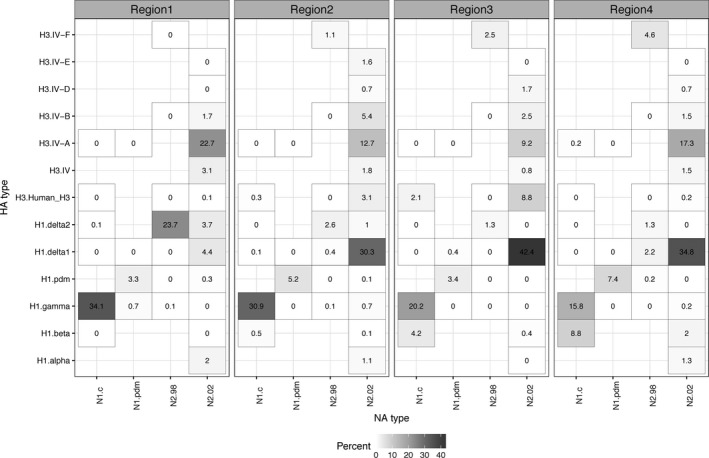
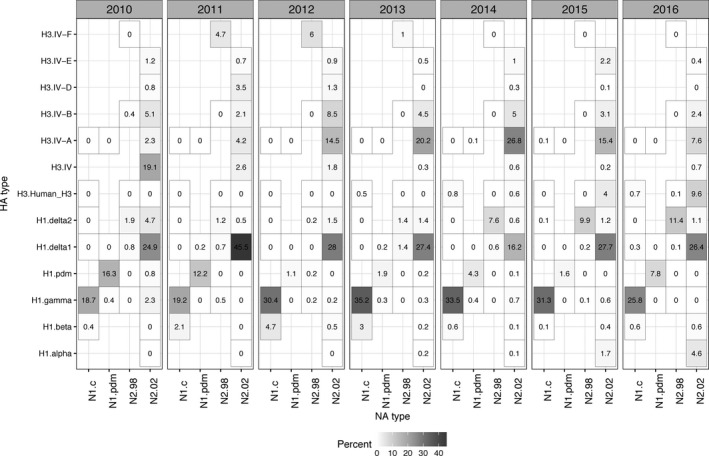
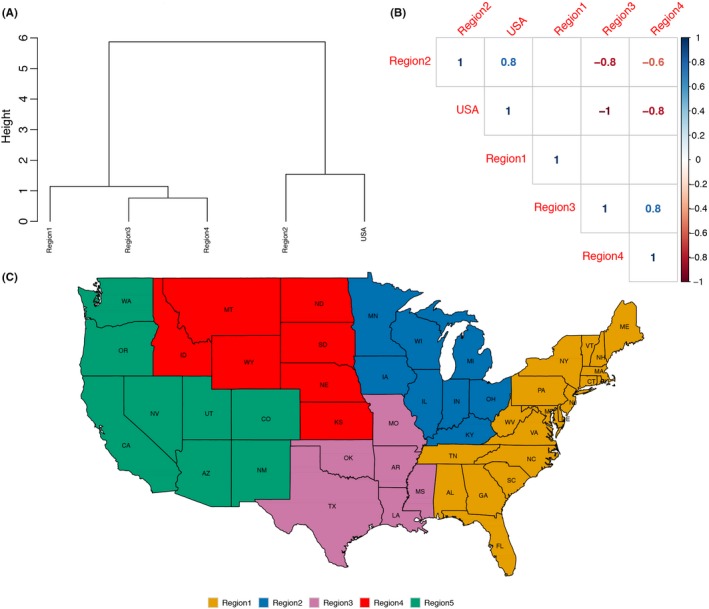
The dominant subtypes and genetic clades detected during the study period were H1N1 (H1-γ/1A.3.3.3, N1-classical, 29%), H1N2 (H1-δ1/1B.2.2, N2-2002, 27%), and H3N2 (H3-IV-A, N2-2002, 15%), but many other minor clades were also maintained. Year-round circulation was observed, with a primary epidemic peak in October-November and a secondary epidemic peak in March-April. Partitioning these data into 5 spatial zones revealed that genetic diversity varied regionally and was not correlated with aggregated national patterns of HA/NA diversity.
These data suggest that vaccine composition and control efforts should consider IAV diversity within swine production regions in addition to aggregated national patterns.
定期对猪流感病毒 (IAV) 的遗传多样性和进化模式进行时空分析,可为防控工作提供信息并改善动物健康。美国农业部从 2009 年开始被动监测美国猪中的 IAV,重点是对临床呼吸道样本进行亚型分类,至少对血凝素 (HA) 和神经氨酸酶 (NA) 基因进行测序,并公开分享这些数据。
本研究旨在定量和描述 2010 年至 2016 年美国猪中 IAV 的遗传多样性和进化的区域和全国模式。
对美国农业部监测系统收集的 2010 年 1 月至 2016 年 12 月期间公开可用的 HA 和 NA 基因进行全面的系统发生和流行病学分析。
在研究期间检测到的主要亚型和遗传分支是 H1N1(H1-γ/1A.3.3.3,N1-经典,29%)、H1N2(H1-δ1/1B.2.2,N2-2002,27%)和 H3N2(H3-IV-A,N2-2002,15%),但也维持了许多其他次要分支。全年循环,主要流行高峰在 10 月至 11 月,次要流行高峰在 3 月至 4 月。将这些数据分为 5 个空间区,结果显示遗传多样性存在区域性差异,与 HA/NA 多样性的全国聚集模式无关。
这些数据表明,疫苗成分和防控工作应考虑到猪生产区域内的 IAV 多样性,而不仅仅是全国聚集模式。