Department of Molecular Neurobiology, Max Planck Institute of Experimental Medicine, Hermann-Rein-Str. 3, 37075, Göttingen, Germany.
Exp Mol Med. 2018 Apr 9;50(4):1-16. doi: 10.1038/s12276-018-0063-8.
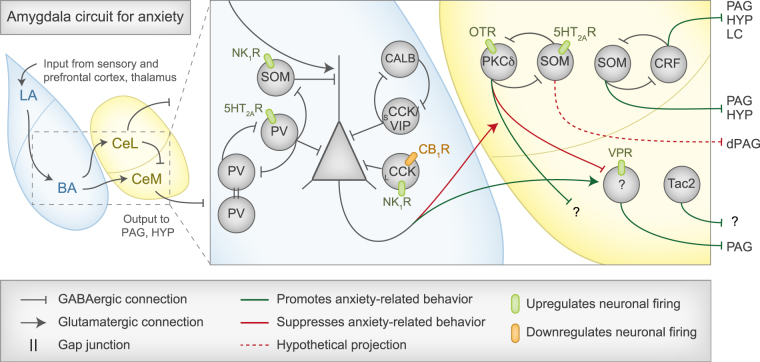
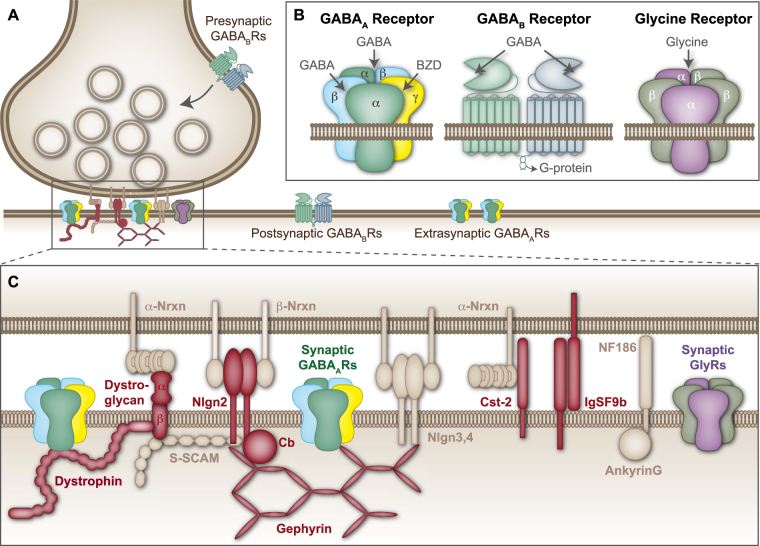
Inhibitory neurotransmission plays a key role in anxiety disorders, as evidenced by the anxiolytic effect of the benzodiazepine class of γ-aminobutyric acid (GABA) receptor agonists and the recent discovery of anxiety-associated variants in the molecular components of inhibitory synapses. Accordingly, substantial interest has focused on understanding how inhibitory neurons and synapses contribute to the circuitry underlying adaptive and pathological anxiety behaviors. A key element of the anxiety circuitry is the amygdala, which integrates information from cortical and thalamic sensory inputs to generate fear and anxiety-related behavioral outputs. Information processing within the amygdala is heavily dependent on inhibitory control, although the specific mechanisms by which amygdala GABAergic neurons and synapses regulate anxiety-related behaviors are only beginning to be uncovered. Here, we summarize the current state of knowledge and highlight open questions regarding the role of inhibition in the amygdala anxiety circuitry. We discuss the inhibitory neuron subtypes that contribute to the processing of anxiety information in the basolateral and central amygdala, as well as the molecular determinants, such as GABA receptors and synapse organizer proteins, that shape inhibitory synaptic transmission within the anxiety circuitry. Finally, we conclude with an overview of current and future approaches for converting this knowledge into successful treatment strategies for anxiety disorders.
抑制性神经传递在焦虑障碍中起着关键作用,这一点可以从苯二氮䓬类 γ-氨基丁酸 (GABA) 受体激动剂的抗焦虑作用以及抑制性突触分子成分中与焦虑相关的变异的最近发现中得到证明。因此,人们对理解抑制性神经元和突触如何为适应性和病理性焦虑行为的神经回路做出贡献产生了浓厚的兴趣。焦虑神经回路的一个关键要素是杏仁核,它整合来自皮质和丘脑感觉输入的信息,以产生与恐惧和焦虑相关的行为输出。杏仁核内的信息处理严重依赖于抑制性控制,尽管调节与焦虑相关的行为的杏仁核 GABA 能神经元和突触的具体机制才刚刚开始被揭示。在这里,我们总结了目前的知识状况,并强调了关于抑制在杏仁核焦虑回路中的作用的开放性问题。我们讨论了在基底外侧和中央杏仁核中处理焦虑信息的抑制性神经元亚型,以及分子决定因素,如 GABA 受体和突触组织蛋白,它们在焦虑回路内塑造抑制性突触传递。最后,我们概述了将这些知识转化为焦虑障碍成功治疗策略的当前和未来方法。