Blume Katharina, Körber Nina, Hoffmann Dieter, Wolfarth Bernd
Department of Sports Medicine, Humboldt-University, Charité University Medicine, Berlin, Germany.
Institute of Virology, Technische Universität München, Helmholtz Zentrum München, Munich, Germany.
Front Physiol. 2018 Mar 23;9:120. doi: 10.3389/fphys.2018.00120. eCollection 2018.
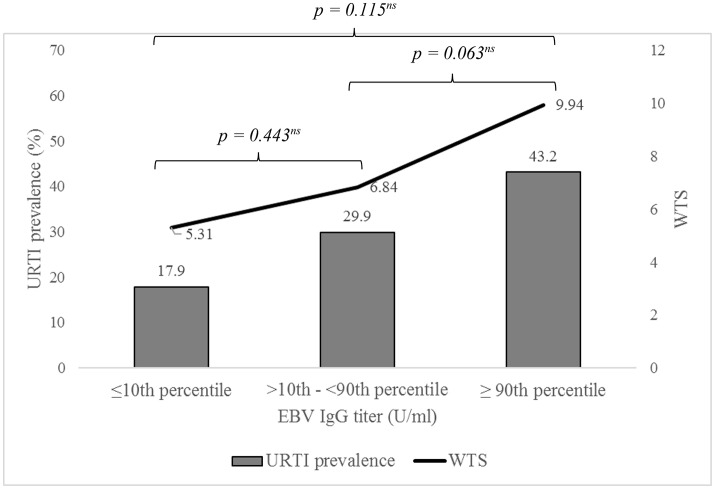
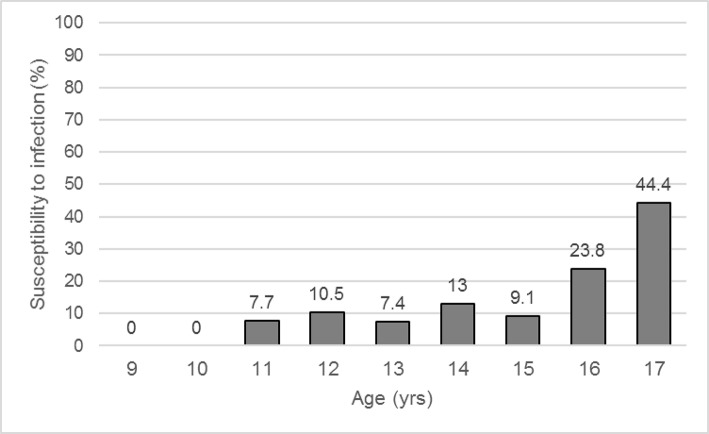
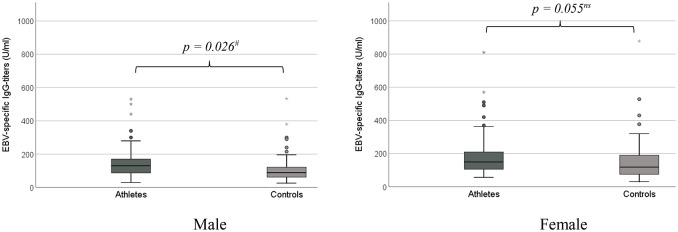
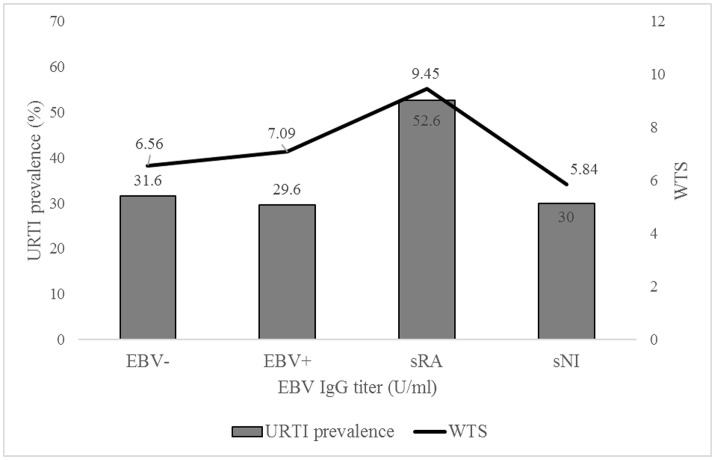
Beside positive effects on athlete's health, competitive sport can be linked with an increased risk of illness and injury. Because of high relative increases in training, additional physical and psychological strains, and an earlier specialization and professionalization, adolescent athletes needs an increased attention. Training can alter the immune system by inducing a temporary immunosuppression, finally developing infection symptoms. Previous studies identified Epstein Barr Virus (EBV) as potential indicator for the immune status. In addition to the identification of triggering risk factors for recurrent infections, the aim was to determine the interaction between training load, stress sense, immunological parameters, and clinical symptoms. A controlled, prospective, longitudinal study on young athletes ( = 274, mean age: 13.8 ± 1.5 yrs) was conducted between 2010 and 2014. Also 285 controls (students, who did not perform competitive sports, mean age: 14.5 ± 1.9 yrs) were recruited. Athletes were examined 3 times each year to determine the effects of stress factors (training load: training hours per week [Th/w]) on selected outcome parameters (clinical [susceptibility to infection, WURSS-21: 21-item ], immunological, psychological end points). As part of each visit, EBV serostatus and EBV-specific IgG tiers were studied longitudinally as potential immune markers. Athletes (A) trained 14.9 ± 5.6 h weekly. Controls (C) showed no lower stress levels compared to athletes ( = 0.387). Twelve percent of athletes reported recurrent infections (C: 8.5%, = 0.153), the presence of an upper respiratory tract infection (URTI) was achieved in 30.7%. EBV seroprevalence of athletes was 60.3% (C: 56.6%, = 0.339). Mean EBV-specific IgG titer of athletes was 166 ± 115 U/ml (C: 137 ± 112 U/ml, = 0.030). With increasing Th/w, higher stress levels were observed ( < 0.001). Analyzes of WURSS-21 data revealed no relationship to training load ( = 0.323). Also, training load had no relation to EBV serostatus ( = 0.057) or the level of EBV-specific IgG titers ( = 0.364). Young elite athletes showed no increased sense of stress, no higher prevalence of recurrent infections, and no different EBV-specific serological parameters compared to controls. Also, no direct relationship between training loads, clinical complaints, and EBV-specific immune responses was found. With increasing training loads athletes felt more stressed, but significant associations to EBV-specific serological parameters were absent. In summary, EBV serostatus and EBV-specific IgG titers do not allow risk stratification for impaired health. Further investigations are needed to identify additional risk factors and immune markers, with the aim to avoid inappropriate strains by early detection and following intervention.
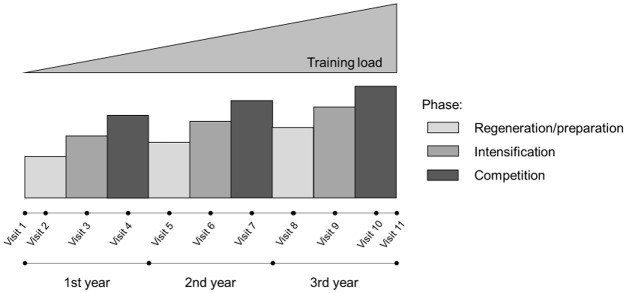
除了对运动员健康有积极影响外,竞技运动还可能与疾病和受伤风险增加有关。由于训练量相对大幅增加、额外的身体和心理压力,以及更早的专项化和职业化,青少年运动员需要更多关注。训练可通过诱导暂时的免疫抑制来改变免疫系统,最终出现感染症状。先前的研究将爱泼斯坦-巴尔病毒(EBV)确定为免疫状态的潜在指标。除了确定反复感染的触发风险因素外,目的还在于确定训练负荷、压力感、免疫参数和临床症状之间的相互作用。2010年至2014年间对年轻运动员(n = 274,平均年龄:13.8±1.5岁)进行了一项对照、前瞻性、纵向研究。还招募了285名对照者(不从事竞技运动的学生,平均年龄:14.5±1.9岁)。每年对运动员进行3次检查,以确定压力因素(训练负荷:每周训练小时数[Th/w])对选定结果参数(临床[感染易感性,WURSS - 21:21项]、免疫、心理终点)的影响。作为每次就诊的一部分,纵向研究EBV血清状态和EBV特异性IgG滴度作为潜在的免疫标志物。运动员(A)每周训练14.9±5.6小时。对照者(C)与运动员相比压力水平并不更低(p = 0.387)。12%的运动员报告有反复感染(C组:8.5%,p = 0.153),30.7%的人出现上呼吸道感染(URTI)。运动员的EBV血清阳性率为60.3%(C组:56.6%,p = 0.339)。运动员的平均EBV特异性IgG滴度为166±115 U/ml(C组:137±112 U/ml,p = 0.030)。随着Th/w增加,观察到更高的压力水平(p < 0.001)。对WURSS - 21数据的分析显示与训练负荷无关(p = 0.323)。此外,训练负荷与EBV血清状态(p = 0.057)或EBV特异性IgG滴度水平(p = 0.364)无关。与对照者相比,年轻的精英运动员没有表现出更高的压力感、反复感染的患病率也没有更高,EBV特异性血清学参数也没有差异。此外,未发现训练负荷、临床症状与EBV特异性免疫反应之间有直接关系。随着训练负荷增加,运动员感觉压力更大,但与EBV特异性血清学参数没有显著关联。总之,EBV血清状态和EBV特异性IgG滴度不能用于健康受损的风险分层。需要进一步研究以确定其他风险因素和免疫标志物,目的是通过早期检测和后续干预避免不适当的压力。