Yang Eunjeong, Kim Heejin, Kim Sangryun, Kim In, Kim Jaehoon, Ji Hyunjun, Choi Jang Wook, Jung Yousung
Graduate School of EEWS , Korea Advanced Institute of Science and Technology , 291 Daehak-ro , Daejeon , 34141 , Republic of Korea . Email:
Electron Microscopy Research Center , Korea Basic Science Institute , 169-148 Gwahak-ro , Daejeon 34133 , Republic of Korea.
Chem Sci. 2017 Oct 24;9(2):433-438. doi: 10.1039/c7sc04114d. eCollection 2018 Jan 14.
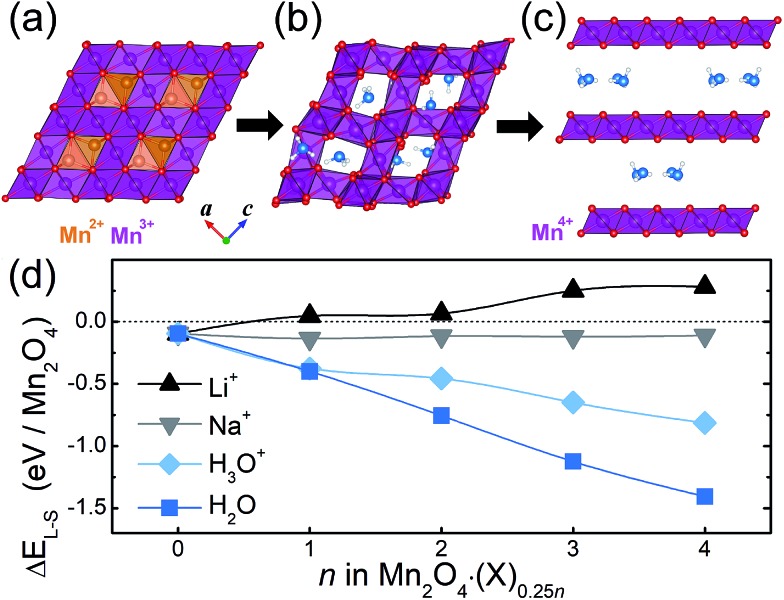
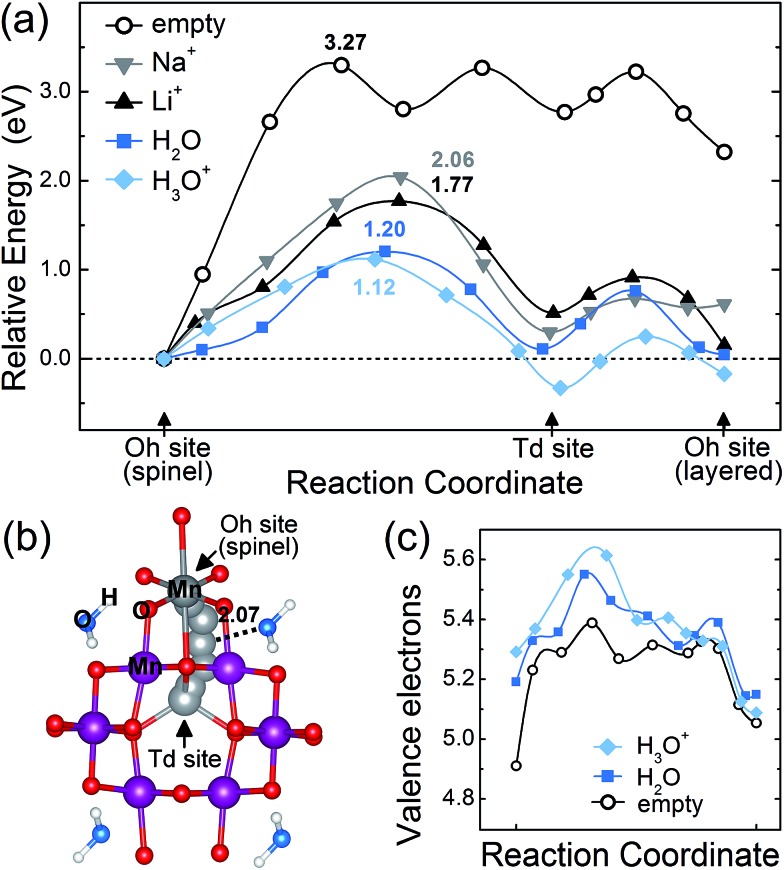
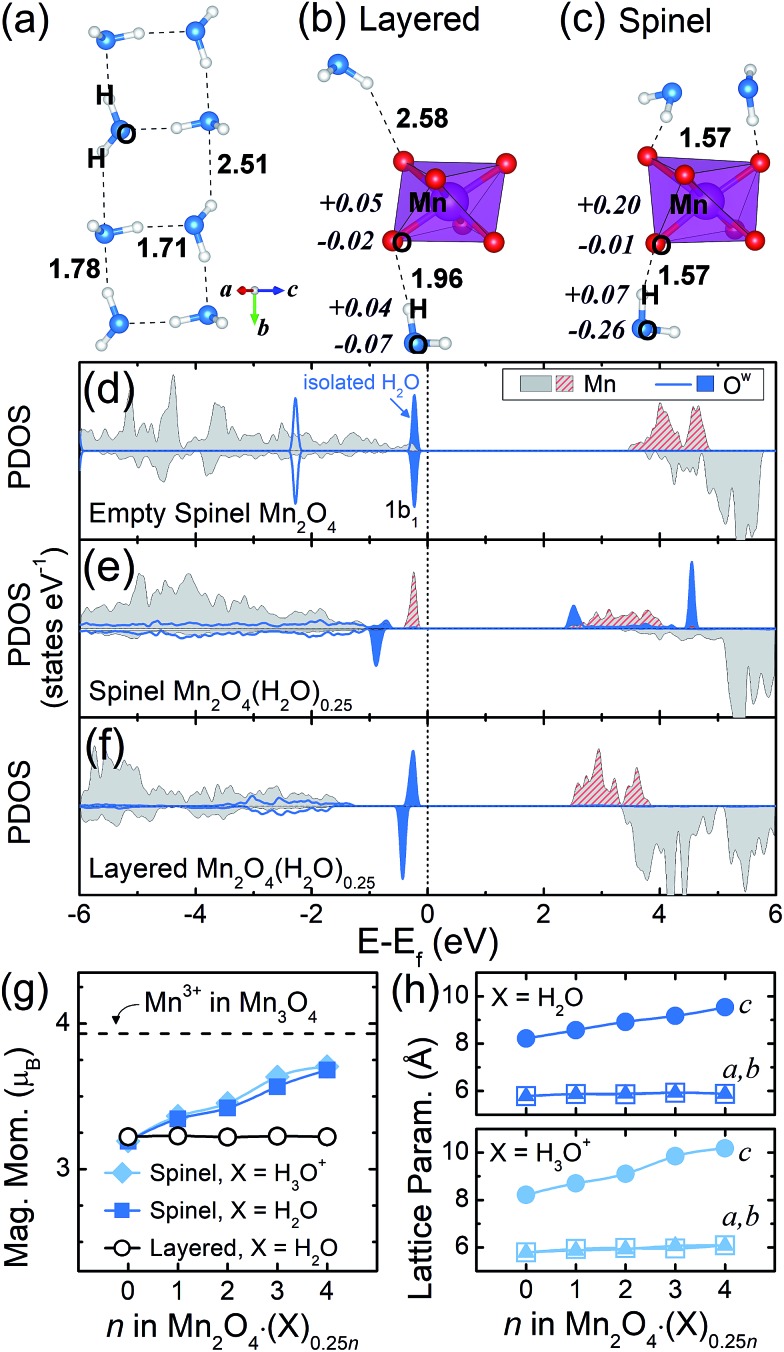
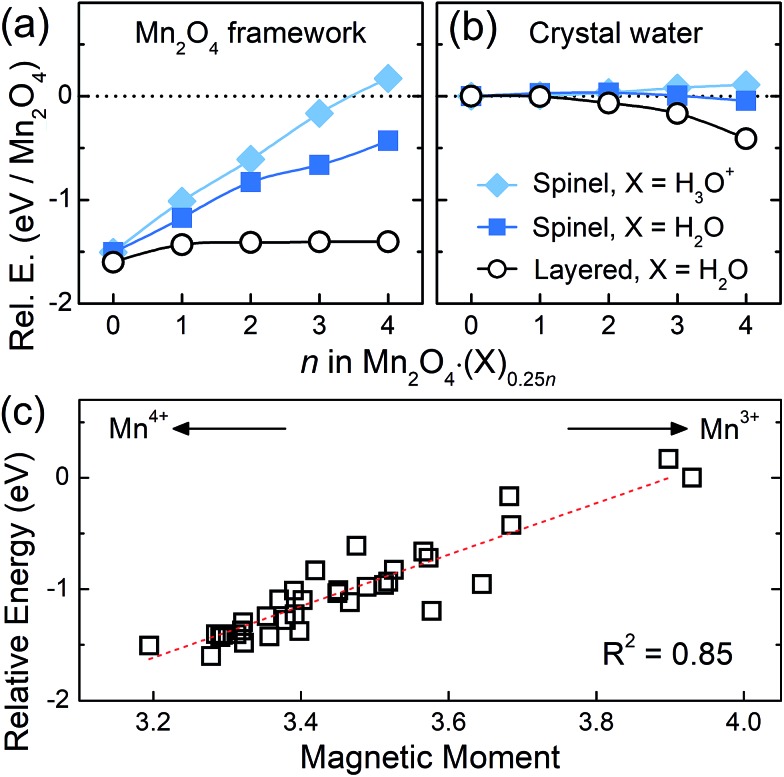
It is well known that many layered transition metal oxides can transform into a spinel structure upon repeated battery cycling, but a phase transition in the opposite direction is rare. Recently, the transformation from spinel MnO to layered MnO was observed during the operation of a Mg battery in aqueous conditions, resulting in high performance Mg batteries. We hereby use calculations to unveil the mechanism by which crystal water plays a critical role in this unique transformation. Once inserted into the spinel form, a water molecule donates an electron, offering a key structural and thermodynamic driving force to initiate the transformation process. These crystal water molecules then get favorably clustered into a planar form in the layered structure and act as a stabilizing agent for birnessite. Kinetically, the inserted crystal water dramatically promotes the necessary rearrangement of Mn during the transition by lowering the activation barrier by >2 eV. The present structural, thermodynamic and kinetic understanding of the crystal water-driven phase transition provides novel insights to further the design of related low dimensional hydrated materials for multi-valent cathodes.
众所周知,许多层状过渡金属氧化物在电池反复循环过程中会转变为尖晶石结构,但相反方向的相变却很少见。最近,在水性条件下镁电池运行过程中观察到了从尖晶石MnO向层状MnO的转变,从而实现了高性能镁电池。在此,我们通过计算揭示了结晶水在这一独特转变中起关键作用的机制。一旦插入尖晶石形式中,一个水分子会提供一个电子,为启动转变过程提供关键的结构和热力学驱动力。然后,这些结晶水分子在层状结构中有利地聚集成平面形式,并作为水钠锰矿的稳定剂。从动力学角度来看,插入的结晶水通过将活化能垒降低超过2 eV,极大地促进了转变过程中锰的必要重排。目前对结晶水驱动相变的结构、热力学和动力学理解为进一步设计用于多价阴极的相关低维水合材料提供了新的见解。