Division of Biotechnology Research and Review II, Center for Drug Evaluation and Research, U.S. Food and Drug Administration, Silver Spring, Maryland, United States of America.
Division of Plasma Protein Therapeutics, Center for Biologics Evaluation and Research, U.S. Food and Drug Administration, Silver Spring, Maryland, United States of America.
PLoS One. 2018 Apr 9;13(4):e0195525. doi: 10.1371/journal.pone.0195525. eCollection 2018.
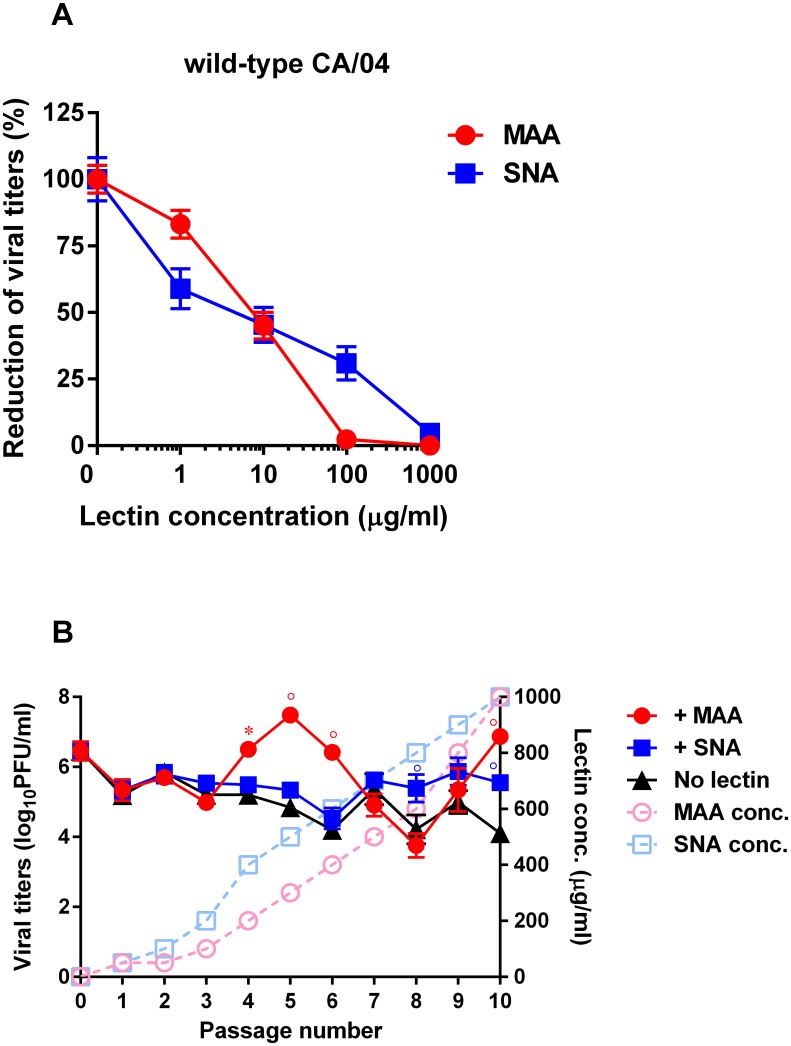
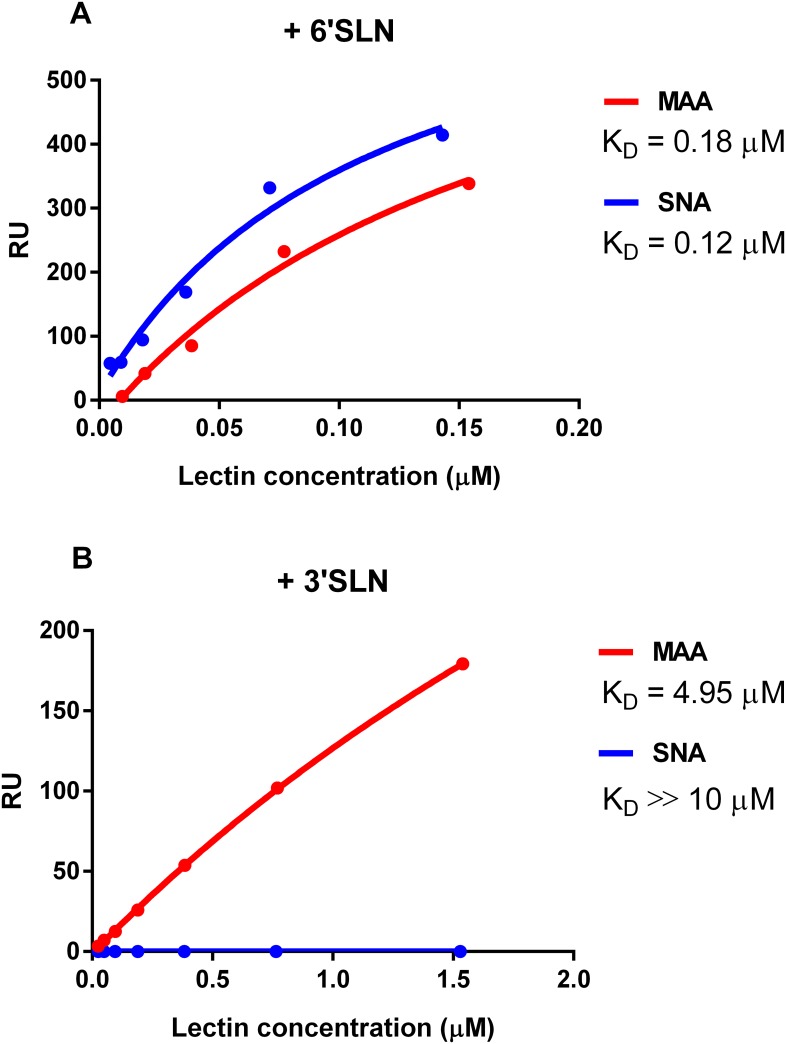
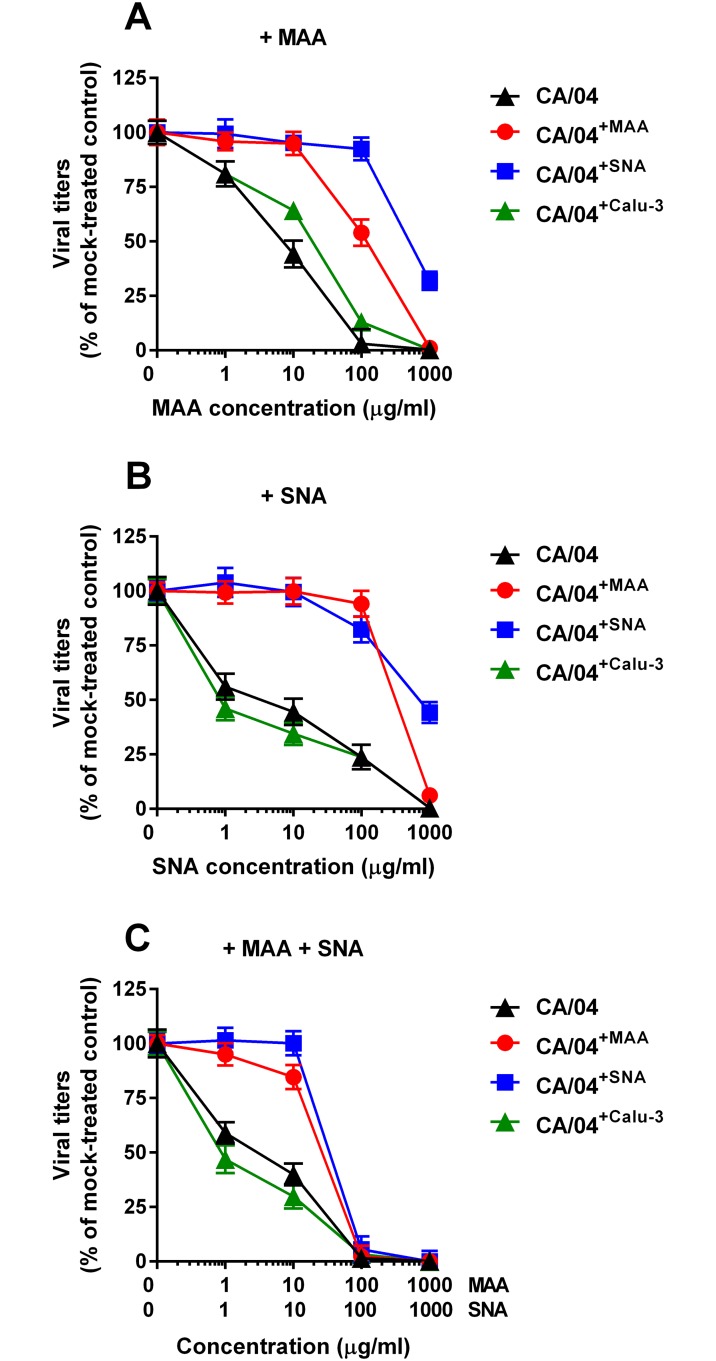
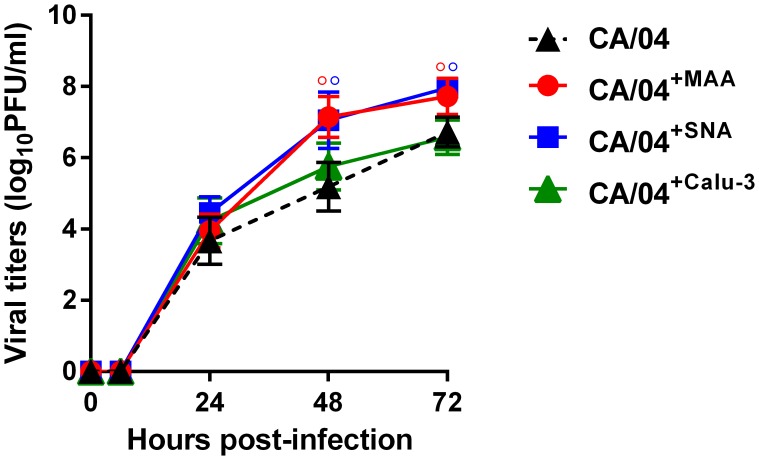
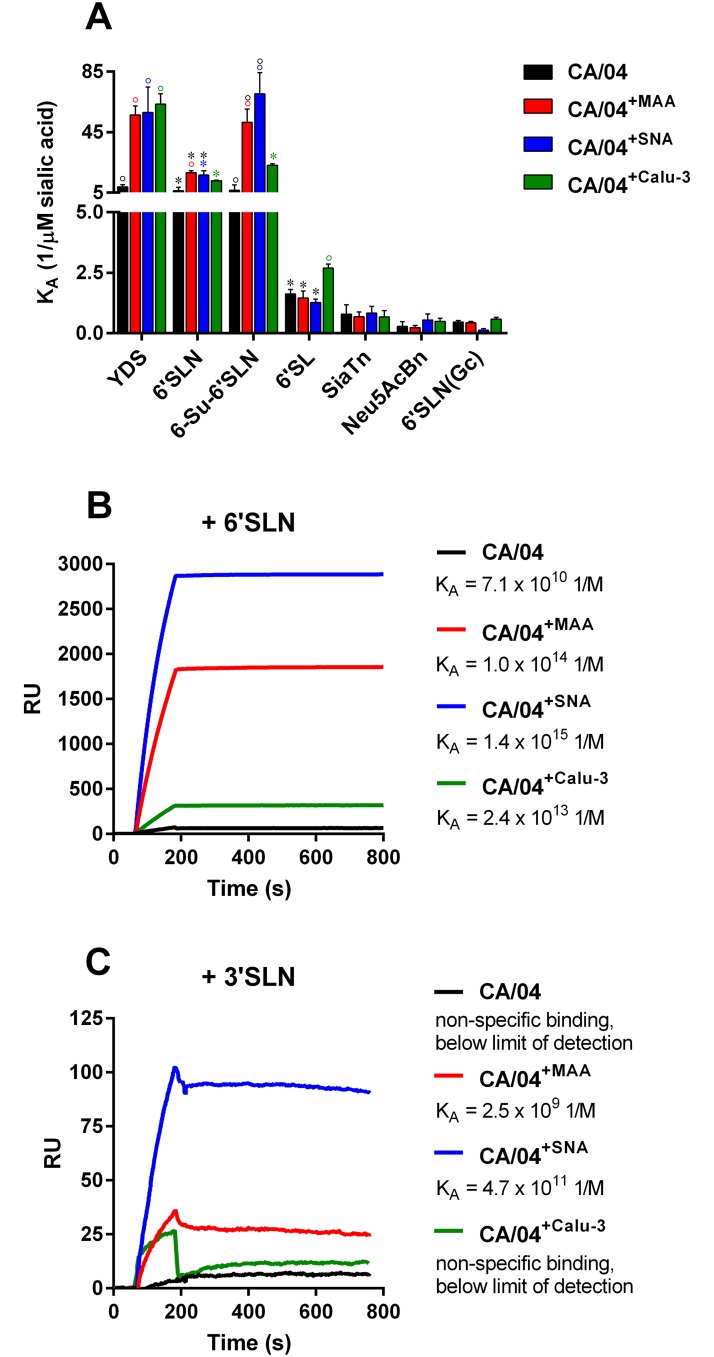
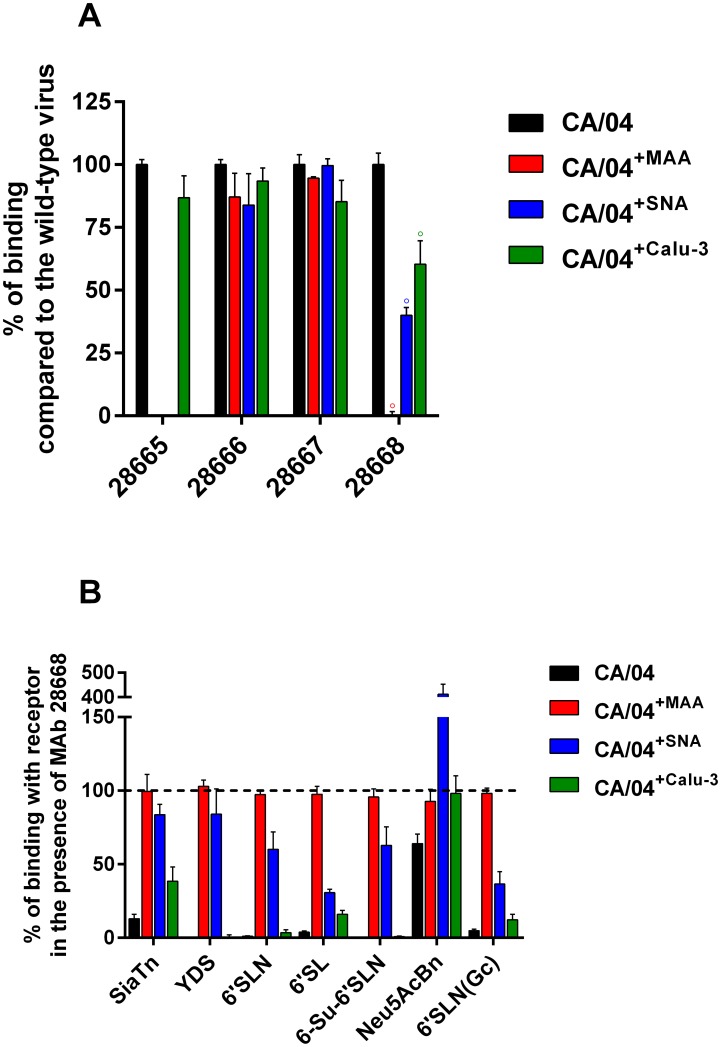
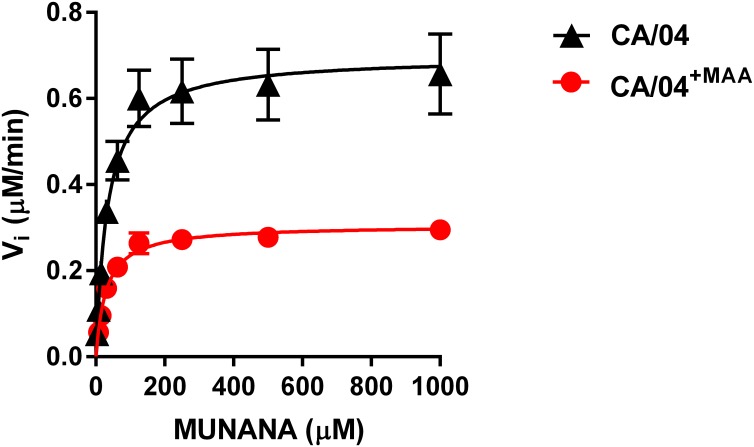
We applied an in vitro selection approach using two different plant lectins that bind to α2,3- or α2,6-linked sialic acids to determine which genetic changes of the A/California/04/09 (H1N1) virus alter hemagglutinin (HA) receptor binding toward α2,3- or α2,6-linked glycans. Consecutive passages of the A/California/04/09 virus with or without lectins in human lung epithelial Calu-3 cells led to development of three HA1 amino acid substitutions, N129D, G155E, and S183P, and one mutation in the neuraminidase (NA), G201E. The S183P mutation significantly increased binding to several α2,6 SA-linked glycans, including YDS, 6'SL(N), and 6-Su-6'SLN, compared to the wild-type virus (↑3.6-fold, P < 0.05). Two other HA1 mutations, N129D and G155E, were sufficient to significantly increase binding to α2,6-linked glycans, 6'SLN and 6-Su-6'SLN, compared to S183P (↑4.1-fold, P < 0.05). These HA1 mutations also increased binding affinity for 3'SLN glycan compared to the wild-type virus as measured by Biacore surface plasmon resonance method. In addition, the HA1 N129D and HA1 G155E substitutions were identified as antigenic mutations. Furthermore, the G201E mutation in NA reduced the NA enzyme activity (↓2.3-fold). These findings demonstrate that the A/California/04/09 (H1N1) virus can acquire enhanced receptor affinity for both α2,3- and α2,6-linked sialic receptors under lectin-induced selective pressure. Such changes in binding affinity are conferred by selection of beneficial HA1 mutations that affect receptor specificity, antigenicity, and/or functional compatibility with the NA protein.
我们应用了一种体外选择方法,使用两种不同的植物凝集素,它们分别与α2,3-或α2,6-连接的唾液酸结合,以确定甲型流感病毒 A/加利福尼亚/04/09(H1N1)的哪些遗传变化改变了血凝素(HA)对α2,3-或α2,6-连接聚糖的受体结合。在人肺上皮细胞 Calu-3 中连续传代 A/加利福尼亚/04/09 病毒,同时或不使用凝集素,导致 HA1 氨基酸发生三个取代,N129D、G155E 和 S183P,以及神经氨酸酶(NA)中的一个突变,G201E。与野生型病毒相比,S183P 突变显著增加了对几种α2,6-SA 连接聚糖的结合,包括 YDS、6'SL(N)和 6-Su-6'SLN(↑3.6 倍,P<0.05)。另外两个 HA1 突变,N129D 和 G155E,与 S183P 相比,足以显著增加与α2,6 连接聚糖 6'SLN 和 6-Su-6'SLN 的结合(↑4.1 倍,P<0.05)。通过表面等离子体共振法测定,这些 HA1 突变也增加了与 3'SLN 聚糖的结合亲和力,与野生型病毒相比。此外,HA1 N129D 和 HA1 G155E 取代被鉴定为抗原突变。此外,NA 中的 G201E 突变降低了 NA 酶活性(↓2.3 倍)。这些发现表明,在凝集素诱导的选择压力下,A/加利福尼亚/04/09(H1N1)病毒可以获得对α2,3-和α2,6-连接唾液酸受体的增强的受体亲和力。这种结合亲和力的变化是通过选择影响受体特异性、抗原性和/或与 NA 蛋白功能兼容性的有利 HA1 突变来赋予的。