Department of Clinical and Experimental Biomedical Sciences, University of Florence, Florence, Italy.
Excellence Centre for Research, Transfer and High Education for the development of DE NOVO Therapies (DENOTHE), Florence, Italy.
Nat Commun. 2018 Apr 9;9(1):1344. doi: 10.1038/s41467-018-03753-4.
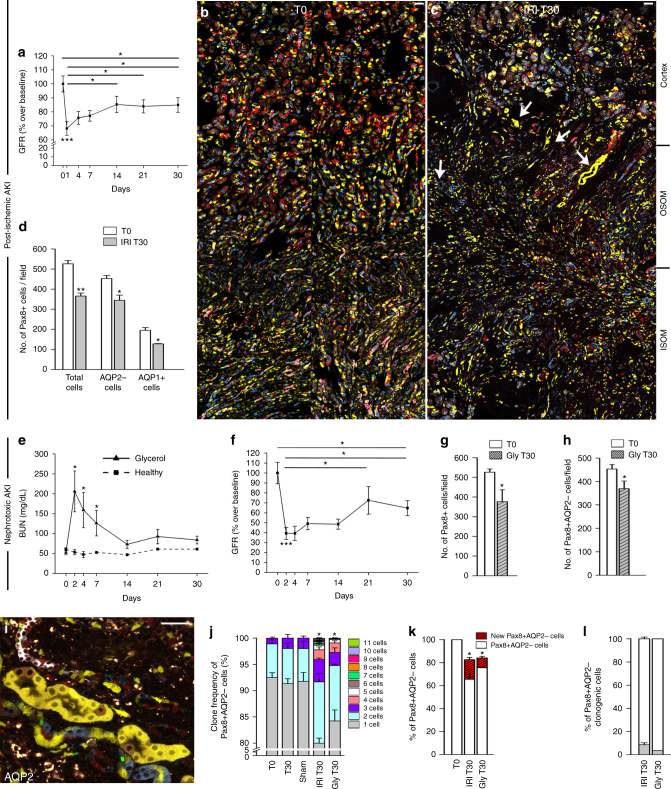
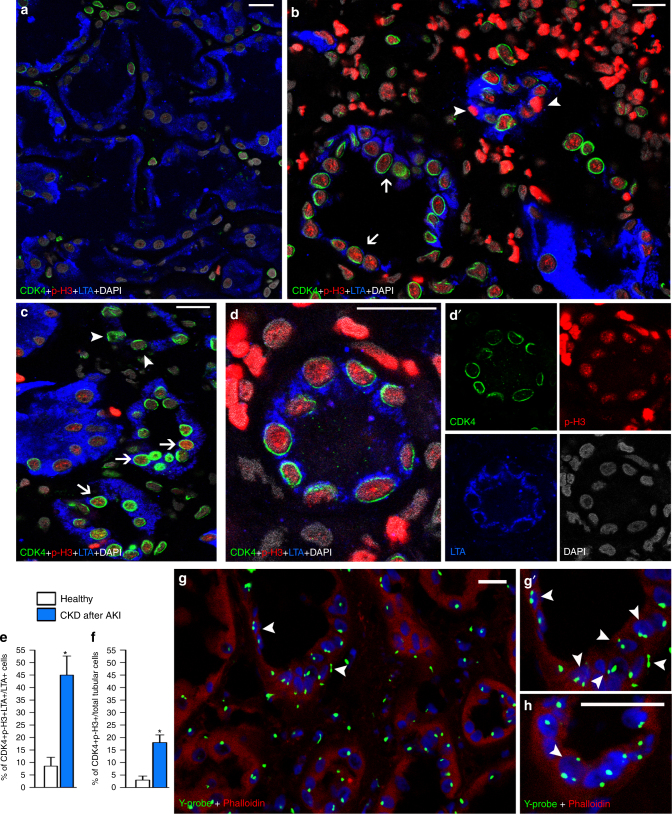
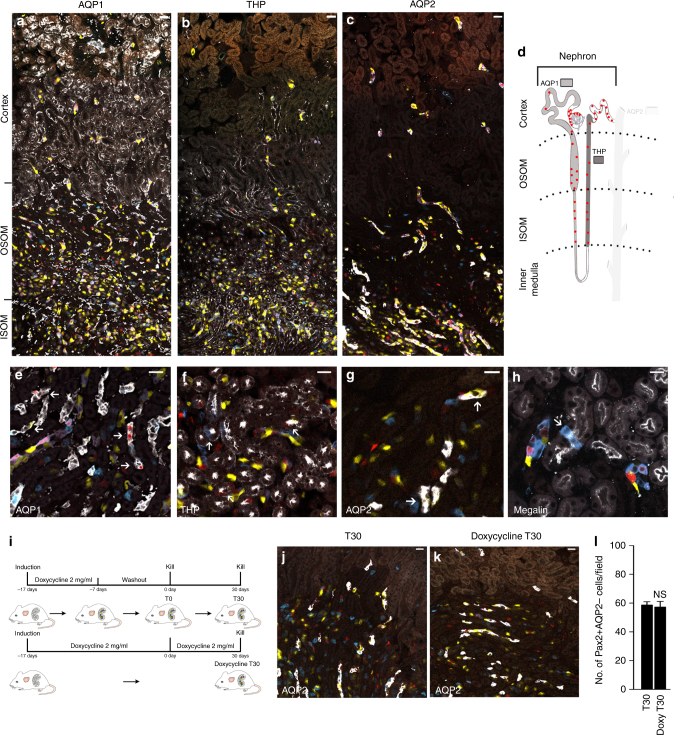
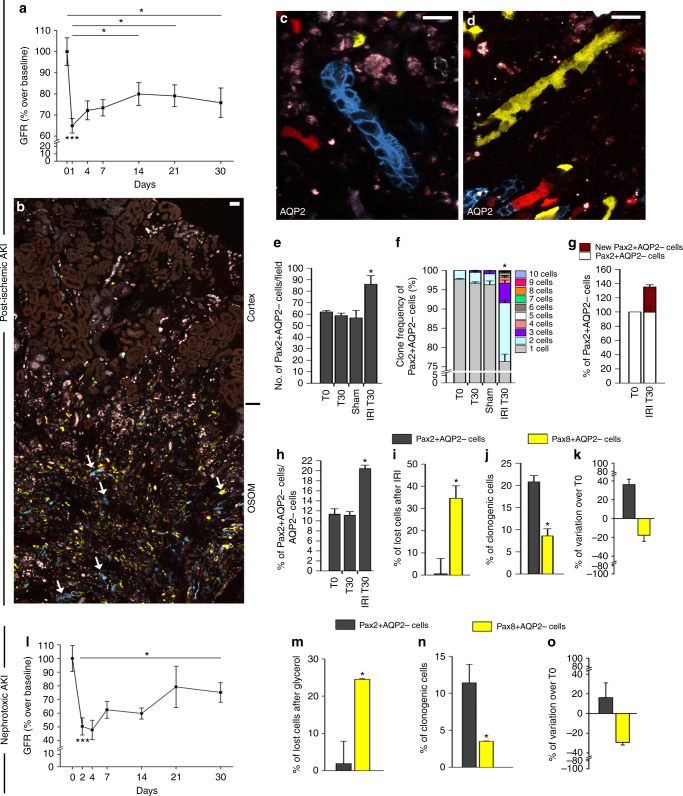
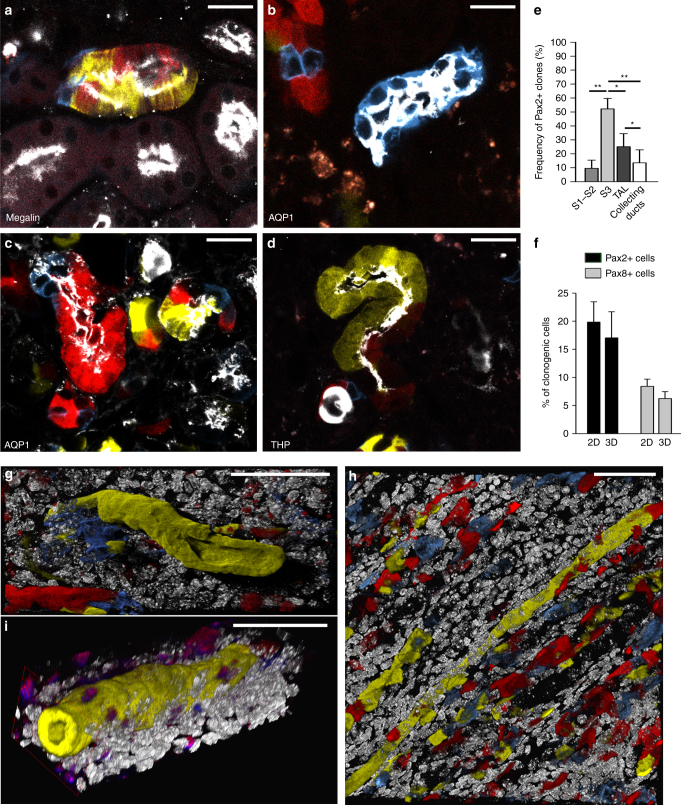
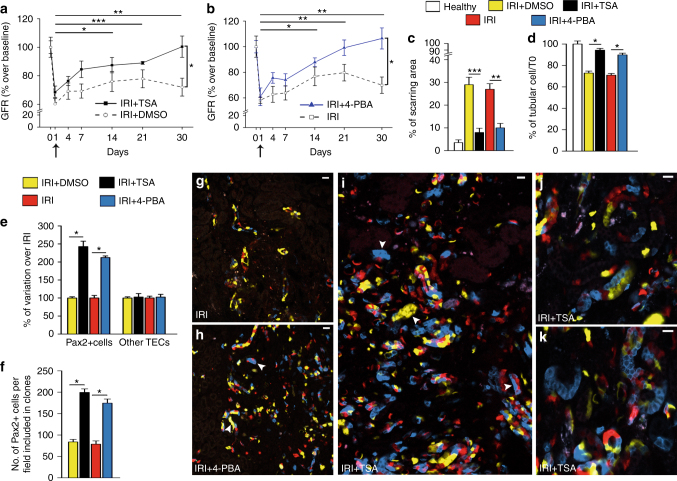
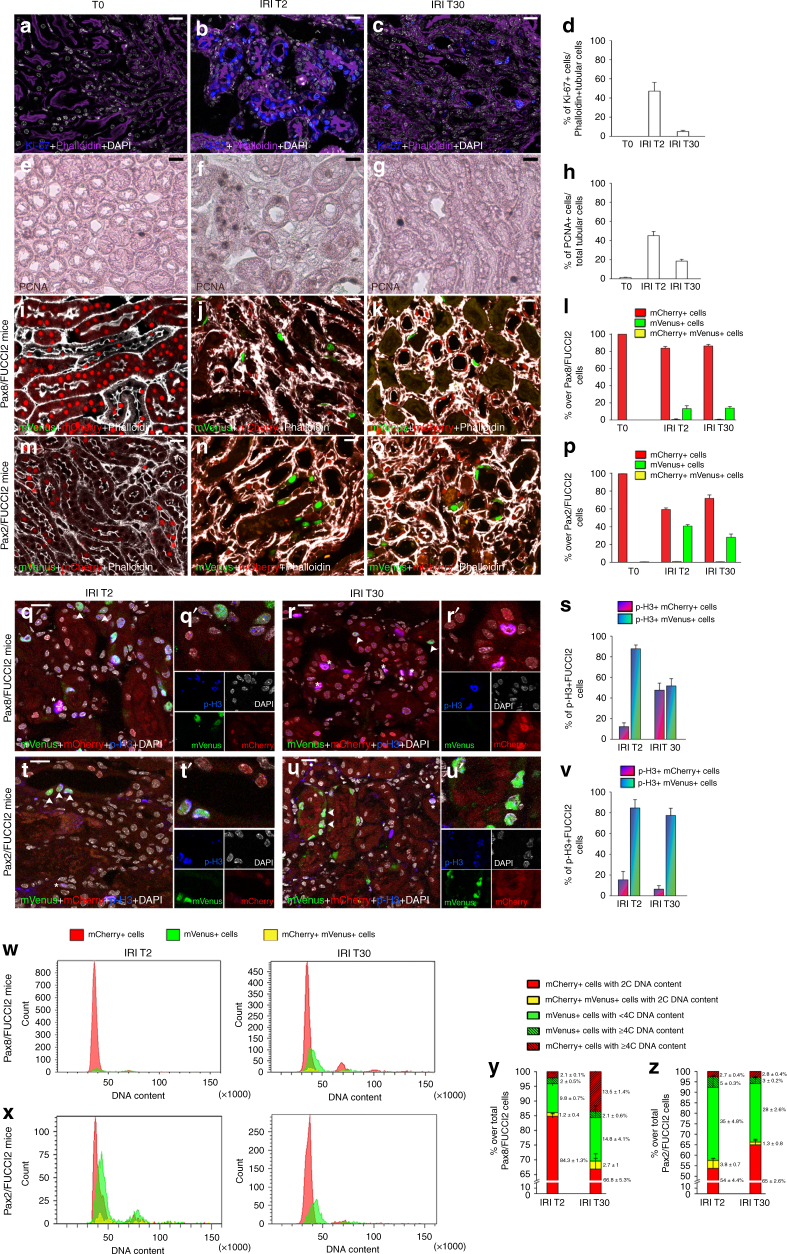
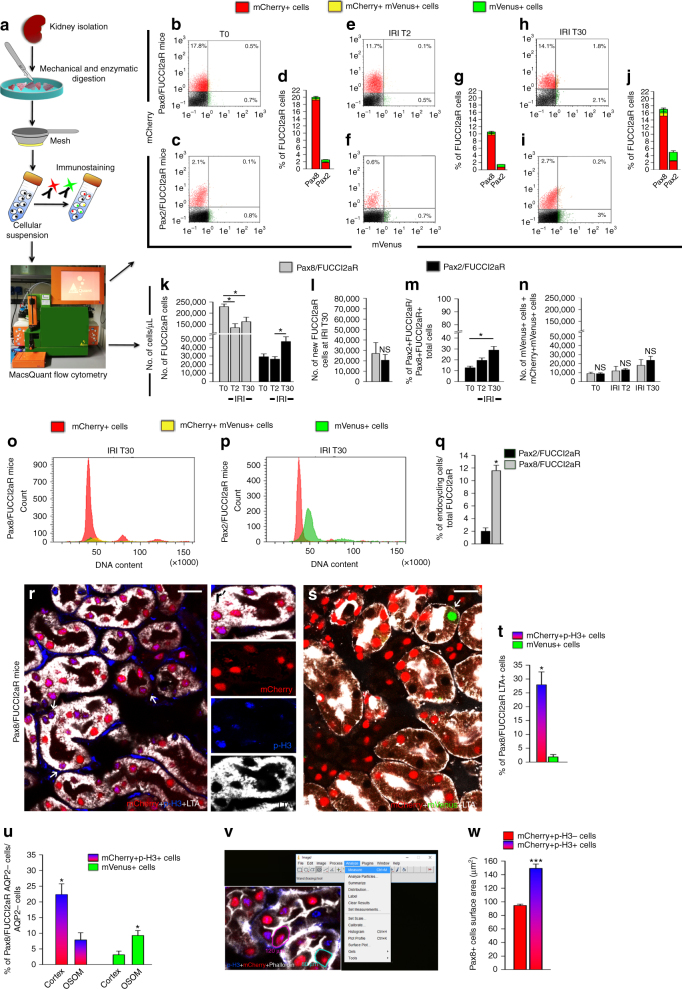
Acute kidney injury (AKI) is considered largely reversible based on the capacity of surviving tubular cells to dedifferentiate and replace lost cells via cell division. Here we show by tracking individual tubular cells in conditional Pax8/Confetti mice that kidney function is recovered after AKI despite substantial tubular cell loss. Cell cycle and ploidy analysis upon AKI in conditional Pax8/FUCCI2aR mice and human biopsies identify endocycle-mediated hypertrophy of tubular cells. By contrast, a small subset of Pax2+ tubular progenitors enriches via higher stress resistance and clonal expansion and regenerates necrotic tubule segments, a process that can be enhanced by suitable drugs. Thus, renal functional recovery upon AKI involves remnant tubular cell hypertrophy via endocycle and limited progenitor-driven regeneration that can be pharmacologically enhanced.
急性肾损伤 (AKI) 被认为在很大程度上是可逆的,这基于存活的肾小管细胞通过细胞分裂去分化和替代丢失的细胞的能力。在这里,我们通过在条件性 Pax8/Confetti 小鼠中追踪单个肾小管细胞显示,尽管肾小管细胞大量丢失,但在 AKI 后肾功能仍可恢复。在条件性 Pax8/FUCCI2aR 小鼠和人类活检中对 AKI 进行的细胞周期和倍性分析确定了肾小管细胞的内循环介导的肥大。相比之下,一小部分 Pax2+ 肾小管祖细胞通过更高的应激抗性和克隆扩增富集,并再生坏死的肾小管段,这一过程可以通过适当的药物增强。因此,AKI 后肾脏功能的恢复涉及通过内循环的残余肾小管细胞肥大和有限的祖细胞驱动的再生,这可以通过药理学增强。