Department of Epidemiology, Harvard T.H. Chan School of Public Health, Boston, MA, USA.
Program in Medical and Population Genetics, Broad Institute of MIT and Harvard, Cambridge, MA, USA.
Nat Genet. 2018 Apr;50(4):538-548. doi: 10.1038/s41588-018-0092-1. Epub 2018 Apr 9.
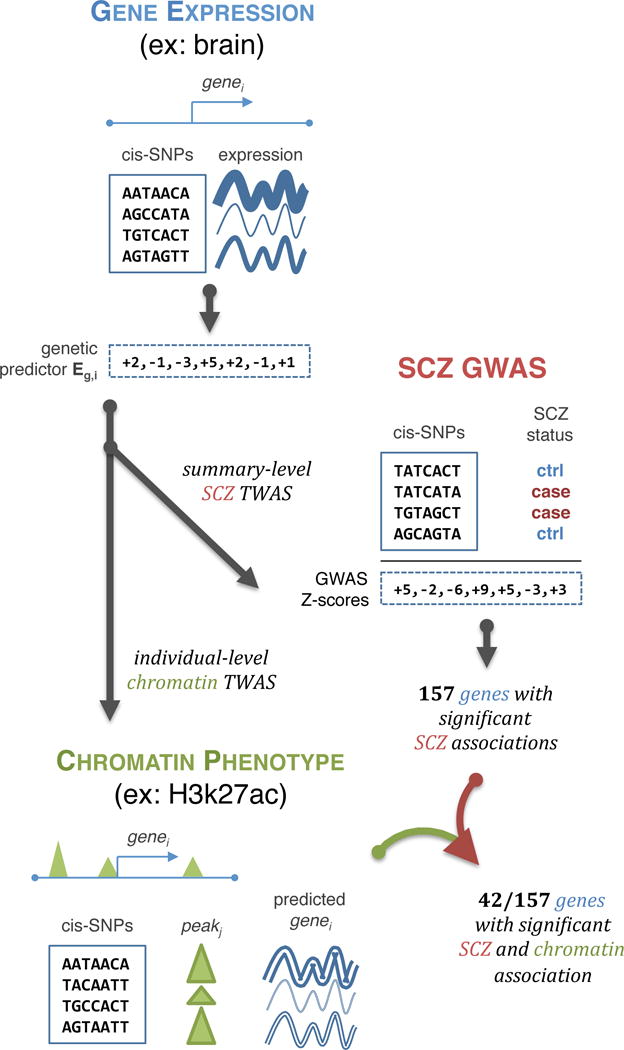
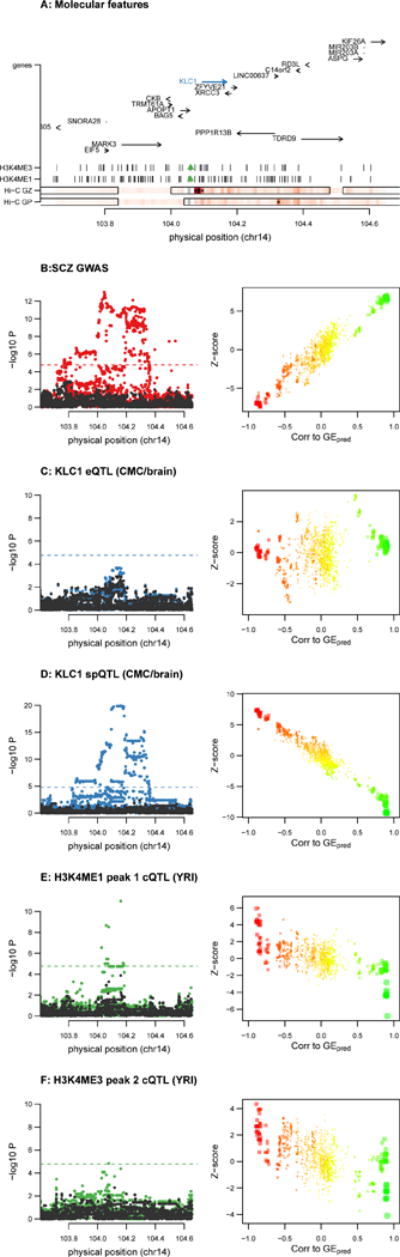
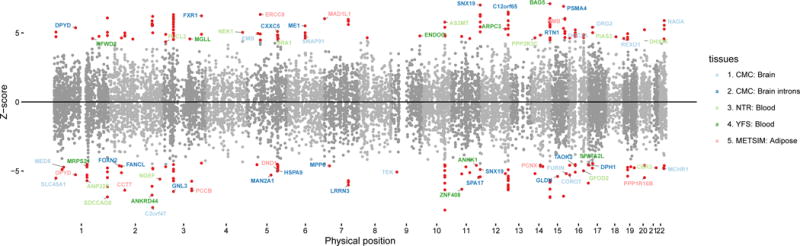
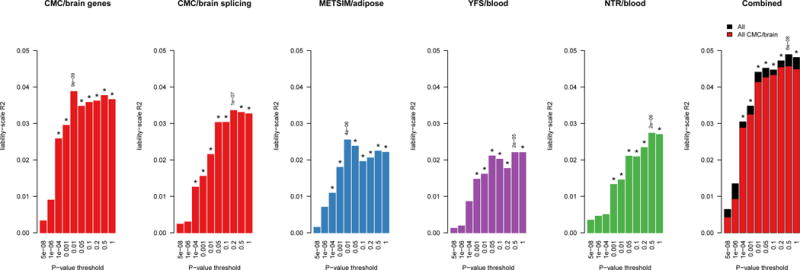
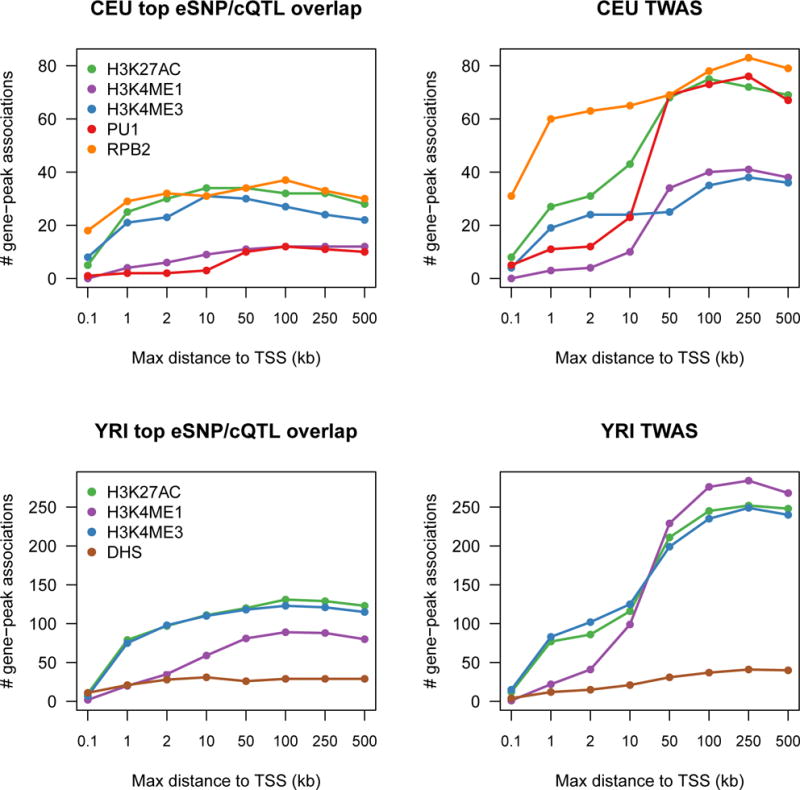
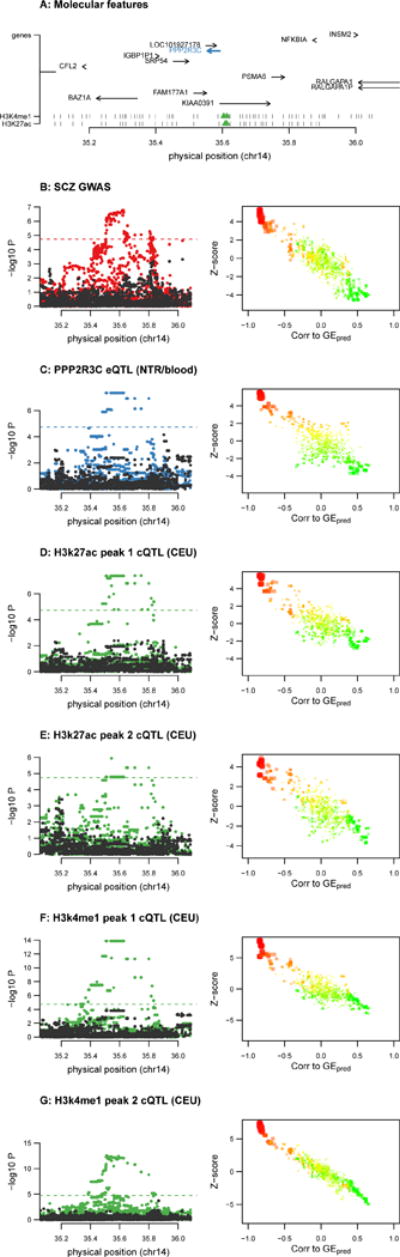
Genome-wide association studies (GWAS) have identified over 100 risk loci for schizophrenia, but the causal mechanisms remain largely unknown. We performed a transcriptome-wide association study (TWAS) integrating a schizophrenia GWAS of 79,845 individuals from the Psychiatric Genomics Consortium with expression data from brain, blood, and adipose tissues across 3,693 primarily control individuals. We identified 157 TWAS-significant genes, of which 35 did not overlap a known GWAS locus. Of these 157 genes, 42 were associated with specific chromatin features measured in independent samples, thus highlighting potential regulatory targets for follow-up. Suppression of one identified susceptibility gene, mapk3, in zebrafish showed a significant effect on neurodevelopmental phenotypes. Expression and splicing from the brain captured most of the TWAS effect across all genes. This large-scale connection of associations to target genes, tissues, and regulatory features is an essential step in moving toward a mechanistic understanding of GWAS.
全基因组关联研究(GWAS)已经确定了超过 100 个与精神分裂症相关的风险基因座,但因果机制在很大程度上仍然未知。我们进行了一项转录组全基因组关联研究(TWAS),将来自精神疾病基因组学联盟的 79845 名个体的精神分裂症 GWAS 与来自 3693 名主要对照个体的大脑、血液和脂肪组织的表达数据相结合。我们鉴定出了 157 个 TWAS 显著基因,其中 35 个基因与已知的 GWAS 基因座不重叠。在这 157 个基因中,有 42 个与在独立样本中测量的特定染色质特征相关,从而突出了潜在的后续调控靶点。在斑马鱼中抑制一个鉴定出的易感基因 mapk3 ,对神经发育表型有显著影响。大脑中的表达和剪接捕捉到了所有基因中大部分的 TWAS 效应。将关联与靶基因、组织和调控特征进行这种大规模的连接是朝着对 GWAS 的机制理解迈出的重要一步。