Piotrowska Marta J, Riddell Carolyn, Hoebe Peter N, Ennos Richard A
Crop and Soil Systems Research Group Scotland's Rural College Edinburgh UK.
The Institute of Biological Chemistry, Biophysics and Bioengineering Heriot-Watt University Edinburgh UK.
Evol Appl. 2017 Nov 10;11(3):350-363. doi: 10.1111/eva.12562. eCollection 2018 Mar.
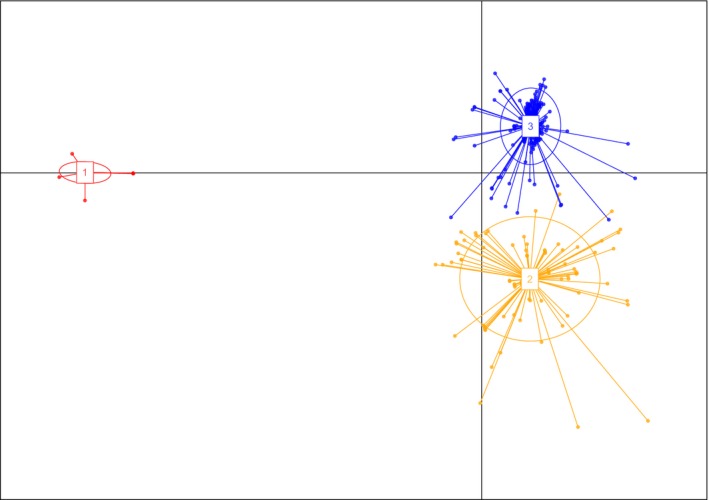
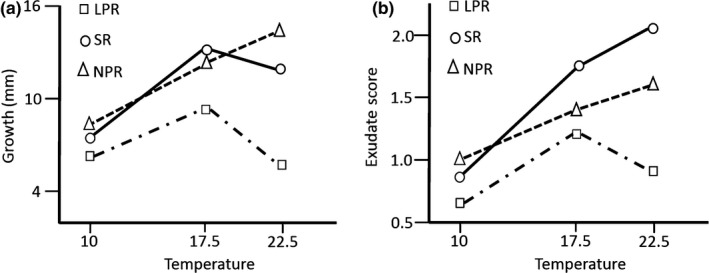
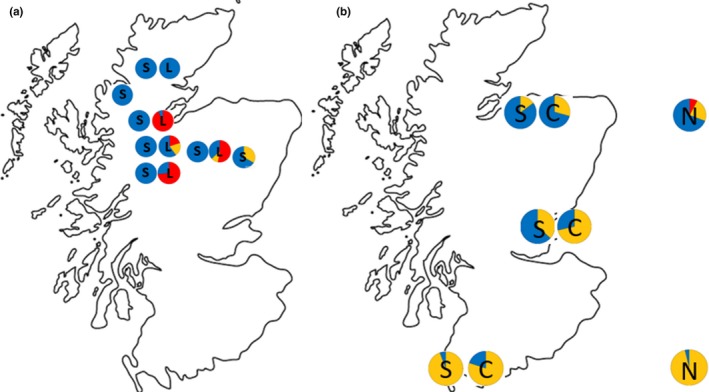
To manage emerging forest diseases and prevent their occurrence in the future, it is essential to determine the origin(s) of the pathogens involved and identify the management practices that have ultimately caused disease problems. One such practice is the widespread planting of exotic tree species within the range of related native taxa. This can lead to emerging forest disease both by facilitating introduction of exotic pathogens and by providing susceptible hosts on which epidemics of native pathogens can develop. We used microsatellite markers to determine the origins of the pathogen responsible for the current outbreak of Dothistroma needle blight (DNB) on native Caledonian Scots pine () populations in Scotland and evaluated the role played by widespread planting of two exotic pine species in the development of the disease outbreak. We distinguished three races of in Scotland, one of low genetic diversity associated with introduced lodgepole pine (), one of high diversity probably derived from the DNB epidemic on introduced Corsican pine ( subsp. ) in England and a third of intermediate diversity apparently endemic on Caledonian Scots pine. These races differed for both growth rate and exudate production in culture. Planting of exotic pine stands in the UK appears to have facilitated the introduction of two exotic races of into Scotland which now pose a threat to native Caledonian pines both directly and through potential hybridization and introgression with the endemic race. Our results indicate that both removal of exotic species from the vicinity of Caledonian pine populations and restriction of movement of planting material are required to minimize the impact of the current DNB outbreak. They also demonstrate that planting exotic species that are related to native species reduces rather than enhances the resilience of forests to pathogens.
为了应对新出现的森林病害并预防其未来发生,确定相关病原体的起源并识别最终导致病害问题的管理措施至关重要。其中一种措施是在相关本地分类群范围内广泛种植外来树种。这可能通过促进外来病原体的引入以及提供易感宿主来引发新出现的森林病害,本地病原体可在这些宿主上引发流行病。我们使用微卫星标记来确定导致苏格兰本土加里东苏格兰松()当前爆发散斑壳针孢叶枯病(DNB)的病原体的起源,并评估两种外来松树物种的广泛种植在病害爆发发展过程中所起的作用。我们在苏格兰区分出了散斑壳的三个种族,一个与引入的黑松()相关,遗传多样性低;一个遗传多样性高,可能源自英格兰引入的科西嘉松(亚种)上的DNB流行病;第三个遗传多样性中等,显然是加里东苏格兰松特有的。这些种族在培养中的生长速率和分泌物产生方面都有所不同。在英国种植外来松林似乎促进了两种外来散斑壳种族引入苏格兰,它们现在对本地加里东松树构成了直接威胁,并且通过与本地种族的潜在杂交和基因渗入也构成了威胁。我们的结果表明,为了尽量减少当前DNB爆发的影响,需要从加里东松种群附近移除外来物种,并限制种植材料的流动。它们还表明,种植与本地物种相关的外来物种会降低而非增强森林对病原体的恢复力。