Gong Caifeng, Valduga Julie, Chateau Alicia, Richard Mylène, Pellegrini-Moïse Nadia, Barberi-Heyob Muriel, Chastagner Pascal, Boura Cédric
Université de Lorraine, CNRS, CRAN, F-54000 Nancy, France.
Service d'Onco-Hématologie Pédiatrique, CHRU-Nancy, F-54000 Nancy, France.
Oncotarget. 2018 Feb 16;9(20):15312-15325. doi: 10.18632/oncotarget.24521. eCollection 2018 Mar 16.
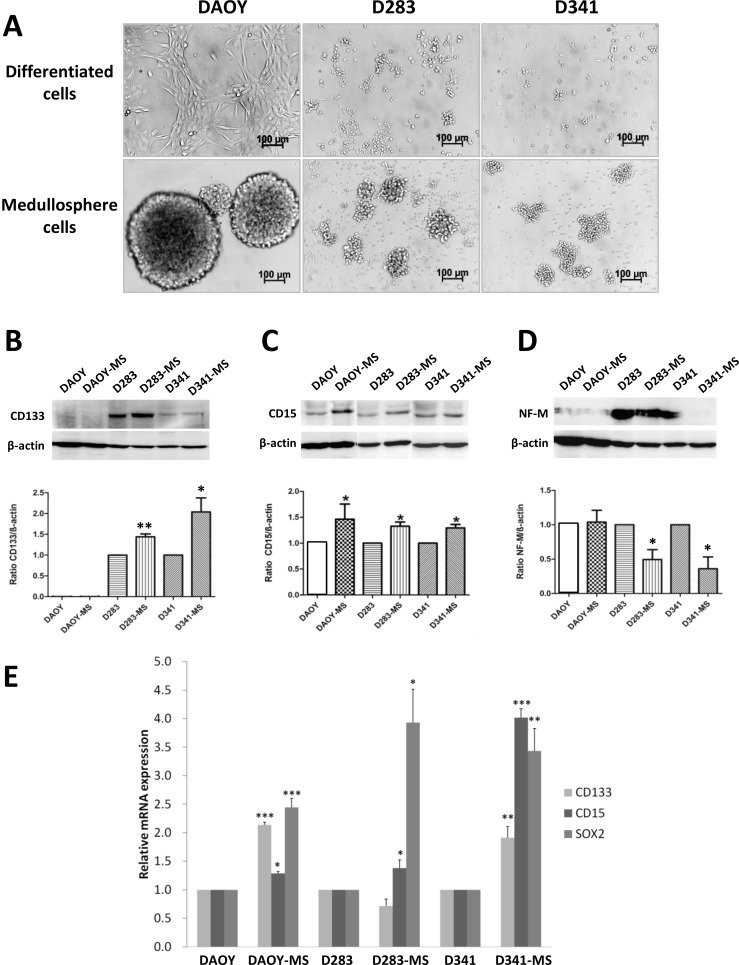
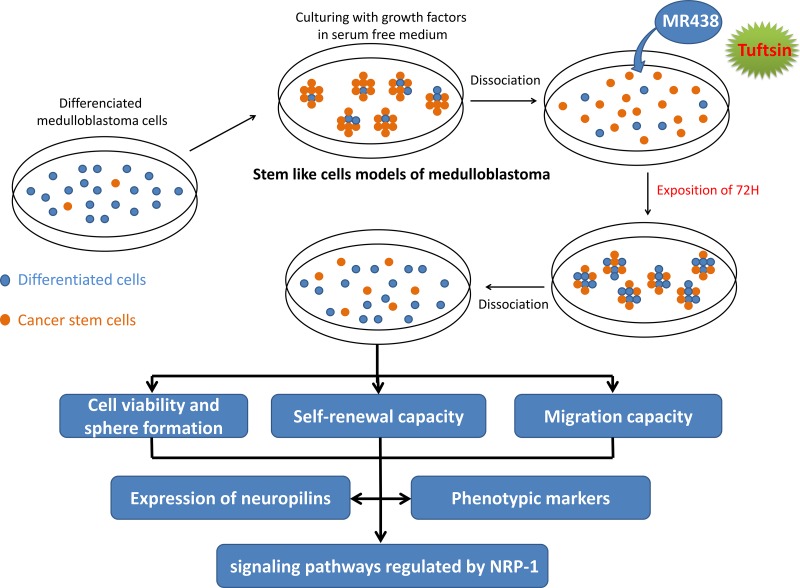
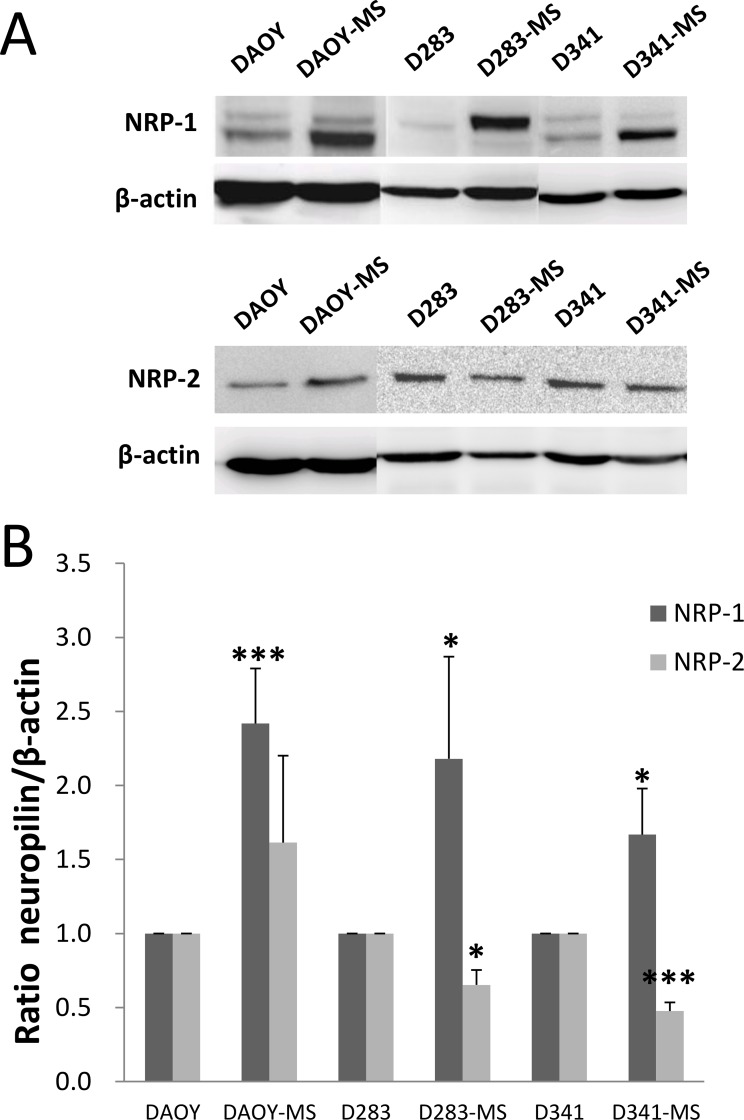
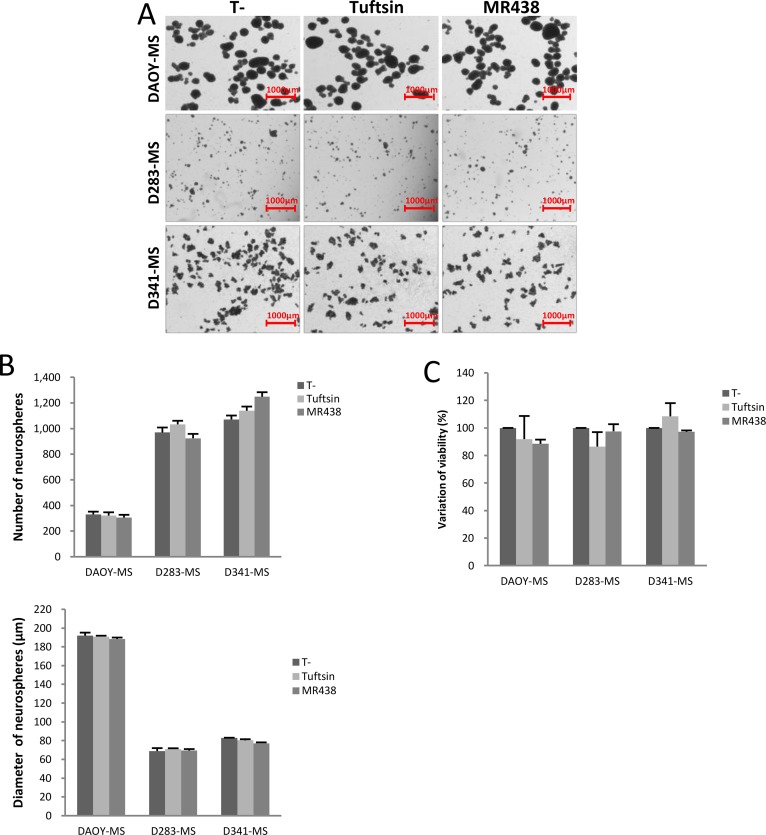
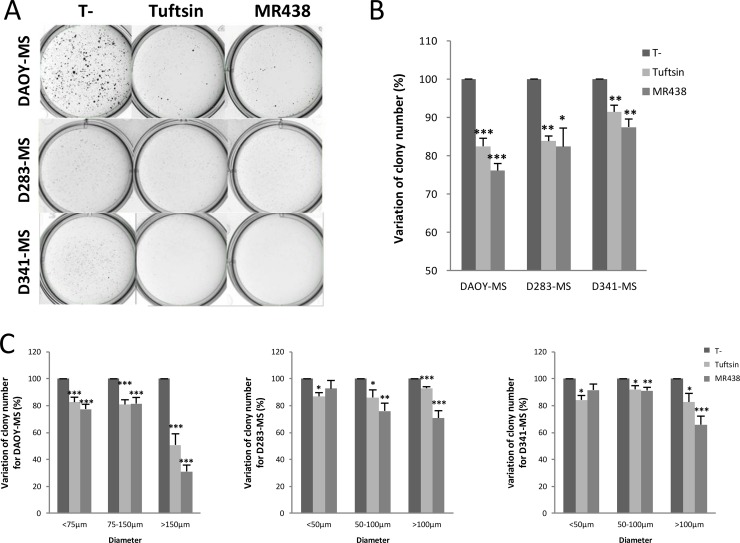
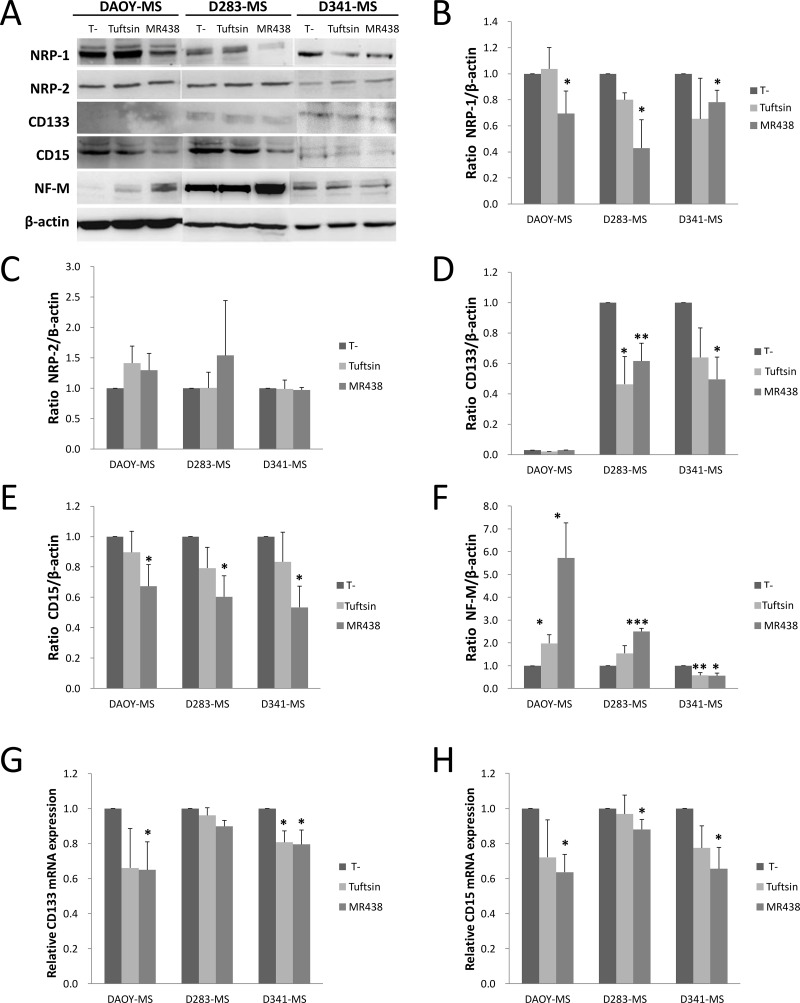
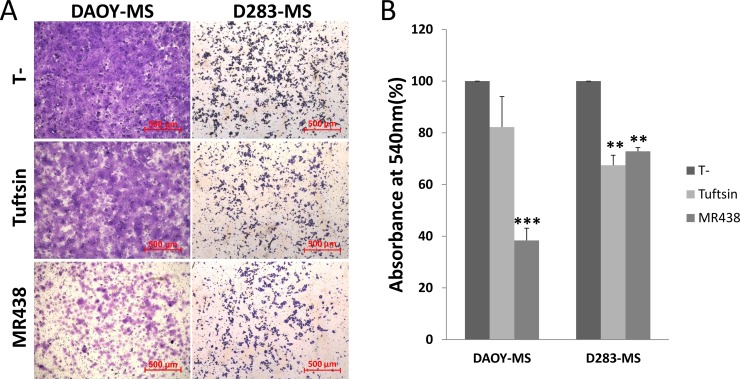
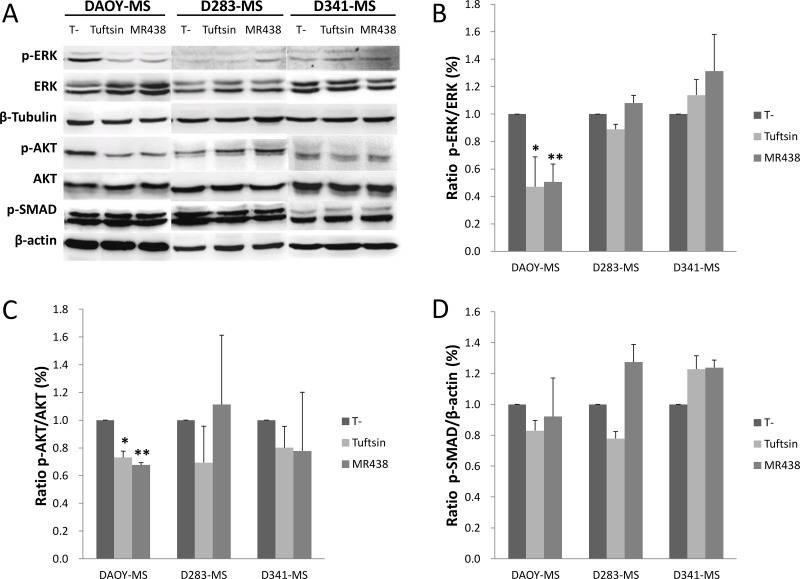
Medulloblastoma (MB) is the most common malignant pediatric brain tumor. Despite the progress of new treatments, the risk of recurrence, morbidity, and death remains important. The neuropilin-1 (NRP-1) receptor has recently been implicated in tumor progression of MB, which seems to play an important role in the phenotype of cancer stem cells. Targeting this receptor appears as an interesting strategy to promote MB stem cells differentiation. Cancer stem-like cells of 3 MB cell lines (DAOY, D283-Med and D341-Med), classified in the more pejorative molecular subgroups, were obtained by enrichment. These models were characterized by an increase of NRP-1 and cancer stem cell markers (CD15, CD133 and Sox2), meanwhile a decrease of the differentiated cell marker Neurofilament-M (NF-M) was observed. Our previous work investigated potential innovative peptidomimetics that specifically target NRP-1 and showed that MR438 had a good affinity for NRP-1. This small molecule decreased the self-renewal capacity of MB stem cells for the 3 cell lines and reduced the invasive ability of DAOY and D283 stem cells while NRP-1 expression and cancer stem cell markers decreased at the same time. Possible molecular mechanisms were explored and showed that the activation of PI3K/AKT and MAPK pathways significantly decreased for DAOY cells after treatment. Finally, our results highlighted that targeting NRP-1 with MR438 could be a potential new strategy to differentiate MB stem cells and could limit medulloblastoma progression.
髓母细胞瘤(MB)是最常见的小儿恶性脑肿瘤。尽管新治疗方法取得了进展,但复发、发病和死亡风险仍然很高。神经纤毛蛋白-1(NRP-1)受体最近被认为与MB的肿瘤进展有关,它似乎在癌症干细胞表型中起重要作用。靶向该受体似乎是促进MB干细胞分化的一种有趣策略。通过富集获得了3种MB细胞系(DAOY、D283-Med和D341-Med)的癌干细胞样细胞,这些细胞系属于预后较差的分子亚组。这些模型的特征是NRP-1和癌干细胞标志物(CD15、CD133和Sox2)增加,同时观察到分化细胞标志物神经丝-M(NF-M)减少。我们之前的工作研究了特异性靶向NRP-1的潜在创新拟肽,结果表明MR438对NRP-1具有良好的亲和力。这种小分子降低了3种细胞系的MB干细胞的自我更新能力,并降低了DAOY和D283干细胞的侵袭能力,同时NRP-1表达和癌干细胞标志物也随之降低。我们还探索了可能的分子机制,结果显示治疗后DAOY细胞中PI3K/AKT和MAPK通路的激活显著降低。最后,我们的结果强调,用MR438靶向NRP-1可能是分化MB干细胞并限制髓母细胞瘤进展的一种潜在新策略。