Departments of Medicine (Cardiology) and Radiology, University of Virginia Health System, Charlottesville, VA, USA.
Vasc Med. 2018 Apr;23(2):143-152. doi: 10.1177/1358863X18754694.
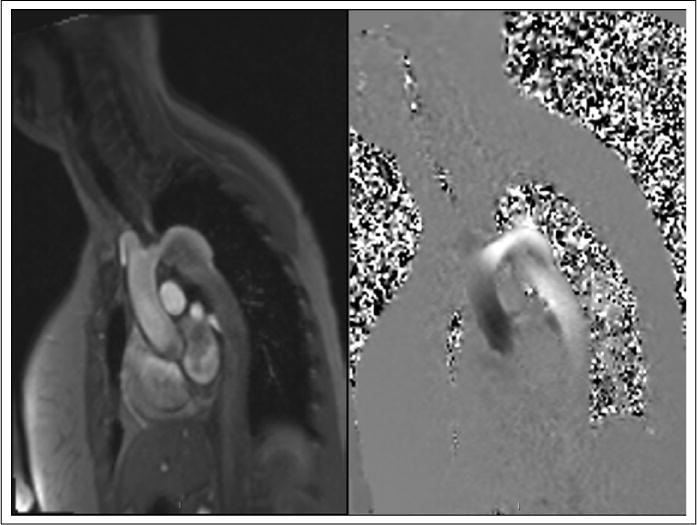
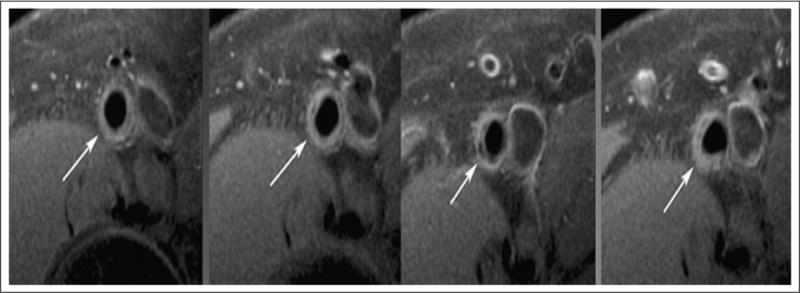
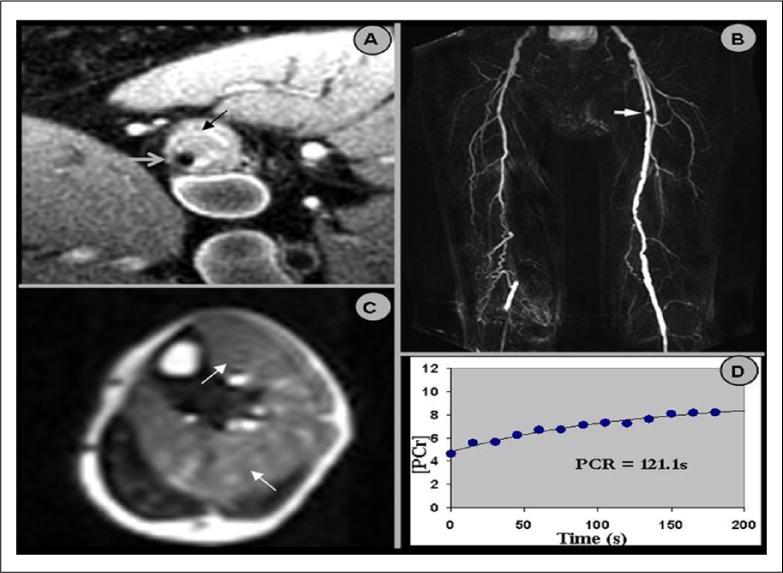
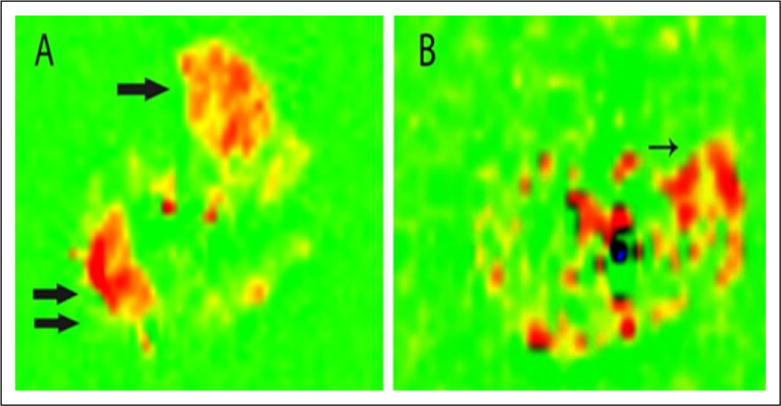
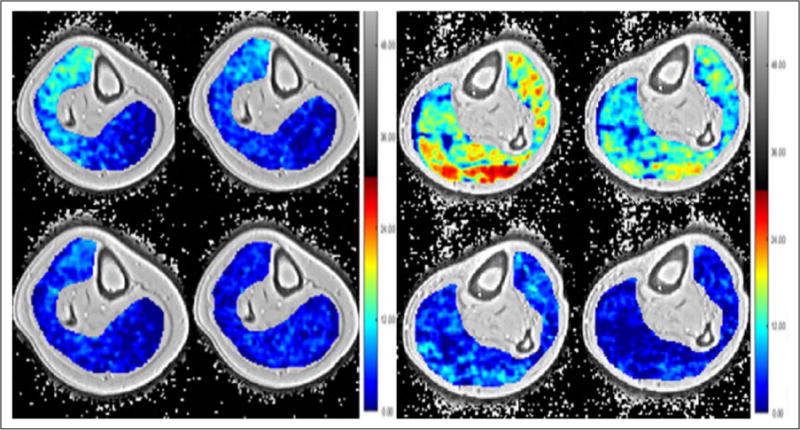
The global burden of peripheral artery disease (PAD) is significant. This has led to numerous recent advances in magnetic resonance imaging (MRI) techniques in PAD. Older techniques such as time of flight MRI or phase contrast MRI are burdened by long acquisition times and significant issues with artifacts. In addition, the most used MRI modality, contrast-enhanced MR angiography (CE-MRA) is limited by the use of gadolinium contrast and its potential toxicity. Novel MRI techniques such as arterial spin labeling (ASL), blood-oxygen-level dependent imaging (BOLD), and first-pass perfusion gadolinium enhancement are advancing the field by providing skeletal muscle perfusion/oxygenation data while maintaining excellent spatial and temporal resolution. Perfusion data can be critical to providing objective clinical data of a visualized stenosis. In addition, there are a number of new MRI sequences assessing plaque composition and lesion severity in the absence of contrast. These approaches used in combination can provide useful clinical and prognostic data and provide critical endpoints in PAD research.
外周动脉疾病(PAD)的全球负担巨大。这导致了磁共振成像(MRI)技术在 PAD 中的许多最新进展。TOF-MRI 或相位对比 MRI 等较旧的技术存在采集时间长和明显伪影问题。此外,最常用的 MRI 模态,对比增强磁共振血管造影(CE-MRA)受到钆造影剂的使用及其潜在毒性的限制。新的 MRI 技术,如动脉自旋标记(ASL)、血氧水平依赖成像(BOLD)和首过灌注钆增强,通过提供骨骼肌灌注/氧合数据,同时保持出色的空间和时间分辨率,推动了该领域的发展。灌注数据对于提供可视化狭窄的客观临床数据至关重要。此外,还有许多新的 MRI 序列可在没有对比的情况下评估斑块成分和病变严重程度。这些方法结合使用可以提供有用的临床和预后数据,并为 PAD 研究提供关键终点。