Department of Oceanography, Dalhousie University, 1355 Oxford Street, Halifax, NS, B3H 4R2, Canada.
Institute for Marine and Antarctic Studies, University of Tasmania, 20 Castray Esplanade, Battery Point, Private Bag 129, Hobart, TAS, 7001, Australia.
Nat Commun. 2018 Apr 10;9(1):1324. doi: 10.1038/s41467-018-03732-9.
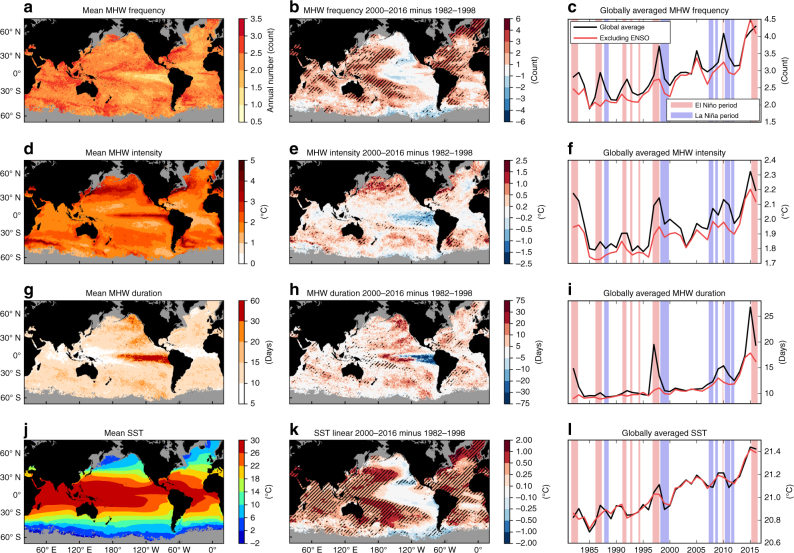
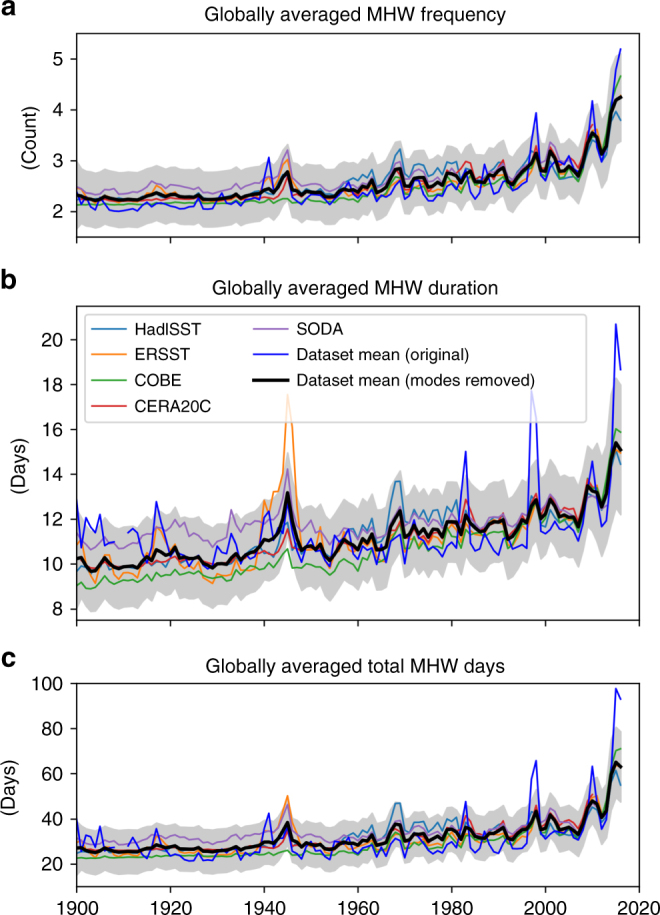
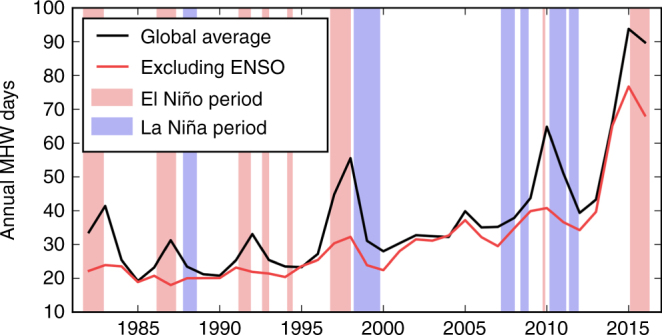
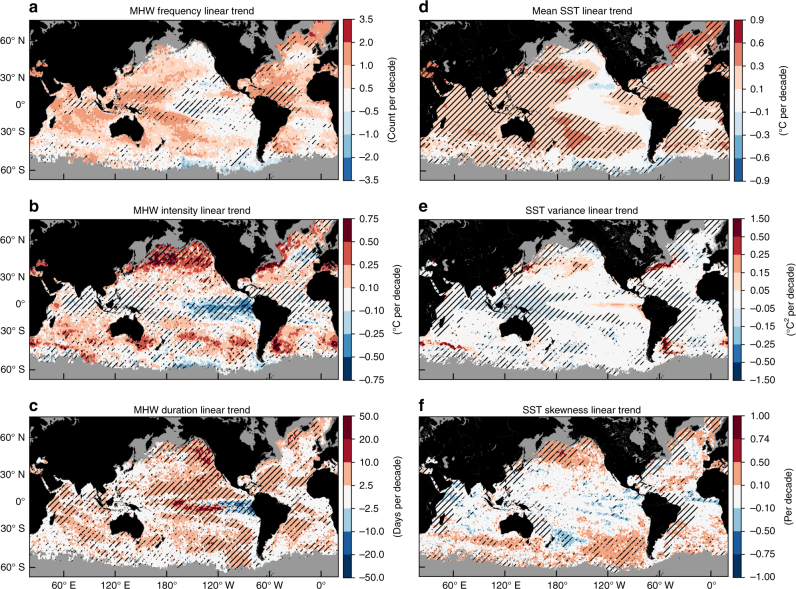
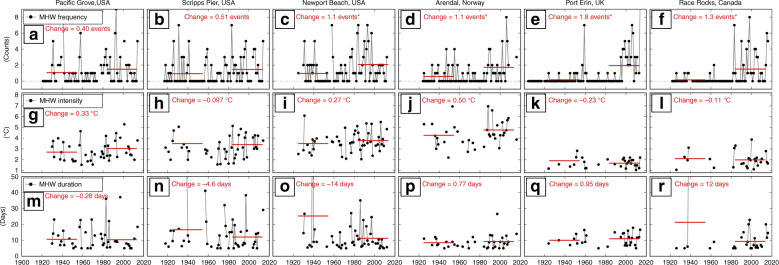
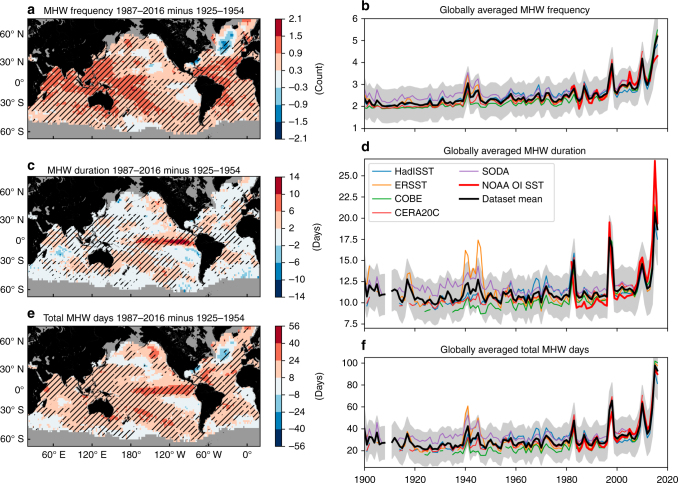
Heatwaves are important climatic extremes in atmospheric and oceanic systems that can have devastating and long-term impacts on ecosystems, with subsequent socioeconomic consequences. Recent prominent marine heatwaves have attracted considerable scientific and public interest. Despite this, a comprehensive assessment of how these ocean temperature extremes have been changing globally is missing. Using a range of ocean temperature data including global records of daily satellite observations, daily in situ measurements and gridded monthly in situ-based data sets, we identify significant increases in marine heatwaves over the past century. We find that from 1925 to 2016, global average marine heatwave frequency and duration increased by 34% and 17%, respectively, resulting in a 54% increase in annual marine heatwave days globally. Importantly, these trends can largely be explained by increases in mean ocean temperatures, suggesting that we can expect further increases in marine heatwave days under continued global warming.
热浪是大气和海洋系统中的重要极端气候现象,它们可能对生态系统产生破坏性和长期性的影响,并带来后续的社会经济后果。最近发生的一些显著的海洋热浪引起了科学界和公众的极大关注。尽管如此,对于这些海洋温度极端事件在全球范围内是如何变化的,仍缺乏全面的评估。利用一系列海洋温度数据,包括全球每日卫星观测记录、每日现场测量和网格化的每月现场数据,我们确定了过去一个世纪海洋热浪的显著增加。我们发现,从 1925 年到 2016 年,全球海洋热浪的平均频率和持续时间分别增加了 34%和 17%,导致全球海洋热浪日数增加了 54%。重要的是,这些趋势在很大程度上可以用海洋平均温度的上升来解释,这表明在持续的全球变暖下,我们可以预期海洋热浪日数会进一步增加。