Department of Cardiology & National Clinical Research Center of Geriatrics Disease, Chinese PLA General Hospital, Beijing 100853, China.
Department of Cardiology, Chengdu Military General Hospital, Chengdu 610083, China.
Oxid Med Cell Longev. 2018 Feb 13;2018:3537609. doi: 10.1155/2018/3537609. eCollection 2018.
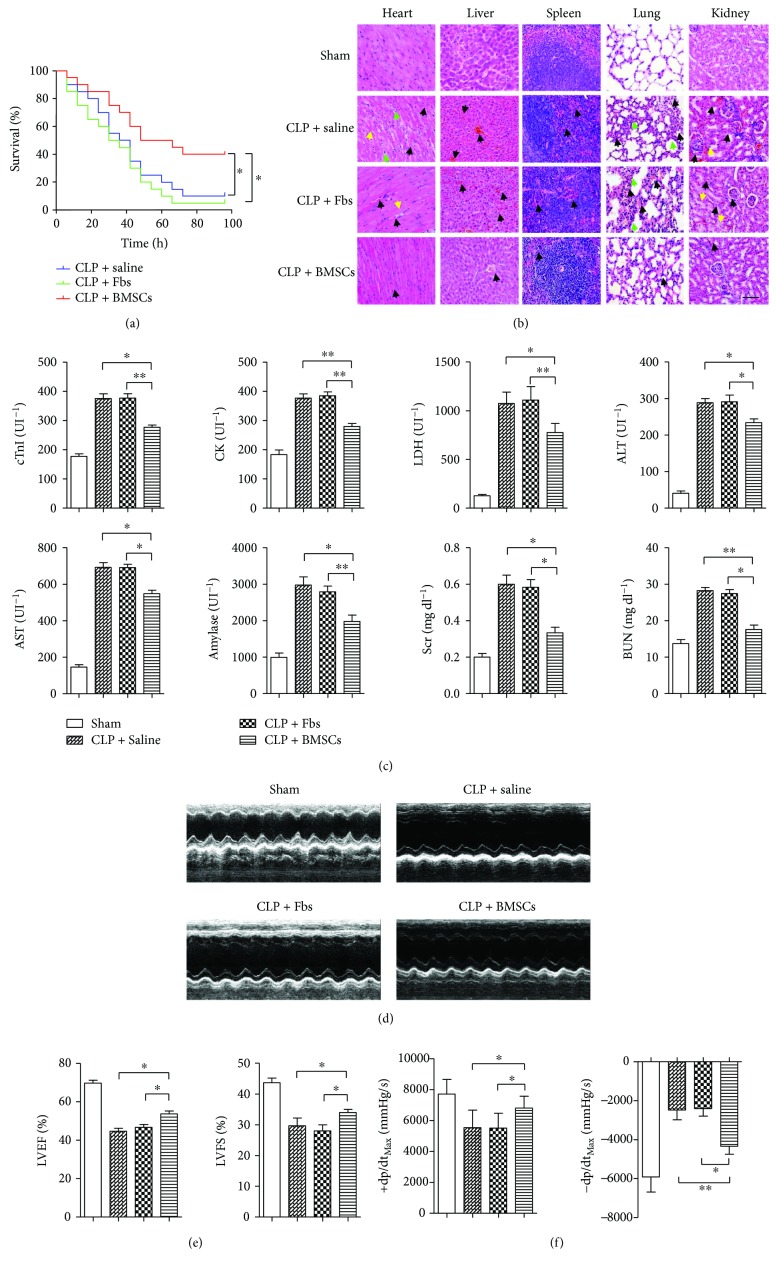
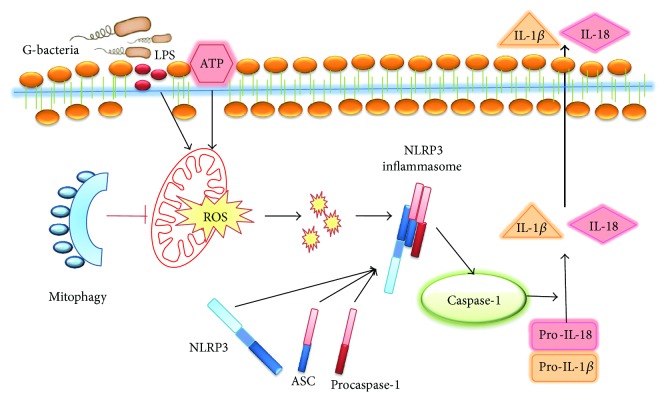
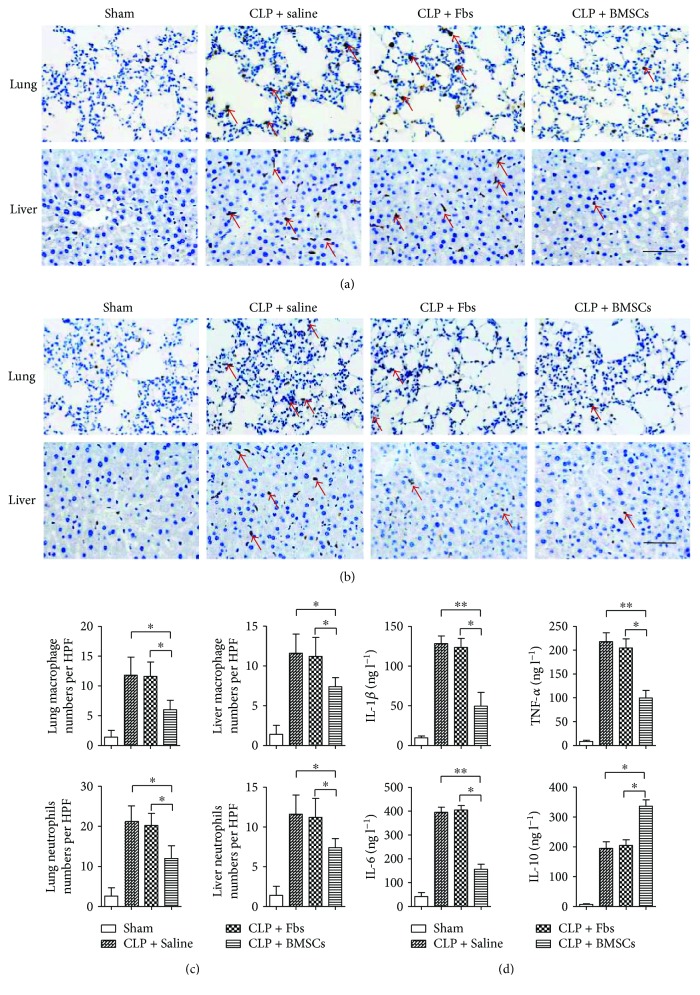
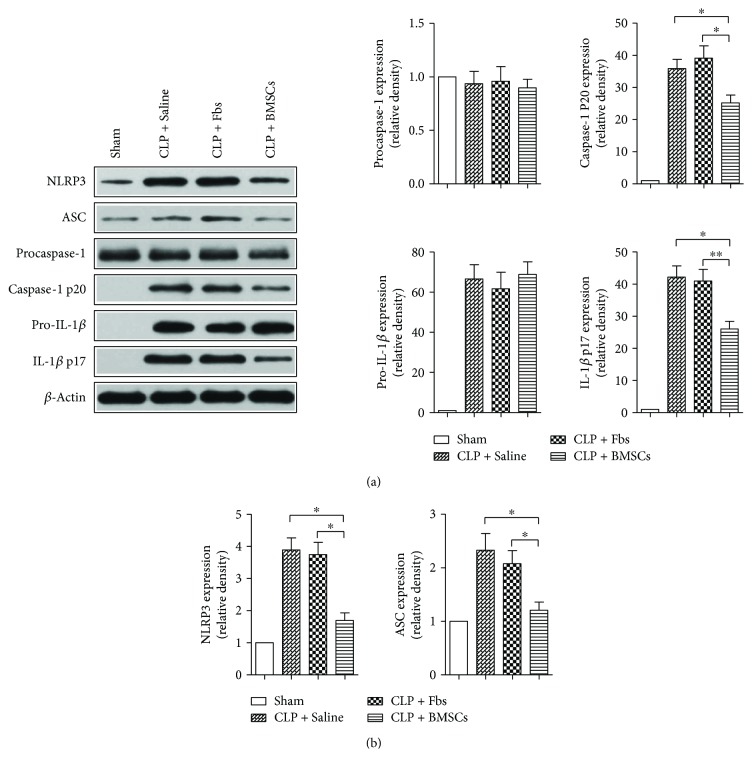
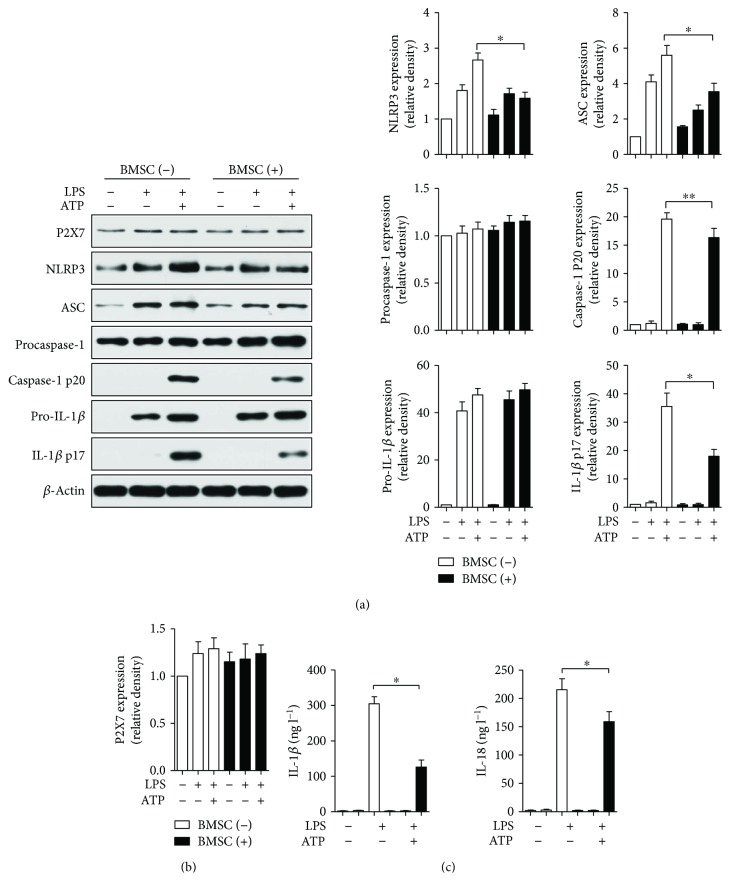
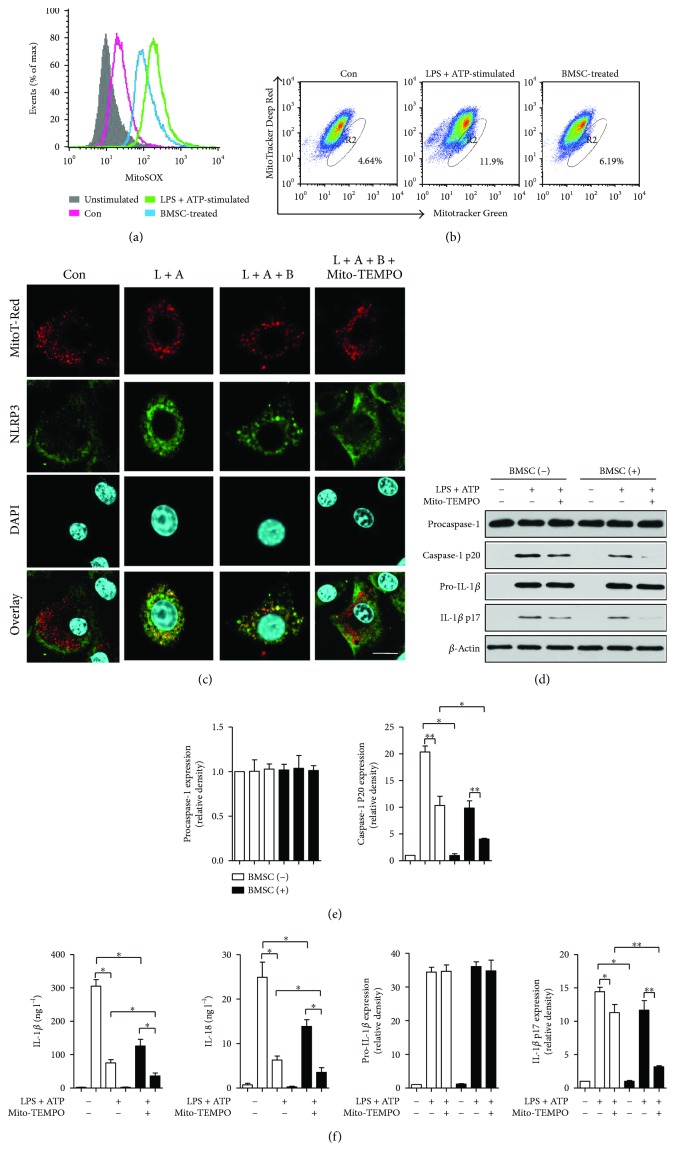
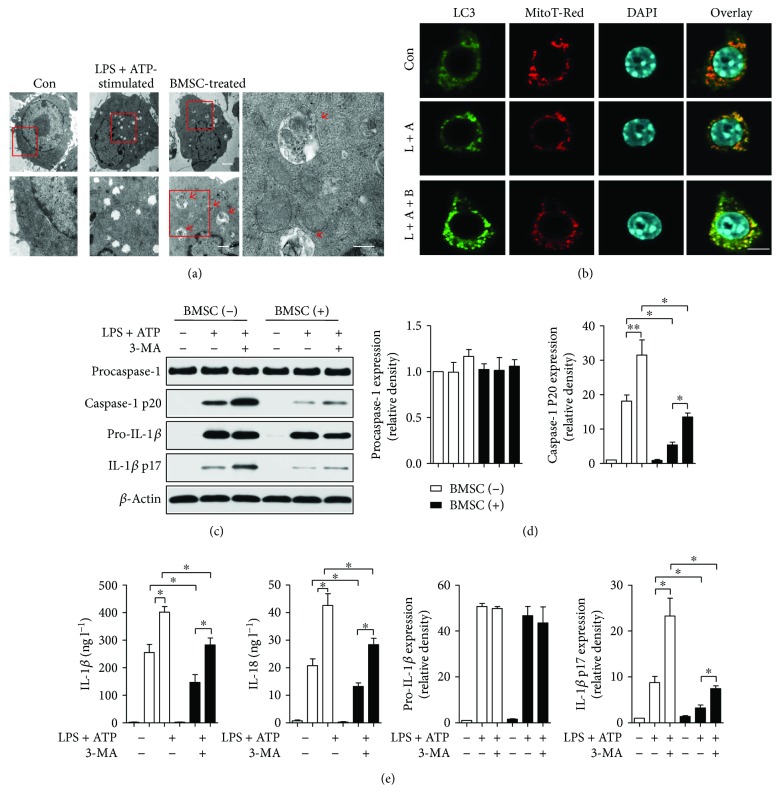
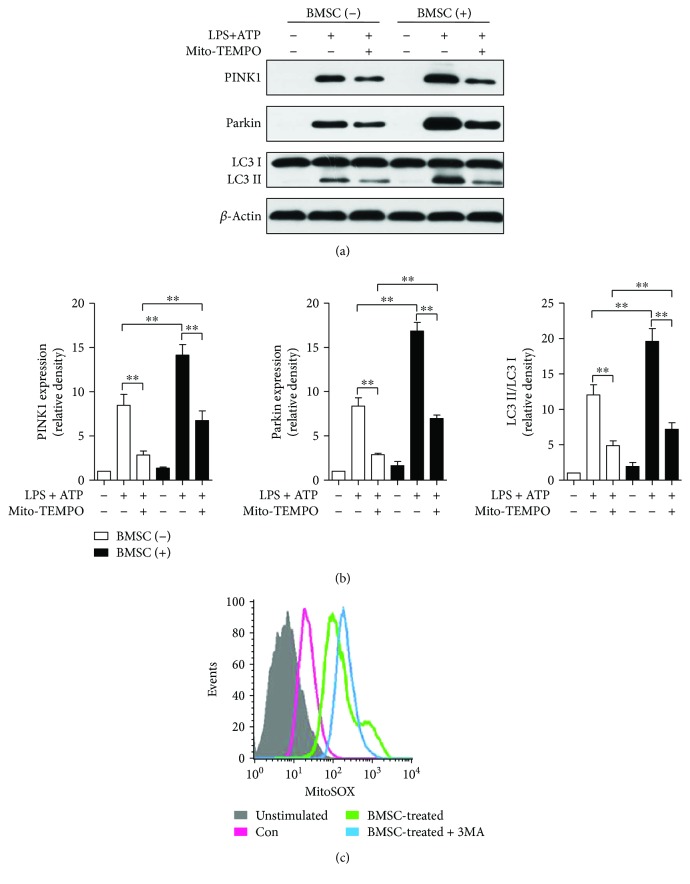
Sepsis, a systemic inflammatory response to infection, is the leading cause of death in the intensive care unit (ICU). Previous studies indicated that mesenchymal stromal cells (MSCs) might have therapeutic potential against sepsis. The current study was designed to investigate the effects of MSCs on sepsis and the underlying mechanisms focusing on inflammasome activation in macrophages. The results demonstrated that the bone marrow-derived mesenchymal stem cells (BMSCs) significantly increased the survival rate and organ function in cecal ligation and puncture (CLP) mice compared with the control-grouped mice. BMSCs significantly restricted NLRP3 inflammasome activation, suppressed the generation of mitochondrial ROS, and decreased caspase-1 and IL-1 activation when cocultured with bone marrow-derived macrophages (BMDMs), the effects of which could be abolished by Mito-TEMPO. Furthermore, the expression levels of caspase-1, IL-1, and IL-18 in BMDMs were elevated after treatment with mitophagy inhibitor 3-MA. Thus, BMSCs exert beneficial effects on inhibiting NLRP3 inflammasome activation in macrophages primarily via both enhancing mitophagy and decreasing mitochondrial ROS. These findings suggest that restricting inflammasome activation in macrophages by increasing mitophagy and decreasing mitochondrial ROS might be a crucial mechanism for MSCs to combat sepsis.
脓毒症是一种全身性炎症反应,是重症监护病房(ICU)死亡的主要原因。先前的研究表明,间充质基质细胞(MSCs)可能对脓毒症具有治疗潜力。本研究旨在研究 MSCs 对脓毒症的影响及其潜在机制,重点关注巨噬细胞中炎症小体的激活。结果表明,与对照组小鼠相比,骨髓来源的间充质干细胞(BMSCs)显著提高了盲肠结扎和穿刺(CLP)小鼠的存活率和器官功能。BMSCs 可显著抑制 NLRP3 炎症小体的激活,抑制线粒体 ROS 的产生,并降低与骨髓来源的巨噬细胞(BMDMs)共培养时 caspase-1 和 IL-1 的激活,而 Mito-TEMPO 可消除这些作用。此外,在用自噬抑制剂 3-MA 处理后,BMDMs 中的 caspase-1、IL-1 和 IL-18 的表达水平升高。因此,BMSCs 通过增强自噬和减少线粒体 ROS 来抑制巨噬细胞中 NLRP3 炎症小体的激活,发挥有益作用。这些发现表明,通过增加自噬和减少线粒体 ROS 来限制巨噬细胞中的炎症小体激活可能是 MSCs 对抗脓毒症的关键机制。