Department of Cardiology & National Clinical Research Center of Geriatrics Disease, Chinese PLA General Hospital, Beijing 100853, China.
Department of Cardiology, Xijing Hospital, Fourth Military Medical University, Xi'an 710032, China.
Oxid Med Cell Longev. 2018 Sep 4;2018:9286458. doi: 10.1155/2018/9286458. eCollection 2018.
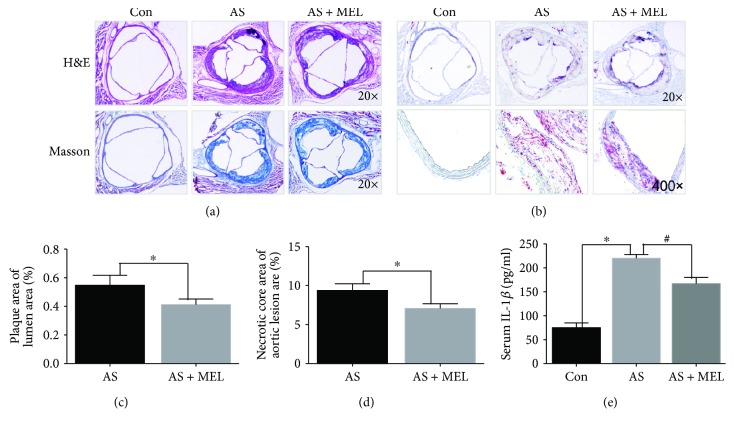
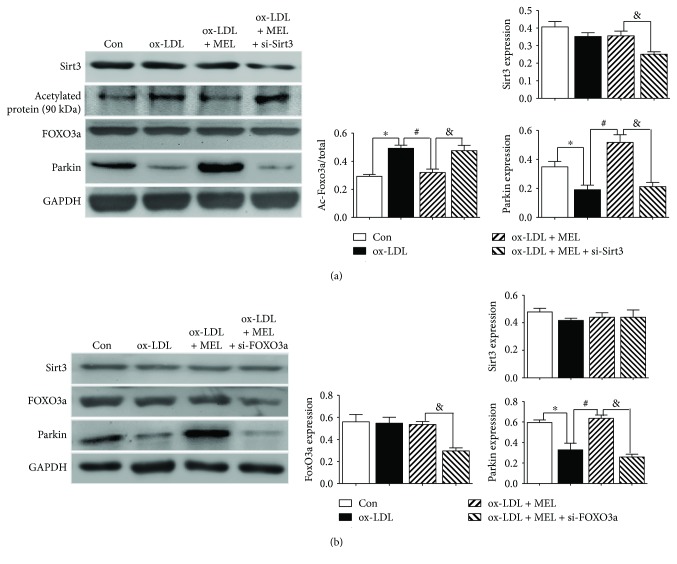
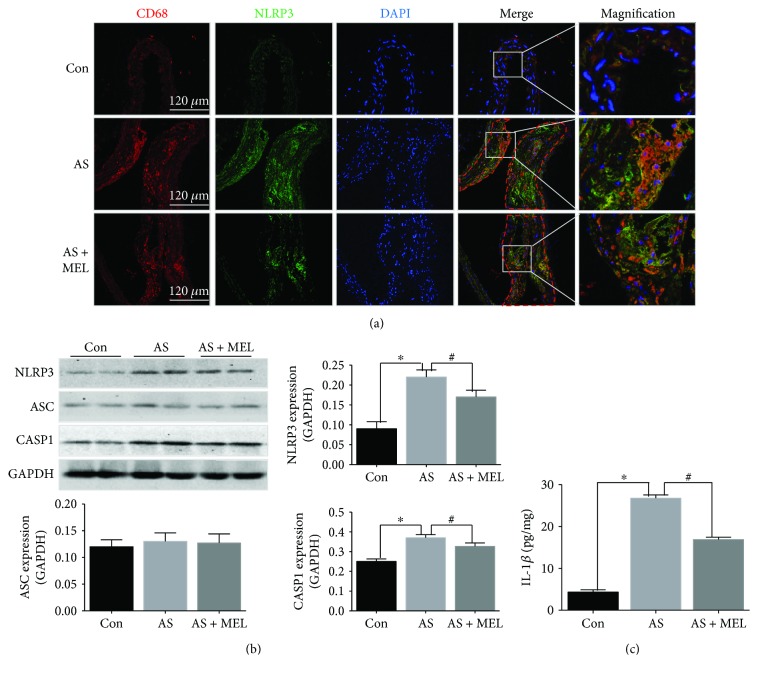
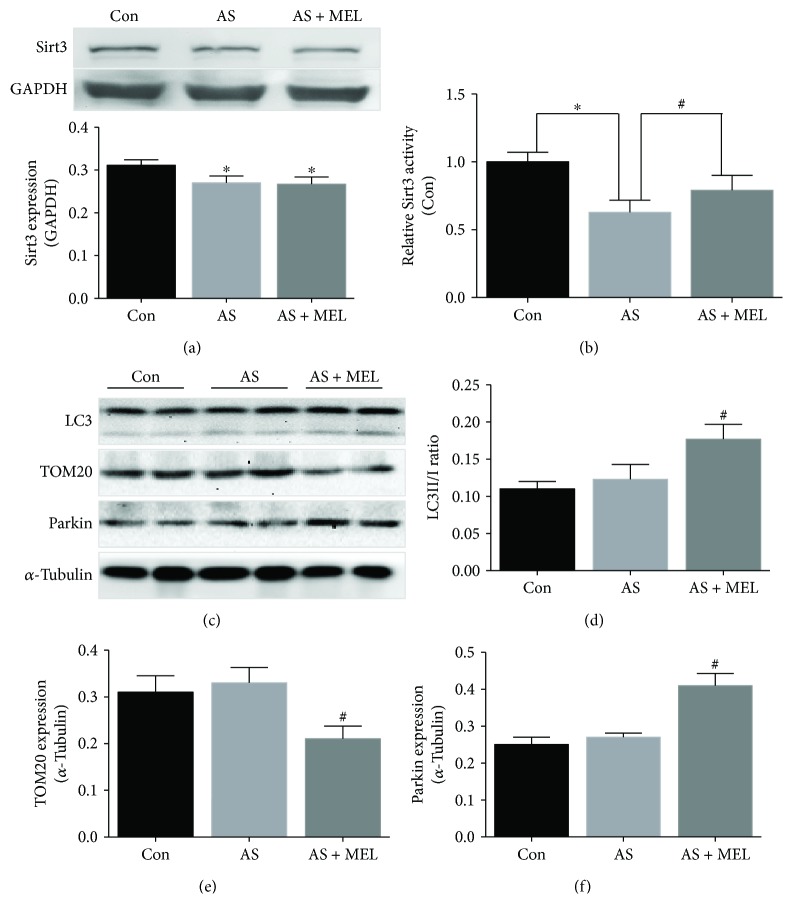
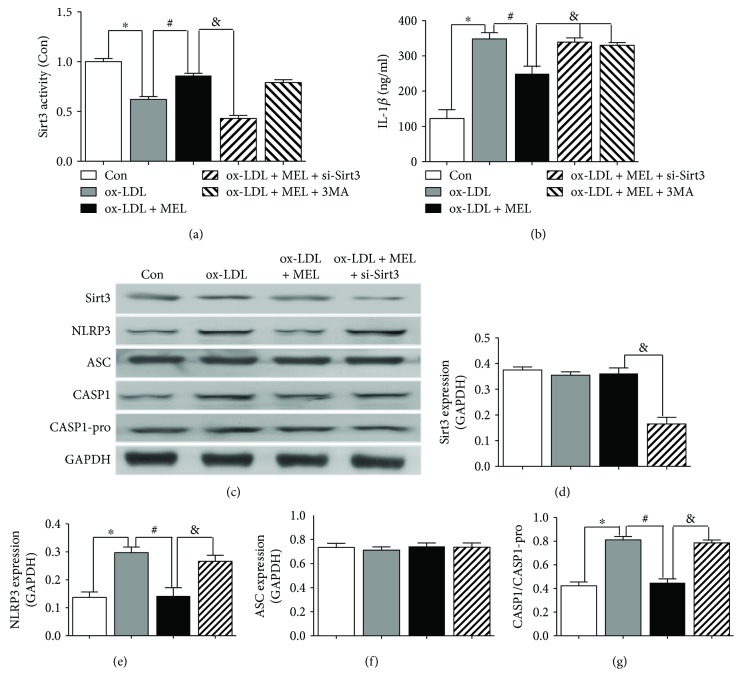
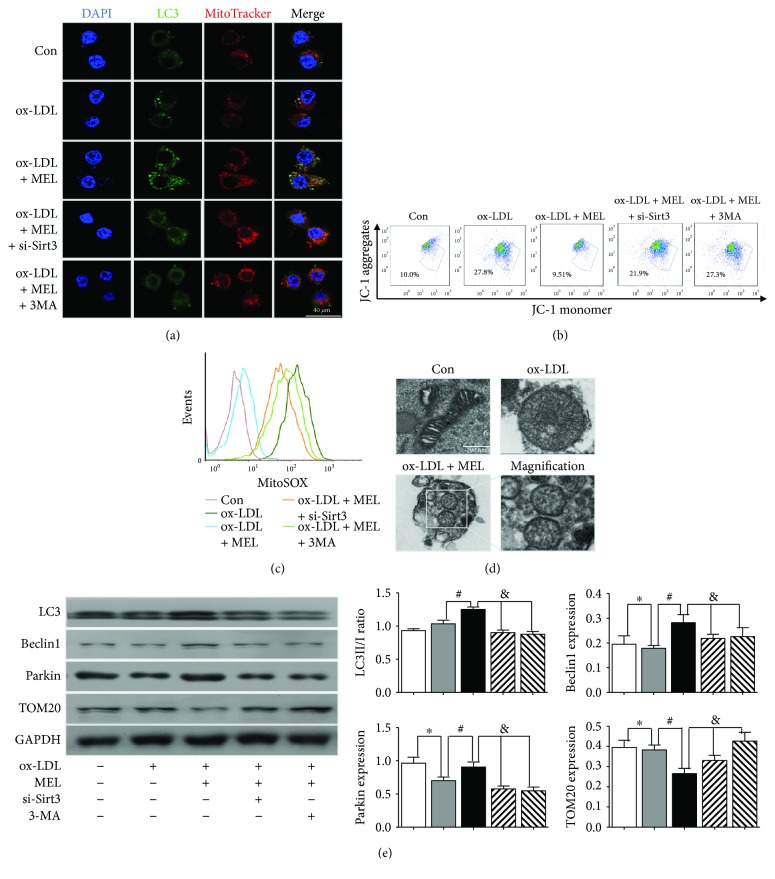
The NLRP3 (nucleotide-binding domain and leucine-rich repeat pyrin domain containing 3) inflammasome-mediated inflammatory responses are critically involved in the progression of atherosclerosis (AS), which is the essential cause for cardiovascular diseases. Melatonin has anti-inflammatory properties. However, little is known about the potential effects of melatonin in the pathological process of AS. Herein, we demonstrate that melatonin suppressed prolonged NLRP3 inflammasome activation in atherosclerotic lesions by reactive oxygen species (ROS) scavenging via mitophagy in macrophages. The atherosclerotic mouse model was induced with a high-fat diet using ApoE mice. Melatonin treatment markedly attenuated AS plaque size and vulnerability. Furthermore, melatonin decreased NLRP3 inflammasome activation and the consequent IL-1 secretion within atherosclerotic lesions. Despite the unchanged protein expression, the silent information regulator 3 (Sirt3) activity was elevated in the atherosclerotic lesions in melatonin-treated mice. In ox-LDL-treated macrophages, melatonin attenuated the NLRP3 inflammasome activation and the inflammatory factors secretion, while this protective effect was abolished by either Sirt3 silence or autophagy inhibitor 3-MA. Mitochondrial ROS (mitoROS), which was a recognized inducer for NLRP3 inflammasome, was attenuated by melatonin through the induction of mitophagy. Both Sirt3-siRNA and autophagy inhibitor 3-MA partially abolished the beneficial effects of melatonin on mitoROS clearance and NLRP3 inflammasome activation, indicating the crucial role of Sirt3-mediated mitophagy. Furthermore, we demonstrated that melatonin protected against AS via the Sirt3/FOXO3a/Parkin signaling pathway. In conclusion, the current study demonstrated that melatonin prevented atherosclerotic progression, at least in part, via inducing mitophagy and attenuating NLRP3 inflammasome activation, which was mediated by the Sirt3/FOXO3a/Parkin signaling pathway. Collectively, our study provides insight into melatonin as a new target for therapeutic intervention for AS.
NLRP3(核苷酸结合域和富含亮氨酸重复吡咯烷域包含 3)炎性小体介导的炎症反应在动脉粥样硬化(AS)的进展中起着至关重要的作用,AS 是心血管疾病的主要原因。褪黑素具有抗炎作用。然而,对于褪黑素在 AS 病理过程中的潜在作用知之甚少。在此,我们证明褪黑素通过巨噬细胞中的线粒体自噬清除活性氧(ROS)来抑制动脉粥样硬化病变中 NLRP3 炎性小体的长期激活。使用 ApoE 小鼠通过高脂肪饮食诱导动脉粥样硬化小鼠模型。褪黑素治疗显著减轻 AS 斑块大小和易损性。此外,褪黑素降低了 NLRP3 炎性小体激活和随后在动脉粥样硬化病变中的 IL-1 分泌。尽管蛋白表达不变,但在褪黑素处理的小鼠动脉粥样硬化病变中,沉默信息调节因子 3(Sirt3)的活性升高。在 ox-LDL 处理的巨噬细胞中,褪黑素减弱了 NLRP3 炎性小体的激活和炎症因子的分泌,而这种保护作用被 Sirt3 沉默或自噬抑制剂 3-MA 所消除。线粒体 ROS(mitoROS)是 NLRP3 炎性小体的公认诱导剂,通过诱导线粒体自噬被褪黑素减弱。Sirt3-siRNA 和自噬抑制剂 3-MA 部分消除了褪黑素对 mitoROS 清除和 NLRP3 炎性小体激活的有益作用,表明 Sirt3 介导的线粒体自噬的关键作用。此外,我们证明褪黑素通过 Sirt3/FOXO3a/Parkin 信号通路来保护 AS。总之,本研究表明褪黑素通过诱导线粒体自噬和抑制 NLRP3 炎性小体激活来预防动脉粥样硬化进展,至少部分是通过 Sirt3/FOXO3a/Parkin 信号通路介导的。总的来说,我们的研究为褪黑素作为动脉粥样硬化治疗干预的新靶点提供了新的认识。