Müller K H, Trust T J, Kay W W
Department of Biochemistry and Microbiology, University of Victoria, British Columbia, Canada.
J Bacteriol. 1988 Mar;170(3):1076-81. doi: 10.1128/jb.170.3.1076-1081.1988.
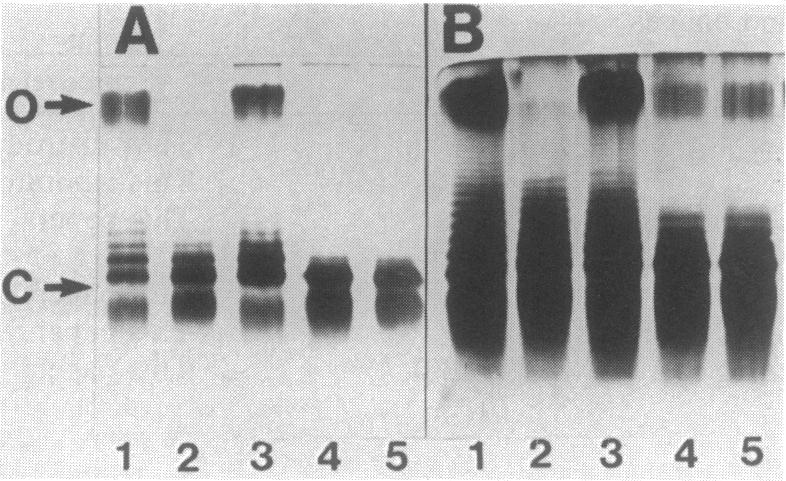
The human pathogen Salmonella enteritidis 3b was found to be highly resistant to phage P22 and Mu derivatives. The Mu sensitivity (musA1) allele from Salmonella typhimurium could be transferred to S. enteritidis 3b at low frequency by cotransduction with hisG::Tn10. Sensitivity to Mu resulted in a large reduction in the number of lipopolysaccharide core-region oligosaccharides that were substituted with O-antigen polysaccharide. The residual high-molecular-weight lipopolysaccharide appeared to be a hybrid displaying O antigens which were immunologically related to those of S. typhimurium and not to those of S. enteritidis. Consequently, Mu d1(Ap lac) could then be transduced into Mus strains forming stable lysogens. On temperature induction, Mu transposition could easily be used to generate mutations in genes coding for cell surface antigens including fimbriae, lipopolysaccharide, and flagella.
人类病原体肠炎沙门氏菌3b被发现对噬菌体P22和Mu衍生物具有高度抗性。鼠伤寒沙门氏菌的Mu敏感性(musA1)等位基因可通过与hisG::Tn10共转导以低频率转移到肠炎沙门氏菌3b中。对Mu的敏感性导致被O抗原多糖取代的脂多糖核心区域寡糖数量大幅减少。残留的高分子量脂多糖似乎是一种杂种,显示出与鼠伤寒沙门氏菌而非肠炎沙门氏菌的O抗原具有免疫相关性的O抗原。因此,Mu d1(Ap lac)随后可被转导到Mus菌株中形成稳定的溶原菌。在温度诱导下,Mu转座可轻松用于在编码包括菌毛、脂多糖和鞭毛在内的细胞表面抗原的基因中产生突变。