Department of Chemistry, University of Cambridge, Cambridge, United Kingdom.
Structural Bioinformatics Unit, Institut Pasteur, CNRS UMR 3528, Paris, France.
Biophys J. 2018 Apr 10;114(7):1604-1613. doi: 10.1016/j.bpj.2018.02.028.
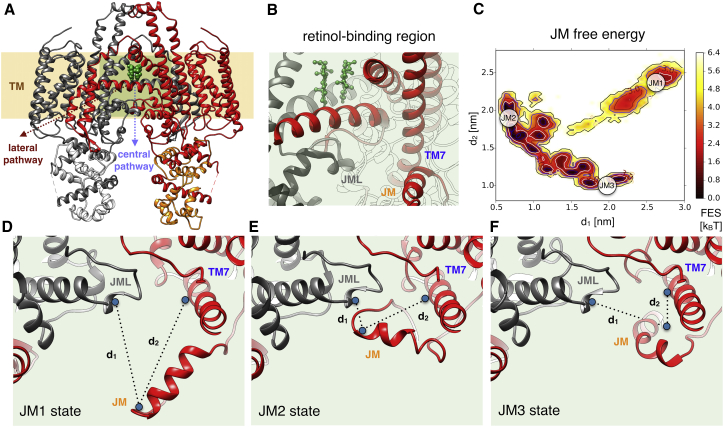
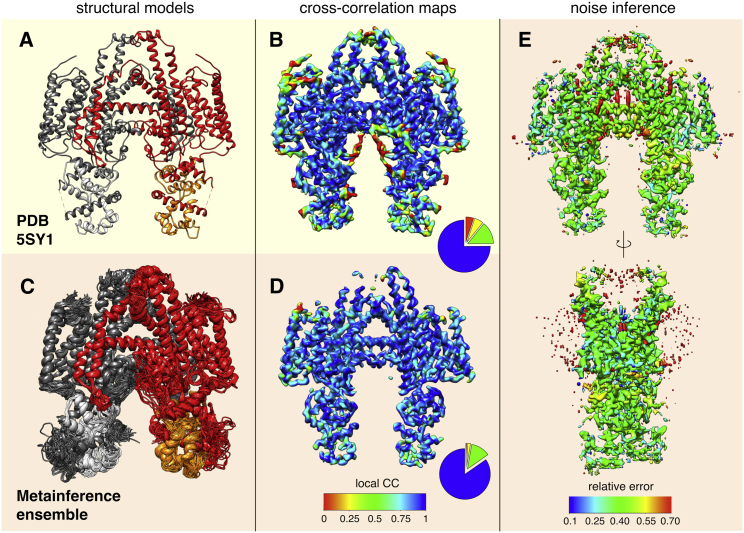
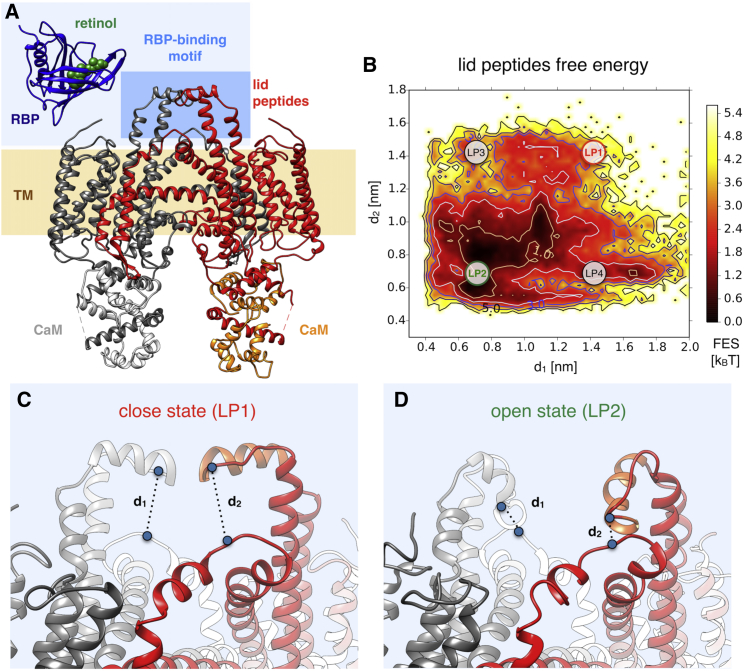
Cryo-electron microscopy is rapidly emerging as a powerful technique to determine the structures of complex macromolecular systems elusive to other techniques. Because many of these systems are highly dynamical, characterizing their movements is also a crucial step to unravel their biological functions. To achieve this goal, we report an integrative modeling approach to simultaneously determine structure and dynamics of macromolecular systems from cryo-electron microscopy density maps. By quantifying the level of noise in the data and dealing with their ensemble-averaged nature, this approach enables the integration of multiple sources of information to model ensembles of structures and infer their populations. We illustrate the method by characterizing structure and dynamics of the integral membrane receptor STRA6, thus providing insights into the mechanisms by which it interacts with retinol binding protein and translocates retinol across the membrane.
冷冻电子显微镜技术正在迅速崛起,成为一种强大的技术,可以确定其他技术难以捉摸的复杂大分子系统的结构。由于这些系统中的许多都是高度动态的,因此描述它们的运动也是揭示其生物学功能的关键步骤。为了实现这一目标,我们报告了一种综合建模方法,可以从冷冻电子显微镜密度图中同时确定大分子系统的结构和动力学。通过量化数据中的噪声水平并处理其集合平均性质,该方法能够整合多种信息源来模拟结构集合并推断其种群。我们通过描述整联膜受体 STRA6 的结构和动力学来举例说明该方法,从而深入了解其与视黄醇结合蛋白相互作用并将视黄醇穿过膜转运的机制。