Department of Clinical Medicine, University of Bergen, N-5021 Bergen, Norway.
Department of Orthopaedic Surgery, Haukeland University Hospital, Jonas Lies vei 87, N-5021 Bergen, Norway.
Int J Mol Sci. 2018 Apr 6;19(4):1101. doi: 10.3390/ijms19041101.
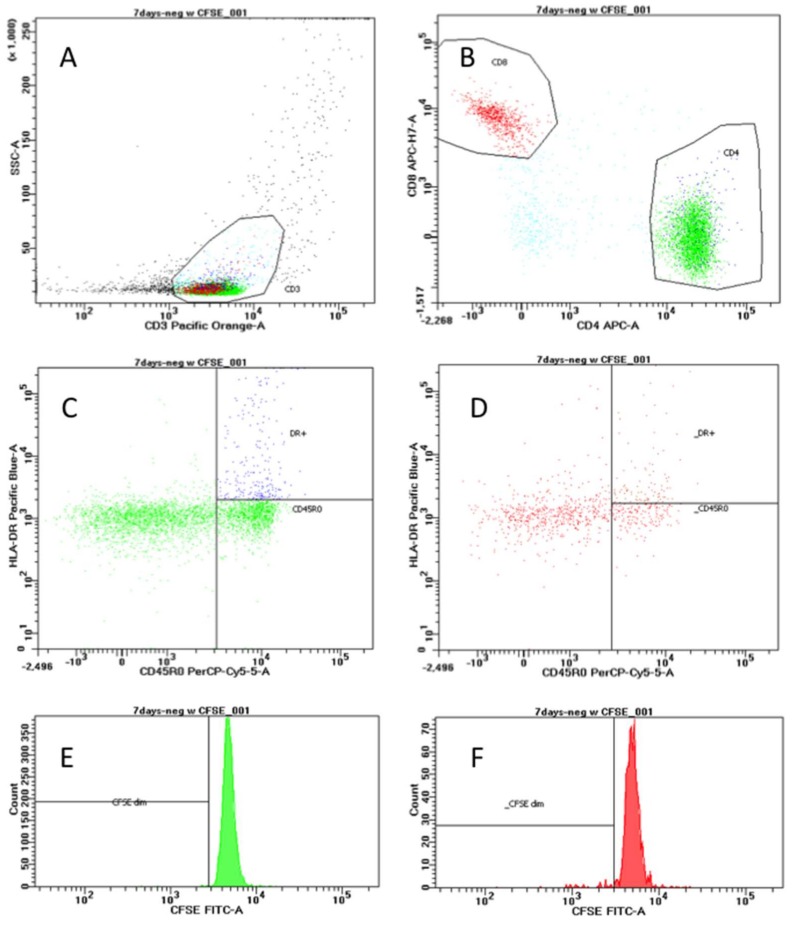
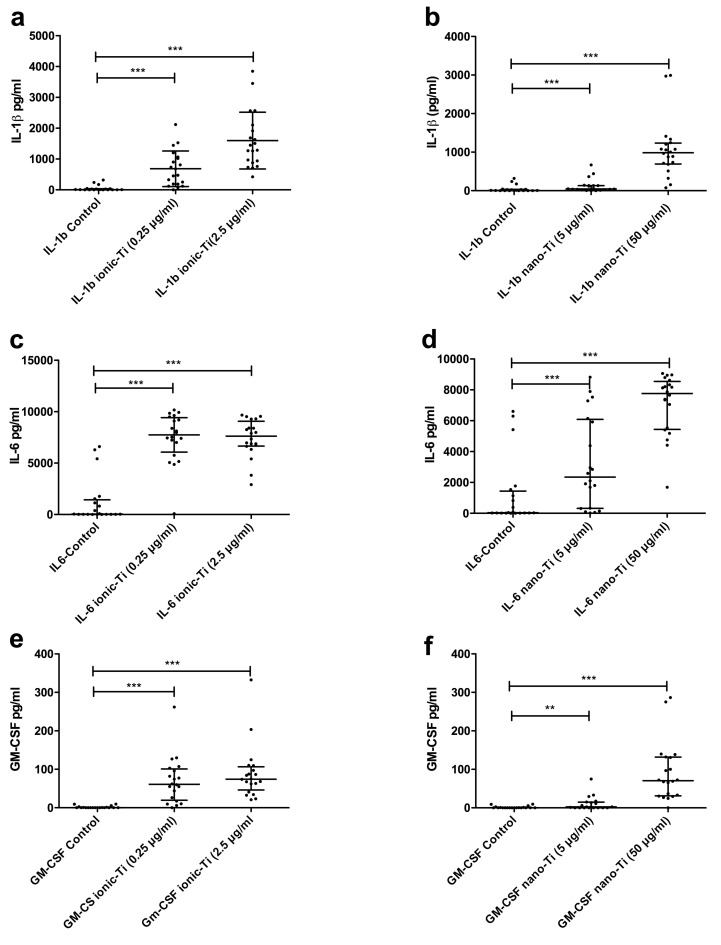
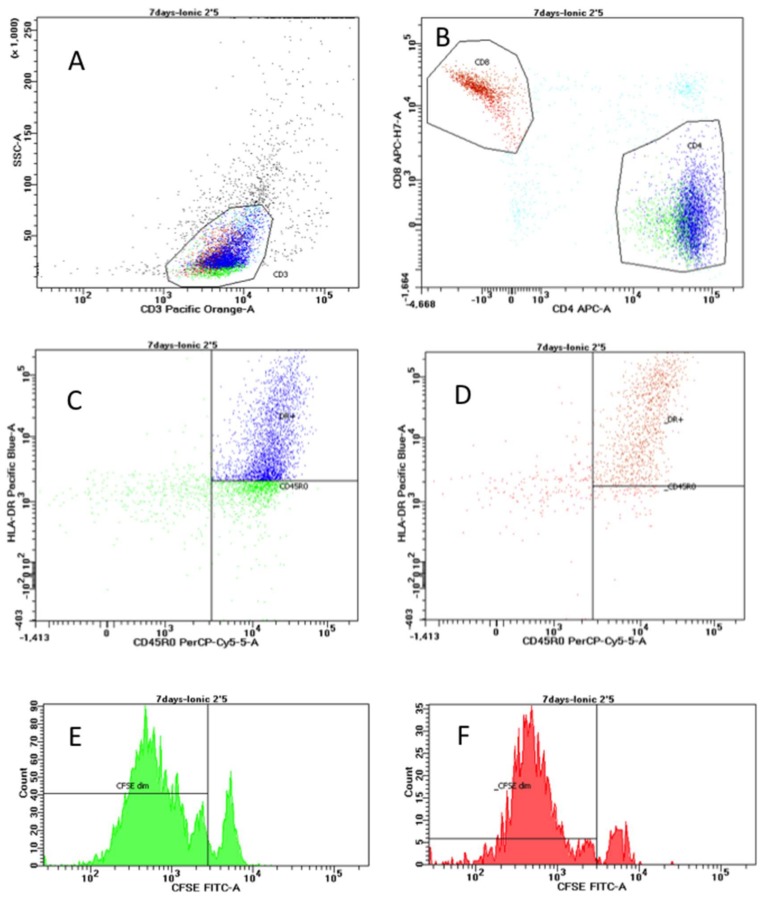
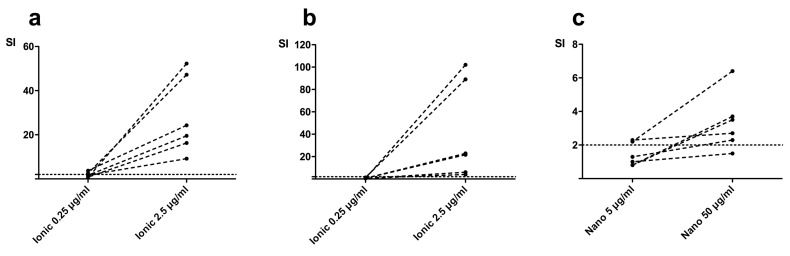
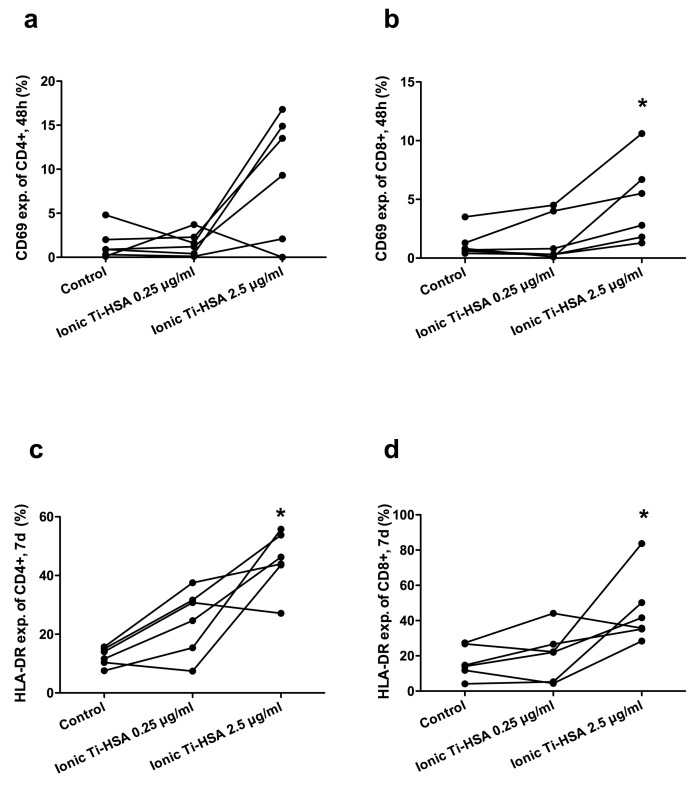
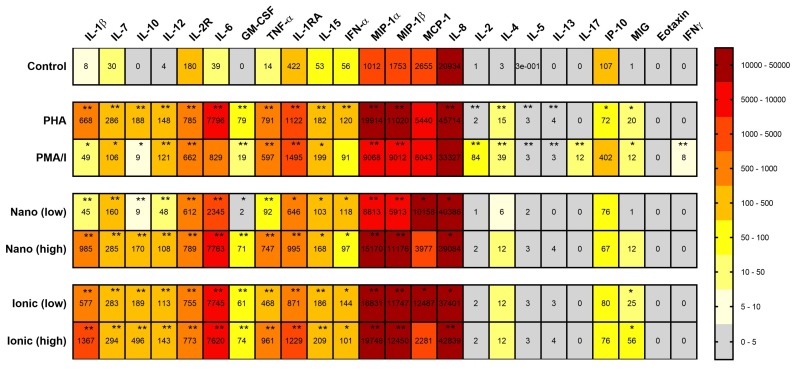
Titanium is used in a wide variety of materials ranging from medical devices to materials used in everyday life. Adverse biological reactions that could occur in patients, consumers, and workers should be monitored and prevented. There is a lack of available agents to test and predict titanium-related hypersensitivity. The aim of this study was to develop two bioavailable titanium substances in ionic and nanoparticulate form to serve as antigens for hypersensitivity testing in vitro. Peripheral blood mononuclear cells from 20 test subjects were stimulated with the antigens and secretion of monocytic and lymphatic cytokines and chemokines were measured by a multiplex bead assay. Lymphocyte stimulation indices were also determined in a subset of test subjects by measuring CD69 and HLA-DR expression by flow cytometry. Cytokine profiling revealed that both antigens increased production of typical monocyte and macrophage secreted cytokines after 24 h, with significant increases in IL-1β, IL-7, IL-10, IL-12, IL-2R, IL-6, GM-CSF, TNF-α, IL-1RA, MIP-1α, MIP-1β, IFN-α, and IL-15. Lymphatic cytokines and chemokines were not significantly induced by activation. After seven days of stimulation, ionic-Ti (2.5 μg/mL) caused proliferation (stimulation index > 2) of CD4+ cells and CD8+ cells in all persons tested ( = 6), while titanium dioxide nanoparticles (50 μg/mL) only caused significant proliferation of CD4+ cells. Our preliminary results show that the experimental titanium antigens, especially the ionic form, induce a general inflammatory response in vitro. A relevant cohort of test subjects is required to further elucidate their potential for predictive hypersensitivity testing.
钛被广泛应用于从医疗器械到日常生活材料等各种材料。应监测和预防可能在患者、消费者和工人中发生的不良生物反应。目前缺乏可用的试剂来测试和预测与钛相关的过敏反应。本研究旨在开发两种具有生物利用度的钛离子和纳米颗粒形式的物质,作为体外过敏测试的抗原。用抗原刺激 20 名测试对象的外周血单核细胞,并通过多重珠粒分析测量单核细胞和淋巴细胞细胞因子和趋化因子的分泌。在测试对象的亚组中,还通过流式细胞术测量 CD69 和 HLA-DR 的表达来确定淋巴细胞刺激指数。细胞因子谱分析显示,两种抗原在 24 小时后均增加了典型单核细胞和巨噬细胞分泌的细胞因子的产生,其中 IL-1β、IL-7、IL-10、IL-12、IL-2R、IL-6、GM-CSF、TNF-α、IL-1RA、MIP-1α、MIP-1β、IFN-α和 IL-15 的增加具有统计学意义。淋巴细胞细胞因子和趋化因子的激活没有明显诱导。刺激 7 天后,离子-Ti(2.5μg/mL)引起所有测试者(n=6)的 CD4+细胞和 CD8+细胞增殖(刺激指数>2),而二氧化钛纳米颗粒(50μg/mL)仅引起 CD4+细胞的显著增殖。我们的初步结果表明,实验性钛抗原,特别是离子形式,在体外引起普遍的炎症反应。需要进行相关的测试对象队列研究来进一步阐明它们在预测性过敏测试中的潜力。