Department of Cell Biology, National Translational Science Center for Molecular Medicine, State Key Laboratory of Cancer Biology, Fourth Military Medical University, Xi'an 710032, China.
Department of Physiology, Basic Medical College, Shaanxi University of Chinese Medicine, Xianyang 712046, China.
Int J Mol Sci. 2018 Apr 10;19(4):1145. doi: 10.3390/ijms19041145.
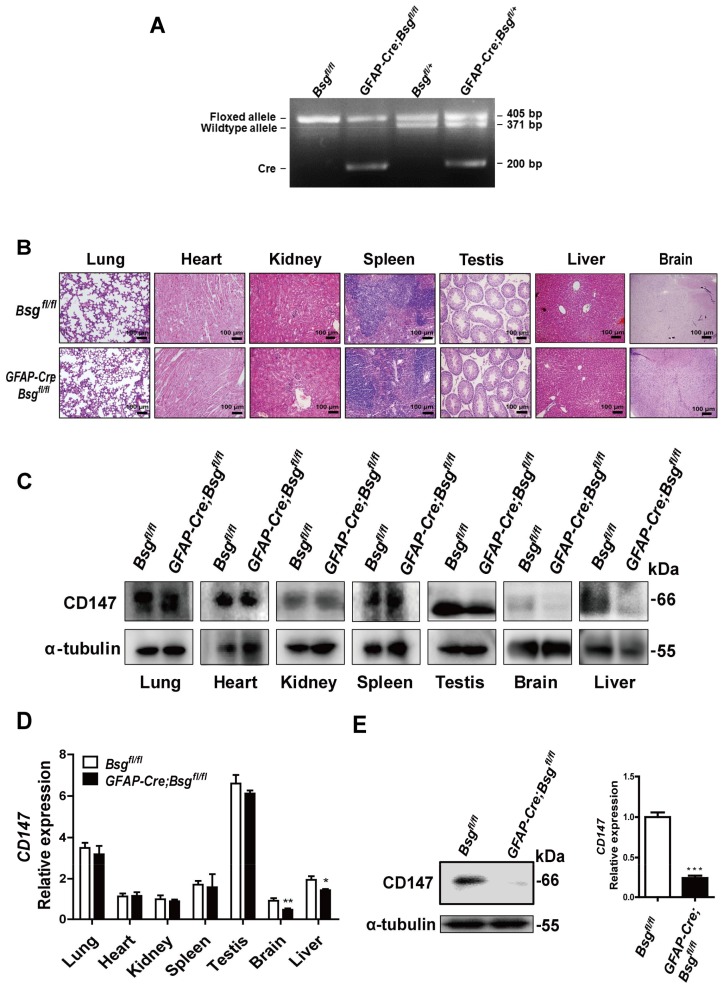
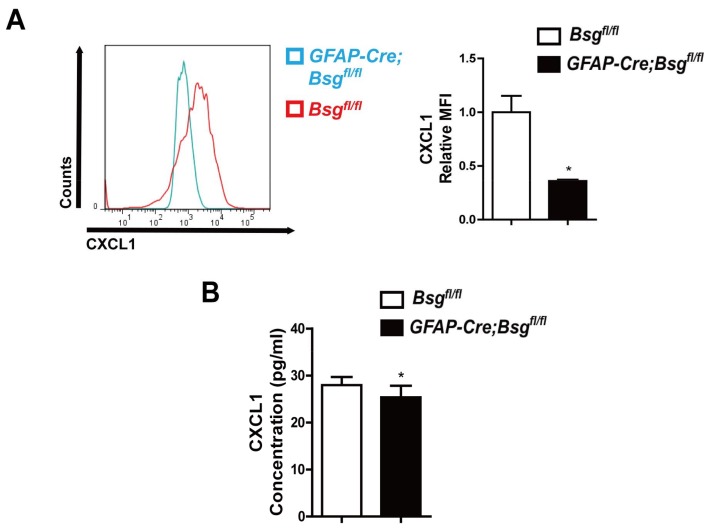
Activated hepatic stellate cells (HSCs) release pro-inflammatory and pro-fibrogenic factors. CXC chemokine-ligand-1 (CXCL1) is expressed on HSCs. We previously found that the CD147 is overexpressed in activated HSCs. In this study, we showed an important role of CD147 in promoting liver fibrosis by activating HSCs and upregulating expression of chemokines. Specifically, we found that CD147 specific deletion in HSCs mice alleviated CCl₄-induced liver fibrosis and inhibited HSCs activation. Overexpression of CD147 upregulated the secretion of CXCL1. Meanwhile, CXCL1 promoted HSCs activation through autocrine. Treating with PI3K/AKT inhibitor could effectively suppress CD147-induced CXCL1 expression. Taken together, these findings suggest that CD147 regulates CXCL1 release in HSCs by PI3K/AKT signaling. Inhibition of CD147 attenuates CCl₄-induced liver fibrosis and inflammation. Therefore, administration of targeting CD147 could be a promising therapeutic strategy in liver fibrosis.
活化的肝星状细胞 (HSCs) 会释放促炎和促纤维化因子。HSCs 表达 CXC 趋化因子配体-1 (CXCL1)。我们之前发现 CD147 在活化的 HSCs 中过度表达。在这项研究中,我们通过激活 HSCs 和上调趋化因子的表达,证明了 CD147 在促进肝纤维化中的重要作用。具体来说,我们发现 HSCs 中 CD147 的特异性缺失减轻了 CCl₄ 诱导的肝纤维化并抑制了 HSCs 的活化。CD147 的过表达上调了 CXCL1 的分泌。同时,CXCL1 通过自分泌促进 HSCs 的活化。用 PI3K/AKT 抑制剂处理可有效抑制 CD147 诱导的 CXCL1 表达。综上所述,这些发现表明 CD147 通过 PI3K/AKT 信号通路调节 HSCs 中 CXCL1 的释放。抑制 CD147 可减轻 CCl₄ 诱导的肝纤维化和炎症。因此,靶向 CD147 的给药可能是肝纤维化的一种有前途的治疗策略。