Xu Yaxi, Hu Jian, Zhang Yunsheng, Guo Zhanbao, Huang Wei, Xie Ming, Liu Hehe, Lei Chuzhao, Hou Shuisheng, Liu Xiaolin, Zhou Zhengkui
College of Animal Science and Technology, Northwest A&F University, Yangling, Shaanxi 712100, China.
Institute of Animal Sciences, Chinese Academy of Agricultural Sciences, Beijing 100193, China.
Asian-Australas J Anim Sci. 2018 Oct;31(10):1575-1580. doi: 10.5713/ajas.17.0837. Epub 2018 Apr 12.
This study was conducted to estimate the genetic parameters and breeding values of breast meat related traits of Pekin ducks. Selection response was also determined by using ultrasound breast muscle thickness (BMT) measurements in combination with bosom breadth (BB) and keel length (KL) values.
The traits analyzed were breast meat weight (BMW), body weight (BW), breast meat percentage (BMP) and the three parameters of breast meat (BB, KL, and BMT). These measurements were derived from studying 15,781 Pekin ducks selected from 10 generations based on breast meat weight. Genetic parameters and breeding value were estimated for the analysis of the breeding process.
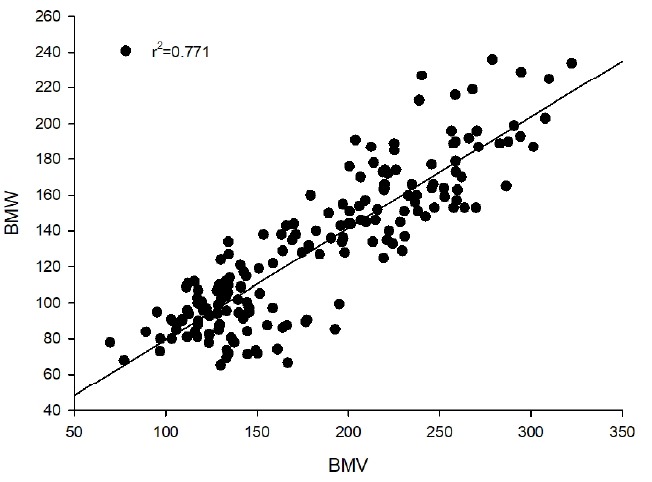
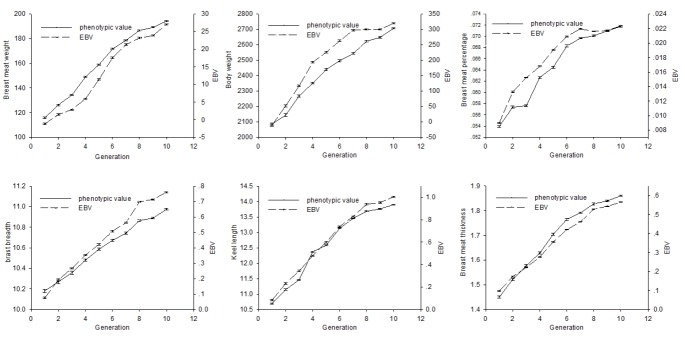
Estimated heritability of BMW and BMP were moderate (0.23 and 0.16, respectively), and heritability of BW was high (0.48). Other traits such as BB, KL, and BMT indicated moderate heritability ranging between 0.11 and 0.28. Significant phenotypic correlations of BMW with BW and BMP were discovered (p<0.05), and genetic correlations of BMW with BW and BMP were positive and high (0.83 and 0.66, respectively). It was noted that BMW had positive correlations with all the other traits. Generational average estimated breeding values of all traits increased substantially over the course of selection, which demonstrated that the ducks responded efficiently to increased breast meat yield after 10 generations of breeding.
The results indicated that duck BMW had the potential to be increased through genetic selection with positive effects on BW and BMP. The ultrasound BMT, in combination with the measurement of BB and KL, is shown to be essential and effective in the process of high breast meat yield duck breeding.
本研究旨在估计北京鸭胸肉相关性状的遗传参数和育种值。还通过结合超声胸肌厚度(BMT)测量值与胸宽(BB)和龙骨长度(KL)值来确定选择反应。
分析的性状包括胸肉重量(BMW)、体重(BW)、胸肉百分比(BMP)以及胸肉的三个参数(BB、KL和BMT)。这些测量数据来自对基于胸肉重量从10个世代中选出的15781只北京鸭的研究。估计遗传参数和育种值以分析育种过程。
BMW和BMP的估计遗传力中等(分别为0.23和0.16),而BW的遗传力较高(0.48)。其他性状如BB、KL和BMT的遗传力中等,范围在0.11至0.28之间。发现BMW与BW和BMP之间存在显著的表型相关性(p<0.05),且BMW与BW和BMP的遗传相关性为正且较高(分别为0.83和0.66)。注意到BMW与所有其他性状均呈正相关。在选择过程中,所有性状的世代平均估计育种值大幅增加,这表明经过10代育种后,鸭子对胸肉产量增加有有效的反应。
结果表明,通过遗传选择有可能提高鸭的BMW,且对BW和BMP有积极影响。超声BMT结合BB和KL的测量在高胸肉产量鸭的育种过程中被证明是必不可少且有效的。