Fazi Barbara, Garbo Sabrina, Toschi Nicola, Mangiola Annunziato, Lombari Malinska, Sicari Daria, Battistelli Cecilia, Galardi Silvia, Michienzi Alessandro, Trevisi Gianluca, Harari-Steinfeld Rona, Cicchini Carla, Ciafrè Silvia Anna
Department of Biomedicine and Prevention, University of Rome "Tor Vergata", Rome, Italy.
Department of Radiology, Athinoula A. Martinos Center for Biomedical Imaging, Boston, MA, USA.
Oncotarget. 2018 Feb 14;9(21):15512-15525. doi: 10.18632/oncotarget.24496. eCollection 2018 Mar 20.
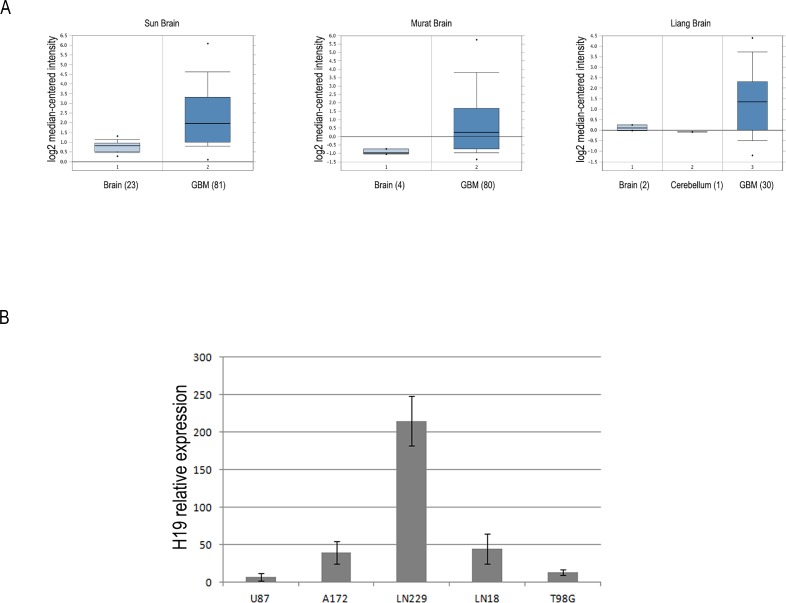
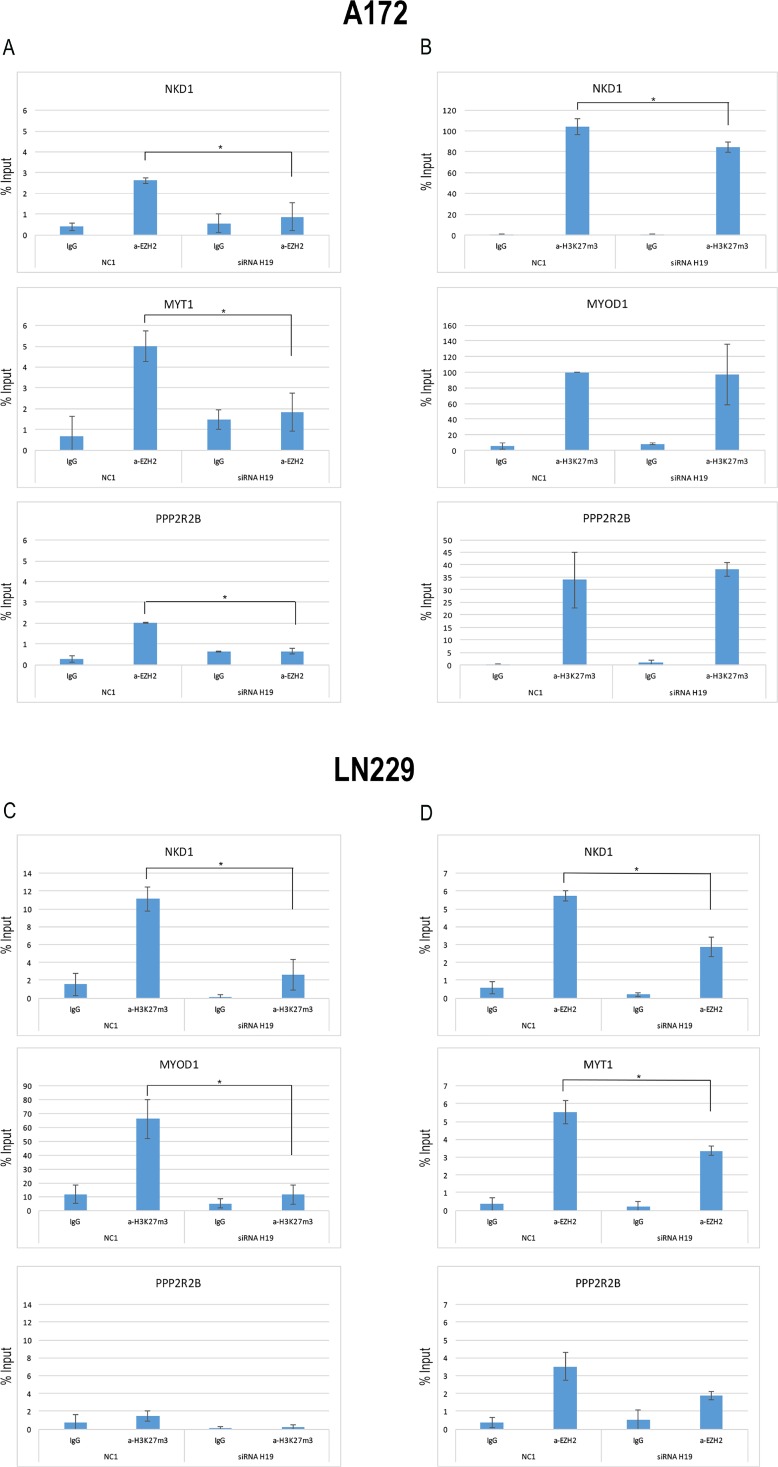
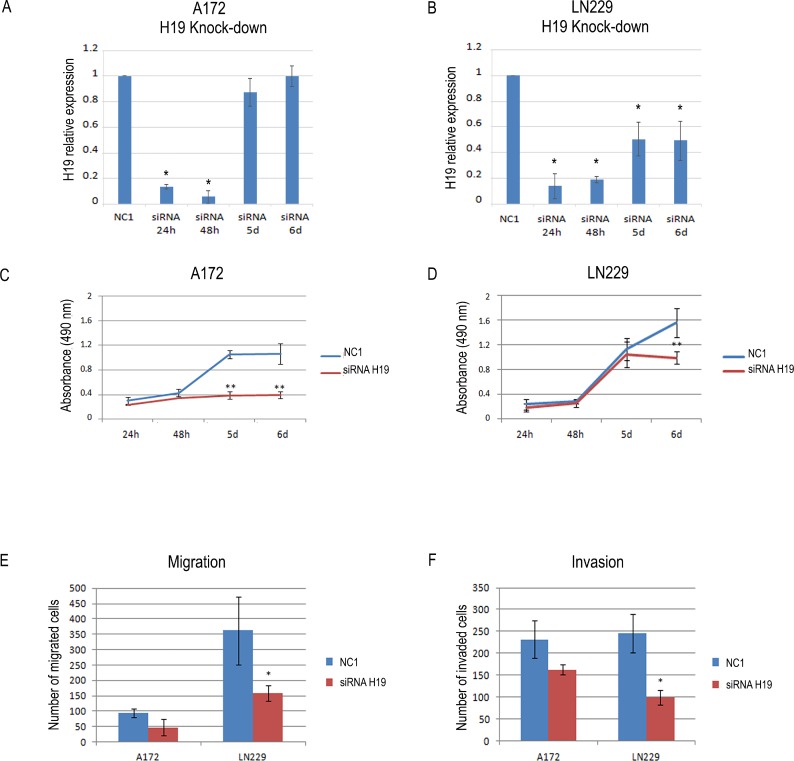
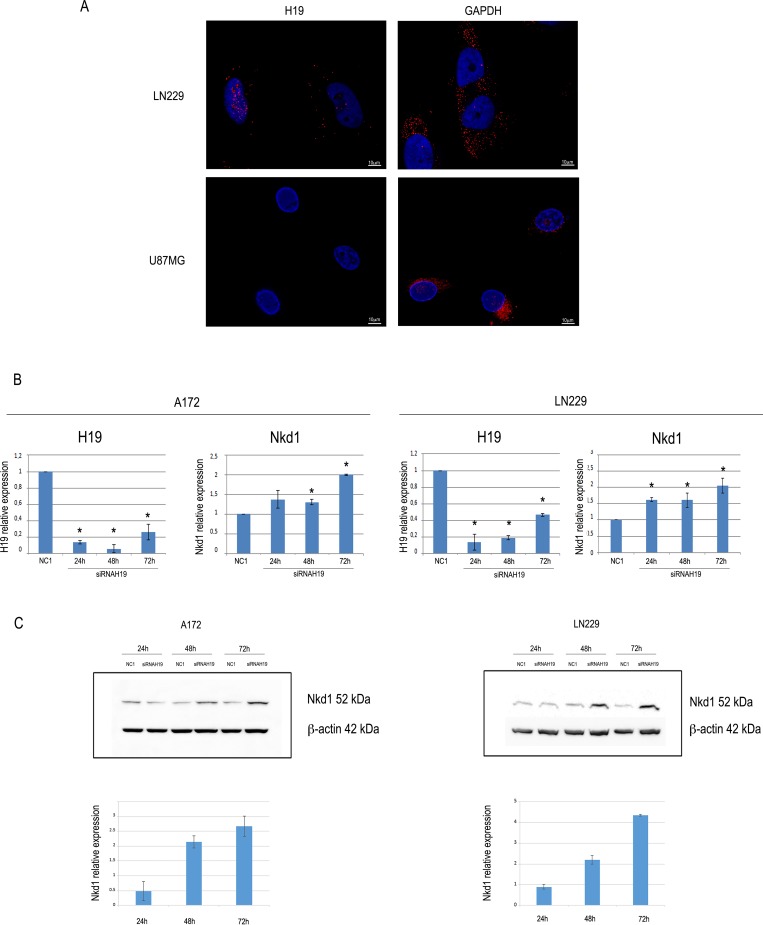
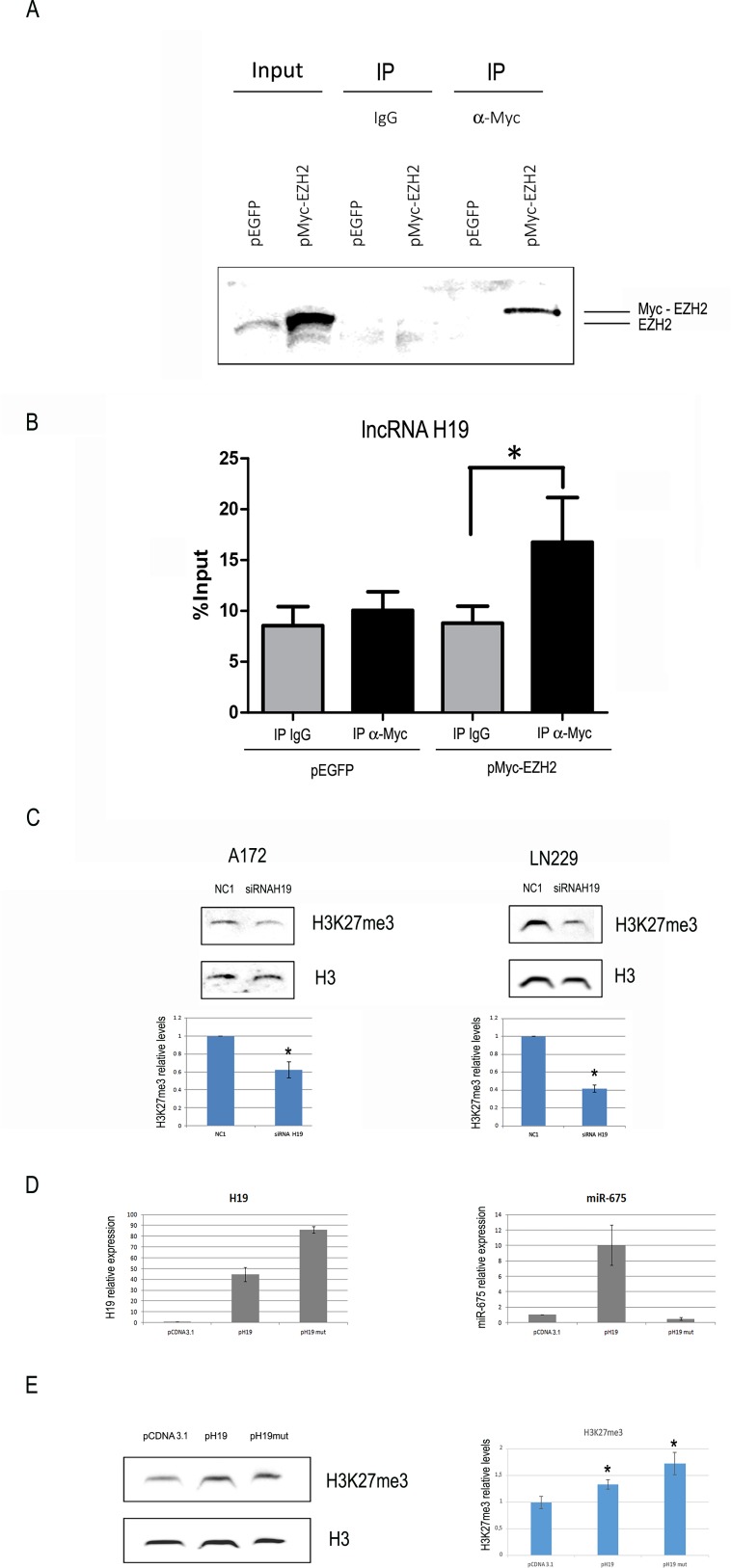
The still largely obscure molecular events in the glioblastoma oncogenesis, a primary brain tumor characterized by an inevitably dismal prognosis, impel for investigation. The importance of Long noncoding RNAs as regulators of gene expression has recently become evident. Among them, H19 has a recognized oncogenic role in several types of human tumors and was shown to correlate to some oncogenic aspects of glioblastoma cells. Here we, hypothesyze that in glioblastoma H19 exerts its function through the interaction with the catalytic subunit of the PRC2 complex, EZH2. By employing a factor analysis on a SAGE dataset of 12 glioblastoma samples, we show that H19 expression in glioblastoma tissues correlates with that of several genes involved in glioblastoma growth and progression. H19 knock-down reduces viability, migration and invasiveness of two distinct human glioblastoma cell lines. Most importantly, we provide a mechanistic perspective about the role of H19 in glioblastoma cells, by showing that its expression is inversely linked to that of NKD1, a negative regulator of Wnt pathway, suggesting that H19 might regulate NKD1 transcription via EZH2-induced H3K27 trimethylation of its promoter. Indeed, we showed that H19 binds EZH2 in glioblastoma cells, and that EZH2 binding to NKD1 and other promoters is impaired by H19 silencing. In this work we describe H19 as part of an epigenetic modulation program executed by EZH2, that results in the repression of Nkd1. We believe that our results can provide a new piece to the complex puzzle of H19 function in glioblastoma.
胶质母细胞瘤是一种原发性脑肿瘤,预后必然很差,其肿瘤发生过程中仍大多不明确的分子事件促使人们进行研究。长链非编码RNA作为基因表达调节因子的重要性最近已变得明显。其中,H19在几种类型的人类肿瘤中具有公认的致癌作用,并且已被证明与胶质母细胞瘤细胞的某些致癌方面相关。在这里,我们假设在胶质母细胞瘤中,H19通过与PRC2复合物的催化亚基EZH2相互作用发挥其功能。通过对12个胶质母细胞瘤样本的SAGE数据集进行因子分析,我们表明胶质母细胞瘤组织中H19的表达与参与胶质母细胞瘤生长和进展的几个基因的表达相关。H19敲低降低了两种不同的人类胶质母细胞瘤细胞系的活力、迁移和侵袭能力。最重要的是,我们通过表明其表达与Wnt途径的负调节因子NKD1的表达呈负相关,提供了关于H19在胶质母细胞瘤细胞中作用的机制观点,这表明H19可能通过EZH2诱导其启动子的H3K27三甲基化来调节NKD1转录。事实上,我们表明H19在胶质母细胞瘤细胞中与EZH2结合,并且H19沉默会损害EZH2与NKD1和其他启动子的结合。在这项工作中,我们将H19描述为EZH2执行的表观遗传调节程序的一部分,该程序导致Nkd1的抑制。我们相信我们的结果可以为胶质母细胞瘤中H19功能的复杂谜题提供新的线索。