Gao Jingchen, Jiang Li, Liang Qinge, Shi Jie, Hou Ding, Tang Di, Chen Siyuan, Kong Deling, Wang Shufang
State Key Laboratory of Medicinal Chemical Biology, Key Laboratory of Bioactive Materials for Ministry of Education, College of Life Sciences, Nankai University, Tianjin 300071, China.
Regen Biomater. 2018 Mar;5(2):105-114. doi: 10.1093/rb/rby003. Epub 2018 Mar 6.
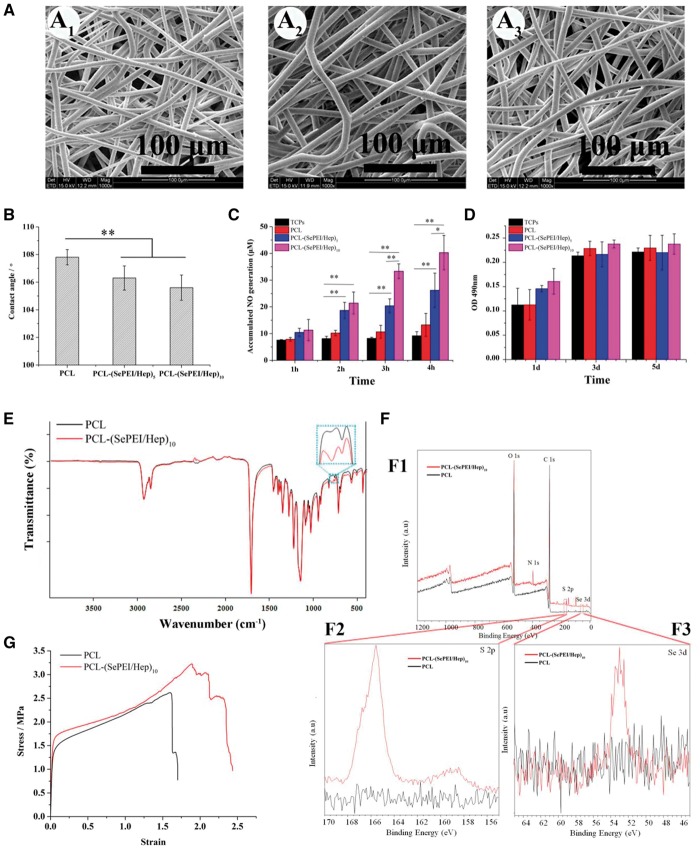
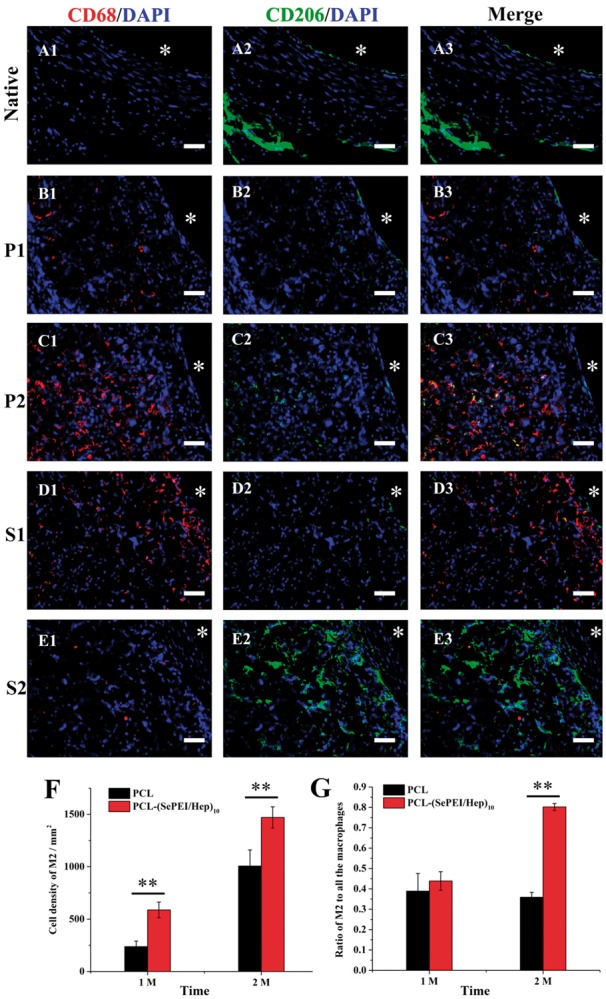
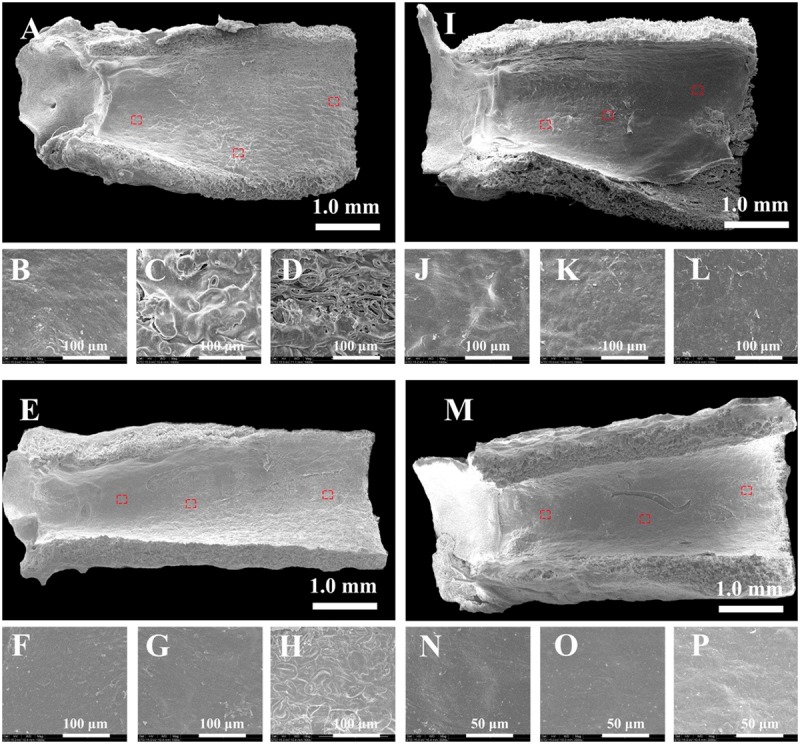
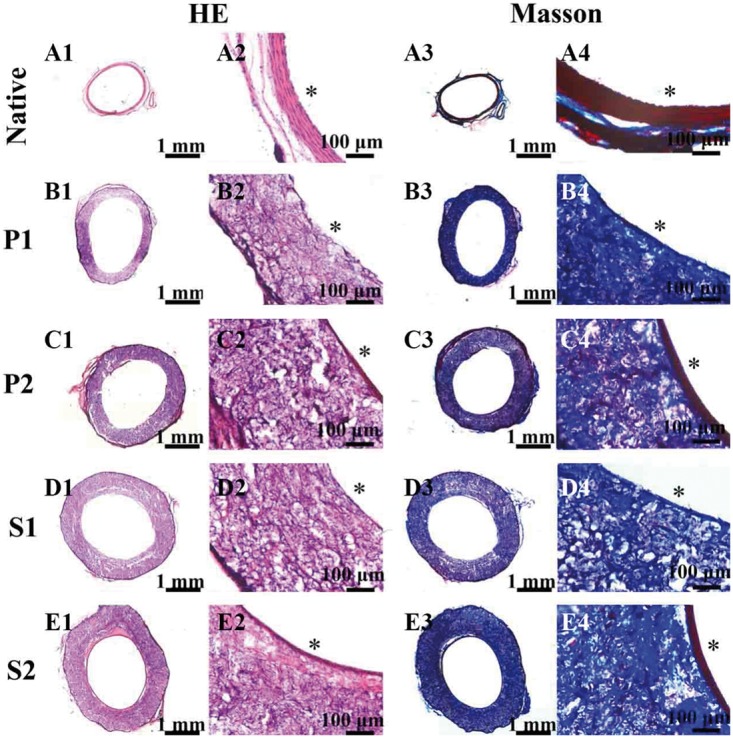
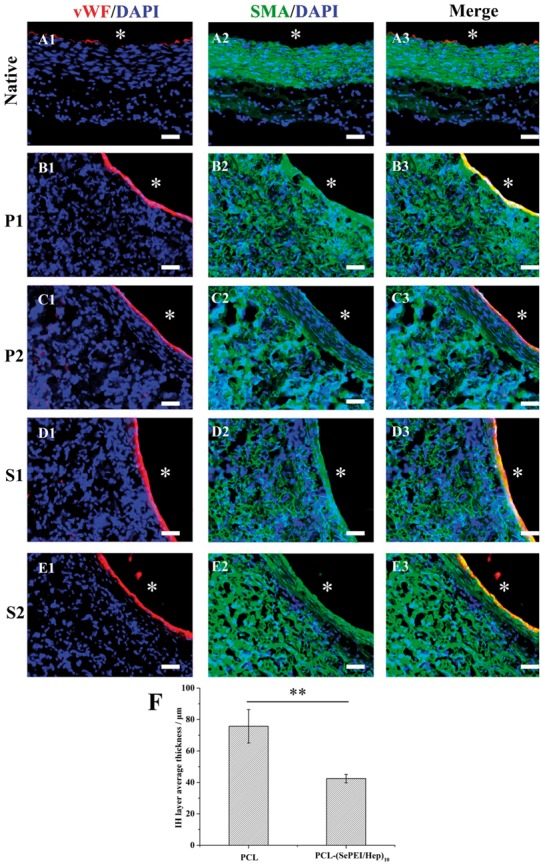
Small-diameter (<6 mm) vascular grafts are increasingly needed in peripheral vascular surgery but have few successes because of acute thrombosis, incomplete endothelialization and intimal hyperplasia after implantation. This study used electrospun poly(ε-caprolactone) as the matrix material. Heparin and selenium-containing catalyst-organoselenium modified polyethyleneimine were introduced through layer-by-layer assembly in order to build a vascular graft with nitric oxide (NO) generation. The aim of this study was to explore the application of the graft with improved histocompatibility and biological function for vascular implantation in rats. After implantation in rats, compared to poly(ε-caprolactone), the modified grafts could promote the adhesion and proliferation of endothelial cells, and inhibit the adhesion of smooth muscle cells. The modified grafts remarkably promoted endothelialization, inhibited intimal hyperplasia and increased the ratio of alternatively activated macrophages (M2) to classical activated macrophages (M1). This work constructed a vascular graft with heparinization and catalytic NO generation for improving the vascularization, and accelerating the tissue regeneration by regulating the inflammatory response. The present study indicates that it is a promising method for regulating response and tissue regeneration of small diameter vascular grafts by a novel approach of combining heparinization and catalytic NO generation.
外周血管手术中对小直径(<6毫米)血管移植物的需求日益增加,但由于植入后急性血栓形成、内皮化不完全和内膜增生,成功案例较少。本研究使用电纺聚己内酯作为基质材料。通过层层组装引入肝素和含硒催化剂-有机硒修饰的聚乙烯亚胺,以构建具有一氧化氮(NO)生成功能的血管移植物。本研究的目的是探索具有改善的组织相容性和生物学功能的移植物在大鼠血管植入中的应用。在大鼠体内植入后,与聚己内酯相比,改性移植物可促进内皮细胞的黏附和增殖,并抑制平滑肌细胞的黏附。改性移植物显著促进内皮化,抑制内膜增生,并增加交替活化巨噬细胞(M2)与经典活化巨噬细胞(M1)的比例。这项工作构建了一种具有肝素化和催化NO生成功能的血管移植物,以通过调节炎症反应改善血管化并加速组织再生。本研究表明,通过肝素化和催化NO生成相结合的新方法调节小直径血管移植物的反应和组织再生是一种有前景的方法。