Institute of Anatomy and Cell Biology, Unit of Reproductive Biology, Aulweg 123, Giessen, Germany.
Clinic of Urology, Pediatric Urology and Andrology, Justus-Liebig University of Giessen, Germany.
Hum Reprod Update. 2018 Jul 1;24(4):416-441. doi: 10.1093/humupd/dmy009.
Infection and inflammation of the reproductive tract are significant causes of male factor infertility. Ascending infections caused by sexually transmitted bacteria or urinary tract pathogens represent the most frequent aetiology of epididymo-orchitis, but viral, haematogenous dissemination is also a contributory factor. Limitations in adequate diagnosis and therapy reflect an obvious need for further understanding of human epididymal and testicular immunopathologies and their contribution to infertility. A major obstacle for advancing our knowledge is the limited access to suitable tissue samples. Similarly, the key events in the inflammatory or autoimmune pathologies affecting human male fertility are poorly amenable to close examination. Moreover, the disease processes generally have occurred long before the patient attends the clinic for fertility assessment. In this regard, data obtained from experimental animal models and respective comparative analyses have shown promise to overcome these restrictions in humans.
This narrative review will focus on male fertility disturbances caused by infection and inflammation, and the usefulness of the most frequently applied animal models to study these conditions.
An extensive search in Medline database was performed without restrictions until January 2018 using the following search terms: 'infection' and/or 'inflammation' and 'testis' and/or 'epididymis', 'infection' and/or 'inflammation' and 'male genital tract', 'male infertility', 'orchitis', 'epididymitis', 'experimental autoimmune' and 'orchitis' or 'epididymitis' or 'epididymo-orchitis', antisperm antibodies', 'vasectomy'. In addition to that, reference lists of primary and review articles were reviewed for additional publications independently by each author. Selected articles were verified by each two separate authors and discrepancies discussed within the team.
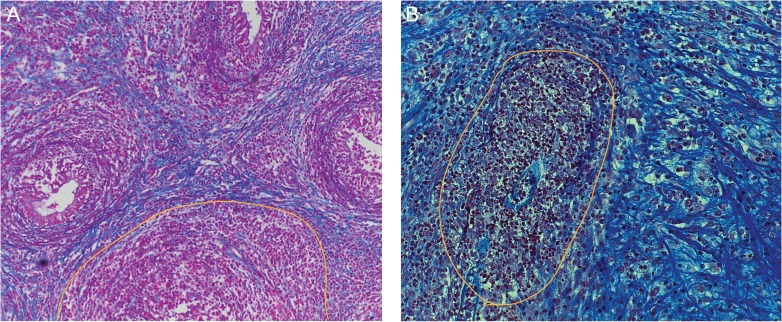
There is clear evidence that models mimicking testicular and/or epididymal inflammation and infection have been instructive in a better understanding of the mechanisms of disease initiation and progression. In this regard, rodent models of acute bacterial epididymitis best reflect the clinical situation in terms of mimicking the infection pathway, pathogens selected and the damage, such as fibrotic transformation, observed. Similarly, animal models of acute testicular and epididymal inflammation using lipopolysaccharides show impairment of reproduction, endocrine function and histological tissue architecture, also seen in men. Autoimmune responses can be studied in models of experimental autoimmune orchitis (EAO) and vasectomy. In particular, the early stages of EAO development showing inflammatory responses in the form of peritubular lymphocytic infiltrates, thickening of the lamina propria of affected tubules, production of autoantibodies against testicular antigens or secretion of pro-inflammatory mediators, replicate observations in testicular sperm extraction samples of patients with 'mixed atrophy' of spermatogenesis. Vasectomy, in the form of sperm antibodies and chronic inflammation, can also be studied in animal models, providing valuable insights into the human response.
This is the first comprehensive review of rodent models of both infectious and autoimmune disease of testis/epididymis, and their clinical implications, i.e. their importance in understanding male infertility related to infectious and non-infectious/autoimmune disease of the reproductive organs.
生殖道感染和炎症是男性因素不孕的重要原因。性传播细菌或尿路感染病原体引起的上行感染是附睾炎-睾丸炎最常见的病因,但病毒、血源性播散也是一个促成因素。诊断和治疗的局限性反映出人们对人类附睾和睾丸免疫病理学及其对不孕的影响需要进一步了解。推进我们的知识的一个主要障碍是获得足够的组织样本的机会有限。同样,影响人类男性生育能力的炎症或自身免疫性病理的关键事件也不容易进行密切检查。此外,这些疾病过程通常在患者因生育评估而就诊之前很久就已经发生了。在这方面,从实验动物模型中获得的数据以及各自的比较分析显示,有希望克服人类在这方面的限制。
本叙述性综述将重点介绍感染和炎症引起的男性生育障碍,以及最常应用的动物模型在研究这些疾病中的有用性。
在 Medline 数据库中进行了广泛的搜索,没有限制,直到 2018 年 1 月,使用以下搜索词:“感染”和/或“炎症”和“睾丸”和/或“附睾”,“感染”和/或“炎症”和“男性生殖道”,“男性不育”,“睾丸炎”,“附睾炎”,“实验性自身免疫”和“睾丸炎”或“附睾炎”或“附睾炎-睾丸炎”,抗精子抗体”,“输精管切除术”。此外,还通过每位作者独立查阅主要和综述文章的参考文献列表,查找了其他出版物。选定的文章由两位作者分别进行验证,并在团队内讨论差异。
有明确的证据表明,模拟睾丸和/或附睾炎症和感染的模型在更好地理解疾病起始和进展的机制方面具有指导意义。在这方面,模拟细菌附睾睾丸炎的啮齿动物模型在模拟感染途径、选择病原体以及观察到的纤维化转化等损伤方面最能反映临床情况。同样,使用脂多糖的急性睾丸和附睾炎症的动物模型显示生殖功能、内分泌功能和组织学结构受损,这在男性中也可以看到。自身免疫反应可以在实验性自身免疫性睾丸炎(EAO)和输精管切除术的模型中进行研究。特别是 EAO 发展的早期阶段,表现为小管周围淋巴细胞浸润的炎症反应、受影响小管固有层变厚、产生针对睾丸抗原的自身抗体或分泌促炎介质,复制了睾丸精子提取样本中“混合萎缩”的生精作用的观察结果。输精管切除术,以精子抗体和慢性炎症的形式,也可以在动物模型中进行研究,为理解与生殖器官感染和非感染/自身免疫性疾病相关的男性不育提供了有价值的见解。
这是第一篇关于睾丸/附睾感染和自身免疫性疾病的啮齿动物模型及其临床意义的综合综述,即它们在理解与生殖器官感染和非感染/自身免疫性疾病相关的男性不育方面的重要性。