College of Animal Science and Technology, Northwest A&F University, Yangling, China.
Front Immunol. 2018 Mar 29;9:647. doi: 10.3389/fimmu.2018.00647. eCollection 2018.
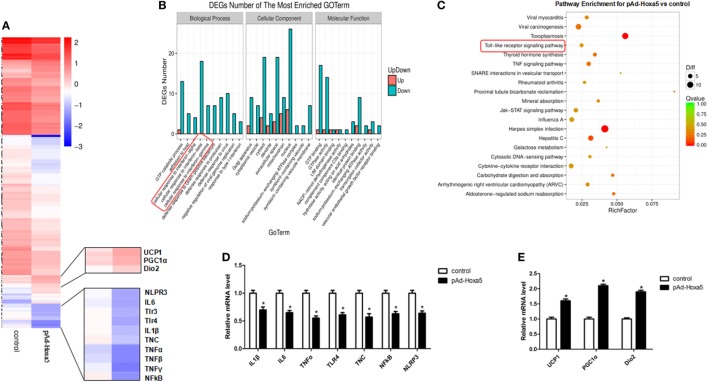
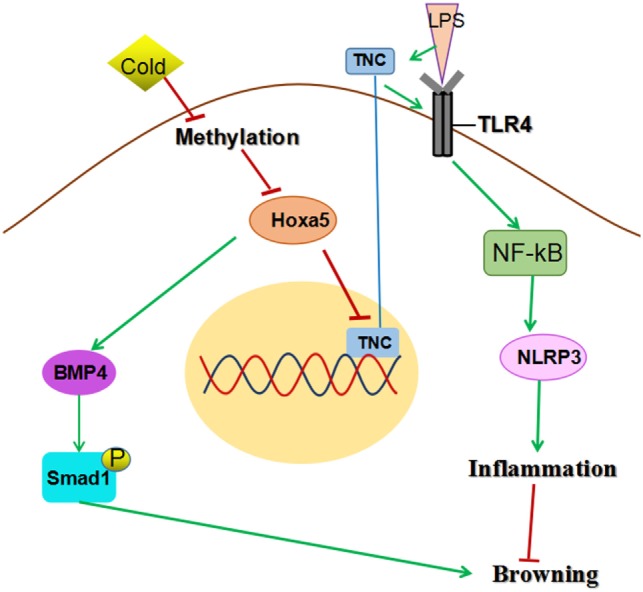
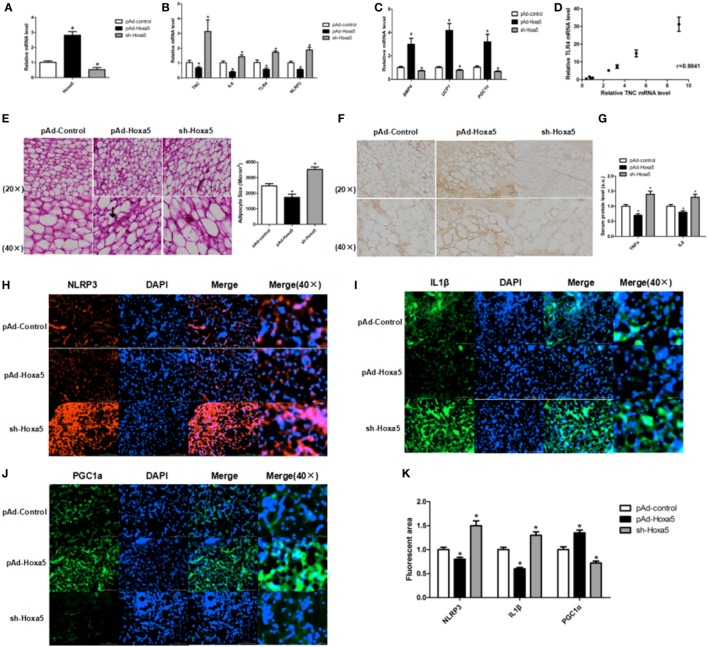
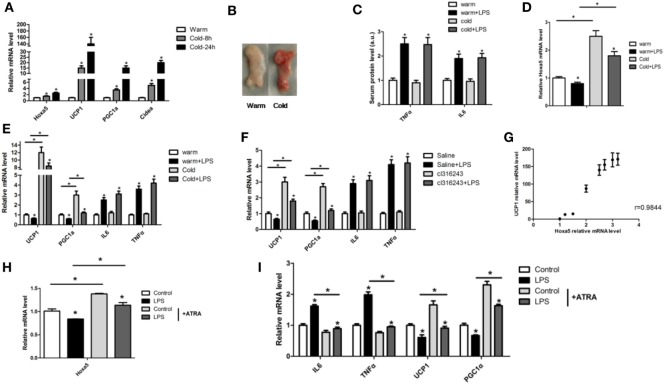
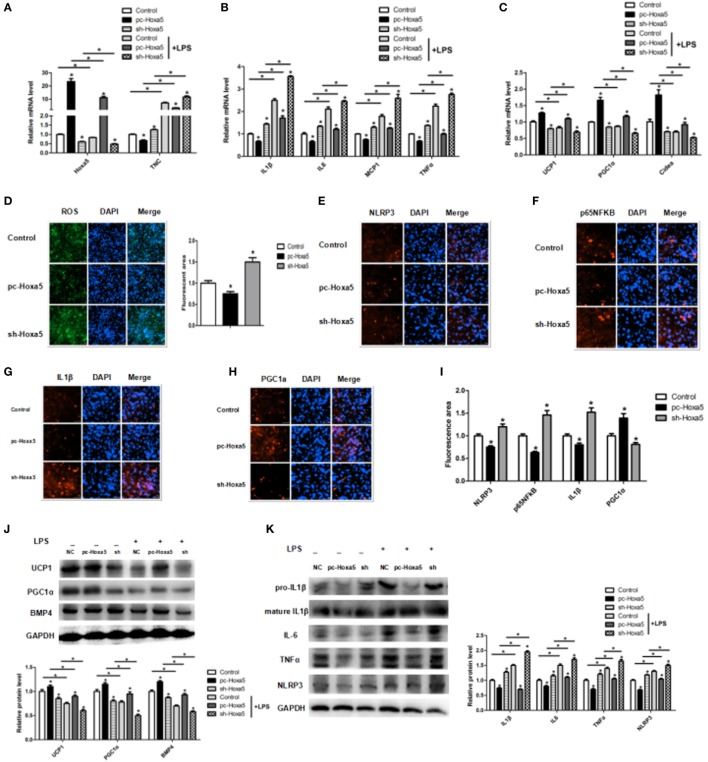
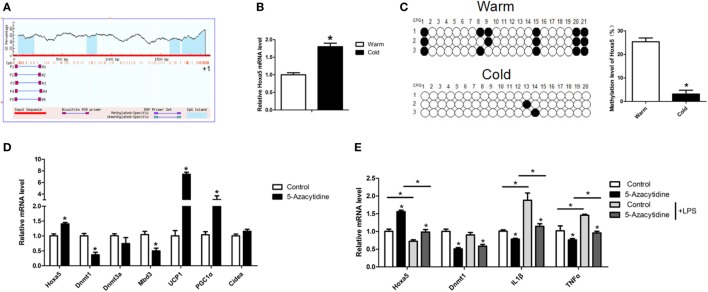
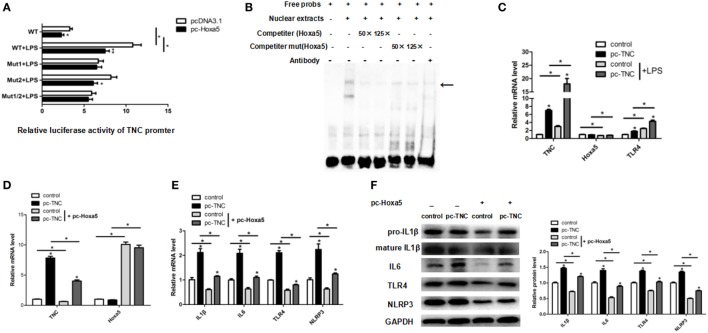
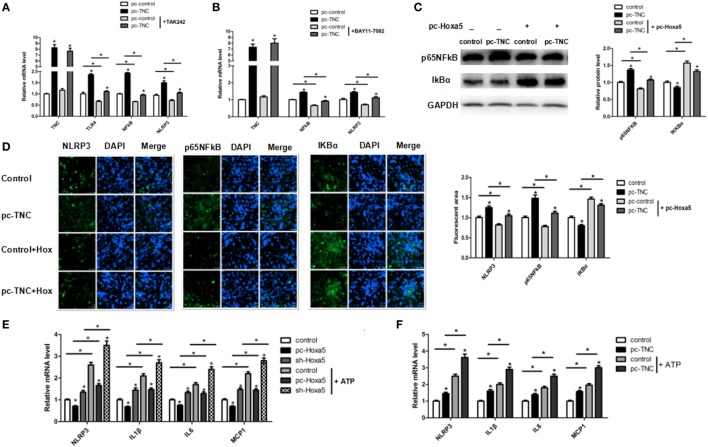
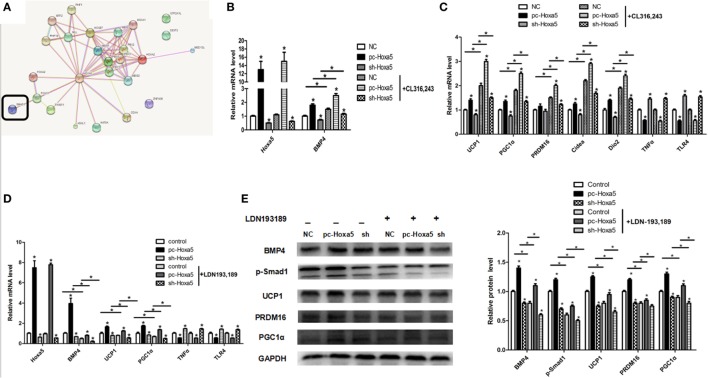
Lipopolysaccharide (LPS) induces rapid increase in systemic inflammatory factors. As adipose tissue is a key contributor to the inflammatory response to numerous metabolic stimuli, it is important to understand the mechanism behind the LPS-induced inflammation in white adipose tissue (WAT). Homeobox a5 (Hoxa5) is an important transcription factor, which is highly expressed in adipose tissue, and its mRNA expression is increased at cold exposure in mice. So far, the function of Hoxa5 in adipose tissue browning has been poorly understood. So, the objective of this study was conducted to determine the role of Hoxa5 in adipose inflammatory response and white adipose browning in mice. LPS-induced inflammatory and cold-induced browning model were conducted. We compared the coordinated role of Hoxa5 in inflammation and thermogenesis of mice adipose. Transcriptional and methylation regulation was determined by luciferase assay, electrophoretic mobility shift assay, and bisulfite conversion experiment. Hoxa5 and tenascin C (TNC) were involved in WAT inflammation and browning in mice with LPS injection. Furthermore, Hoxa5 inhibited the TNC-involved activation of Toll-like receptor (TLR) 4/nuclear factor kappa B (NF-κB) signal pathway and promoted WAT browning. Moreover, we found that a BMP4/Smad1 signal, closely related to browning, was activated by Hoxa5. Hoxa5 relieved adipocyte inflammation by decreasing TNC-mediated TLR4 transducer and activator of the NF-κB pathway. Interestingly, descended methylation level increased Hoxa5 expression in cold exposure. Our findings demonstrated that Hoxa5 alleviated inflammation and enhanced browning of adipose tissue negative control of TNC/TLR4/NF-κB inflammatory signaling and activating BMP4/Smad1 pathway. These findings indicated a novel potential means for the regulation of inflammation in adipocytes to prevent obesity and other inflammatory diseases.
脂多糖 (LPS) 可诱导全身性炎症因子的快速增加。由于脂肪组织是对多种代谢刺激产生炎症反应的关键贡献者,因此了解 LPS 诱导白色脂肪组织 (WAT) 炎症的机制非常重要。同源盒 A5 (Hoxa5) 是一种重要的转录因子,在脂肪组织中高度表达,其 mRNA 表达在小鼠暴露于寒冷时增加。迄今为止,Hoxa5 在脂肪组织褐变中的功能知之甚少。因此,本研究旨在确定 Hoxa5 在小鼠脂肪组织炎症反应和白色脂肪褐变中的作用。进行了 LPS 诱导的炎症和冷诱导的褐变模型。我们比较了 Hoxa5 在小鼠脂肪炎症和产热中的协调作用。通过荧光素酶测定、电泳迁移率变动分析和亚硫酸氢盐转化实验确定转录和甲基化调节。Hoxa5 和 tenascin C (TNC) 参与了 LPS 注射小鼠的 WAT 炎症和褐变。此外,Hoxa5 抑制了 TNC 参与的 Toll 样受体 (TLR) 4/核因子 kappa B (NF-κB) 信号通路的激活,并促进了 WAT 褐变。此外,我们发现与褐变密切相关的 BMP4/Smad1 信号被 Hoxa5 激活。Hoxa5 通过降低 TNC 介导的 TLR4 转导物和 NF-κB 通路,减轻脂肪细胞炎症。有趣的是,下降的甲基化水平增加了冷暴露时 Hoxa5 的表达。我们的研究结果表明,Hoxa5 通过抑制 TNC/TLR4/NF-κB 炎症信号通路和激活 BMP4/Smad1 通路来减轻炎症并增强脂肪组织的褐变。这些发现表明了一种调节脂肪细胞炎症的新的潜在方法,以预防肥胖和其他炎症性疾病。