Liu Guannv, Li Meihang, Saeed Muhammad, Xu Yatao, Ren Qian, Sun Chao
College of Animal Science and Technology, Northwest A&F University, Yangling, Shaanxi, 712100, China.
Oncotarget. 2017 Jul 18;8(29):47642-47654. doi: 10.18632/oncotarget.17465.
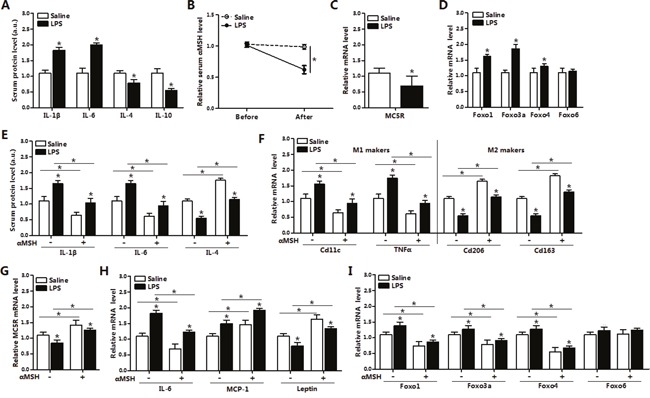
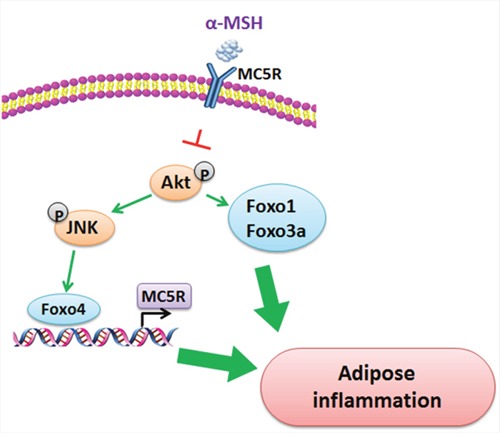
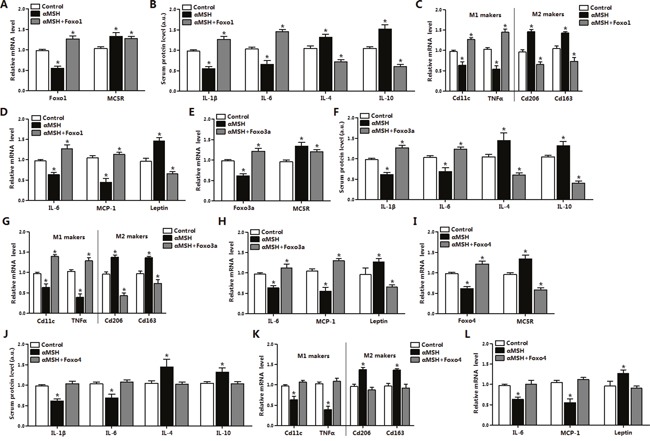
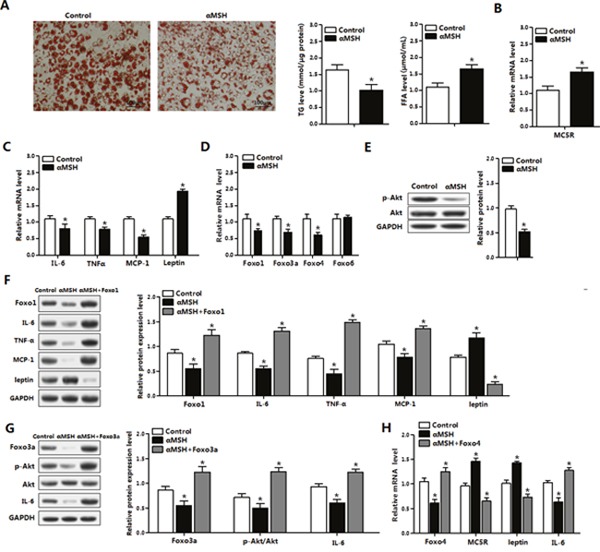
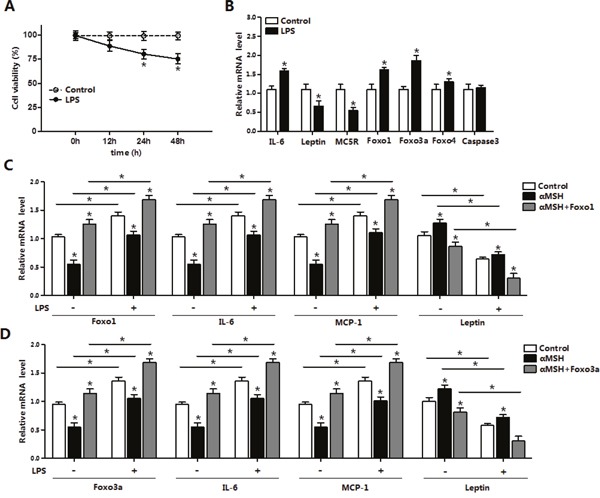
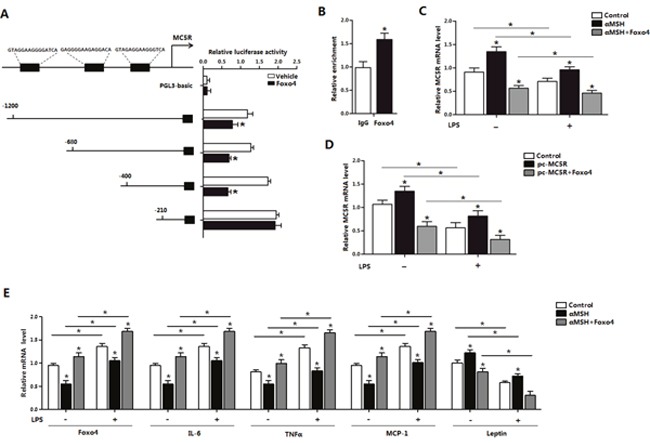
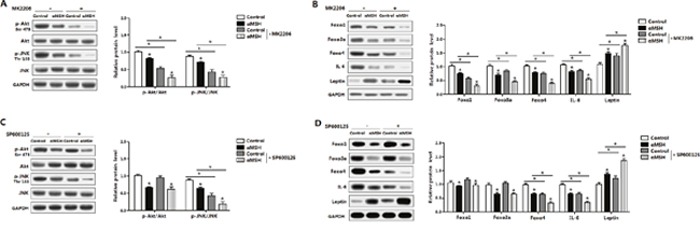
Alpha melanocyte stimulating hormone (αMSH) abates inflammation in multiple tissues, while Forkhead box proteins O (FoxOs) stimulate inflammatory cascade. However, the relationship between αMSH and FoxOs in adipose inflammation remains unclear. In this study, we used LPS-induced inflammation model, attempted to interpret the function of αMSH in inflammation and the interactions with FoxOs. Results indicated that upon inflammatory situation, the secretion of αMSH and the expression of its receptor MC5R were greatly decreased, but FoxOs expressions were elevated. After the treatment with αMSH, LPS-induced adipose inflammation together with FoxOs expressions was significantly reduced. Conversely, when Foxo1, Foxo3a or Foxo4 overexpressed in αMSH treated inflammatory mouse model, all the anti-inflammatory impacts of αMSH were found disappeared. We further studied the mechanisms by which αMSH exerts its anti-inflammatory impacts and how FoxOs reverse αMSH's function. Foxo4 was found as a negative regulator for MC5R transcription in αMSH inhibited inflammation. Moreover, a negative role was found of αMSH in regulating both Akt and JNK signal pathways by observing the enhanced the anti-inflammatory impacts of pathway-specific inhibitors with αMSH treatment. Our findings demonstrate αMSH plays a key role in the prevention of adipose inflammation and inflammatory diseases by down-regulating Akt/JNK signal pathway and negatively interacting with FoxOs, which brings up αMSH as a novel candidate factor in the adipose anti-inflammation process in obesity.
α-黑素细胞刺激素(αMSH)可减轻多种组织中的炎症,而叉头框蛋白O(FoxOs)则刺激炎症级联反应。然而,αMSH与FoxOs在脂肪炎症中的关系仍不清楚。在本研究中,我们使用脂多糖诱导的炎症模型,试图阐释αMSH在炎症中的作用及其与FoxOs的相互作用。结果表明,在炎症状态下,αMSH的分泌及其受体MC5R的表达显著降低,但FoxOs的表达升高。用αMSH治疗后,脂多糖诱导的脂肪炎症以及FoxOs的表达均显著降低。相反,当在αMSH处理的炎症小鼠模型中过表达Foxo1、Foxo3a或Foxo4时,发现αMSH的所有抗炎作用均消失。我们进一步研究了αMSH发挥抗炎作用的机制以及FoxOs如何逆转αMSH的功能。发现在αMSH抑制炎症过程中,Foxo4是MC5R转录的负调节因子。此外,通过观察αMSH处理与通路特异性抑制剂联合使用时增强的抗炎作用,发现αMSH在调节Akt和JNK信号通路中均发挥负性作用。我们的研究结果表明,αMSH通过下调Akt/JNK信号通路并与FoxOs负向相互作用,在预防脂肪炎症和炎症性疾病中起关键作用,这使αMSH成为肥胖症脂肪抗炎过程中的一个新的候选因子。