Department of Biomedical Science and BK21 PLUS Center for Creative Biomedical Scientists at Chonnam National University, Chonnam National University Medical School, Gwangju 61469, Korea.
Department of chemical Engineering, National Taiwan University, Taipei 10617, Taiwan.
Int J Mol Sci. 2018 Apr 13;19(4):1189. doi: 10.3390/ijms19041189.
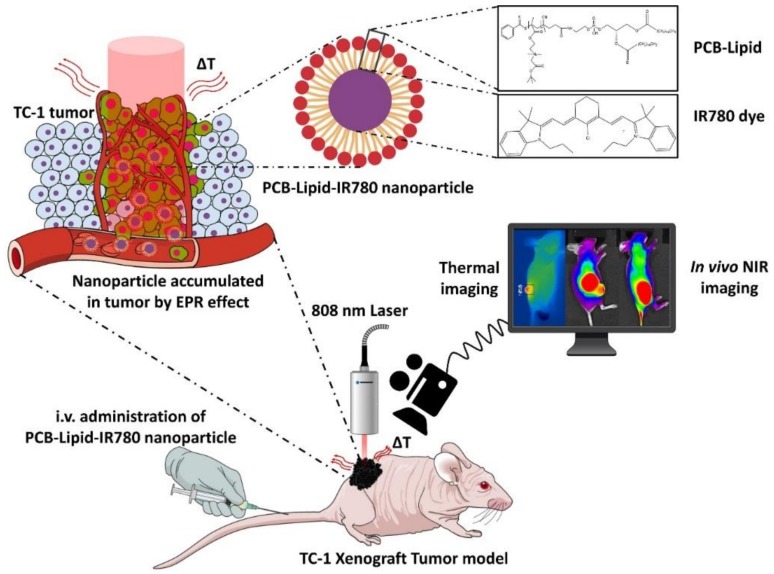
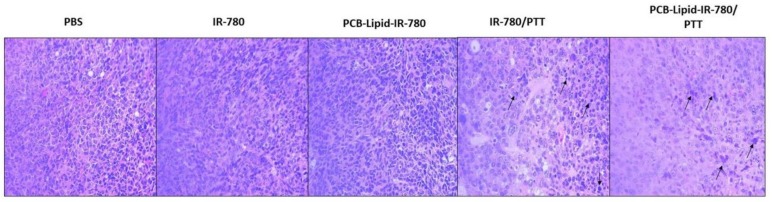
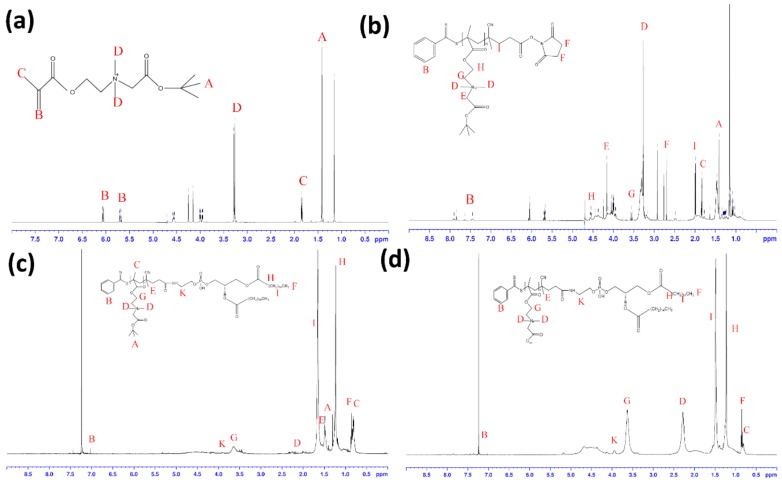
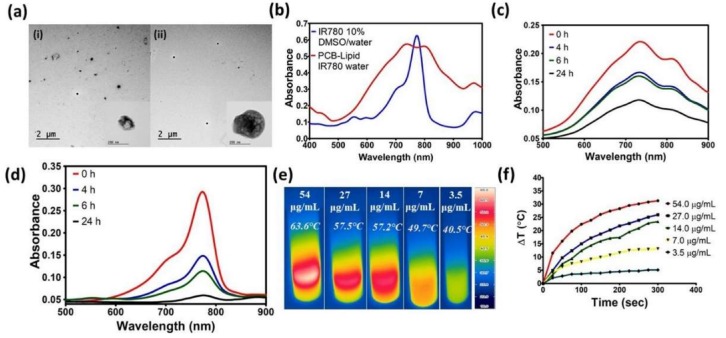
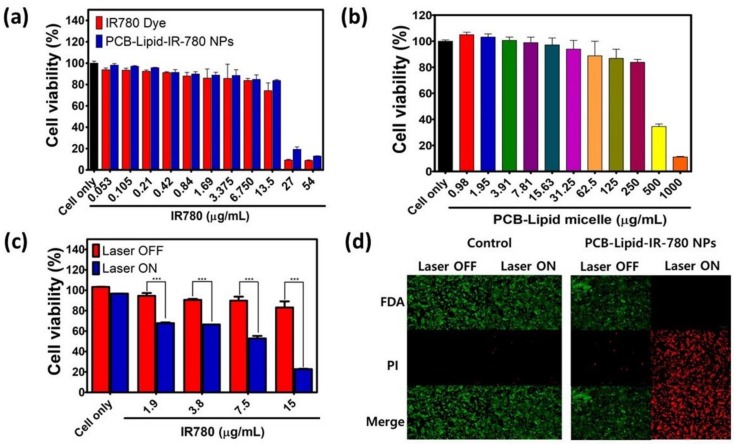
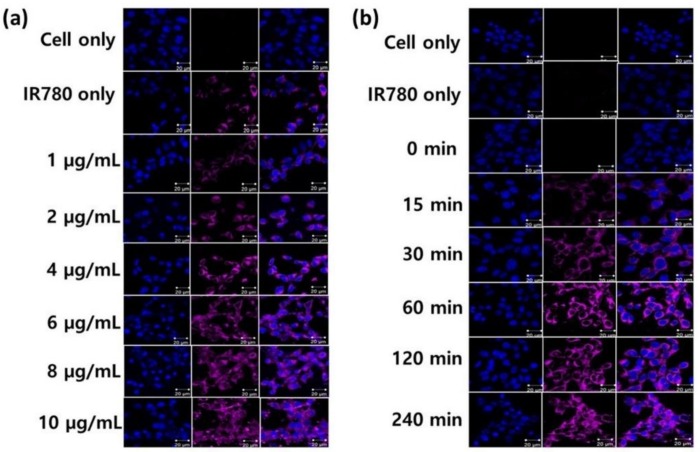
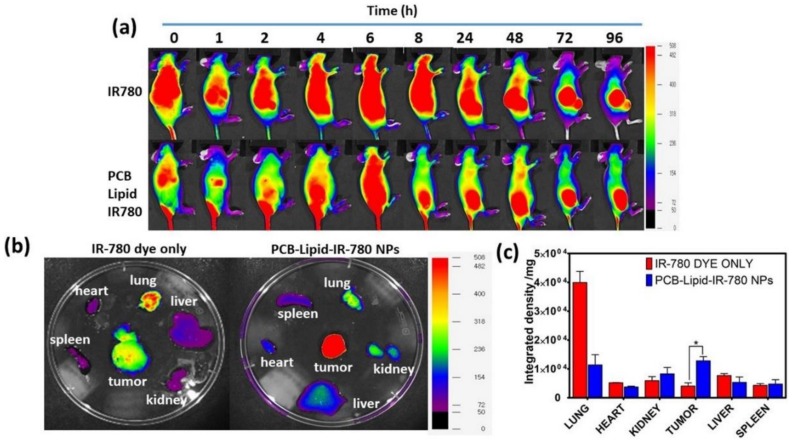
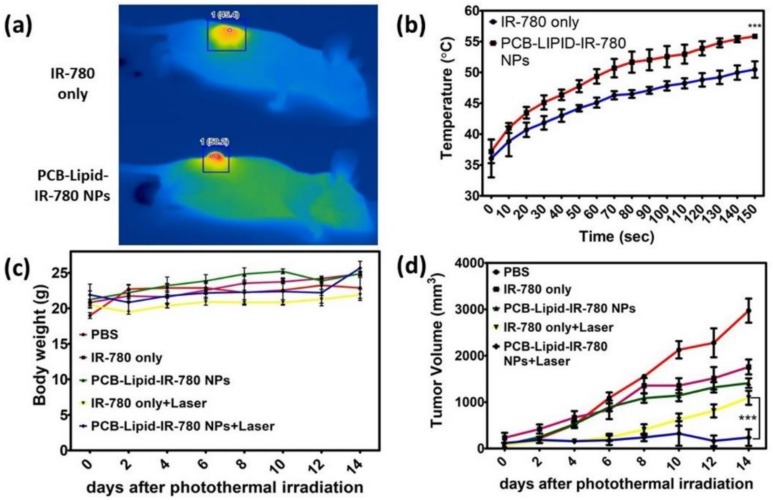
To prolong blood circulation and avoid the triggering of immune responses, nanoparticles in the bloodstream require conjugation with polyethylene glycol (PEG). However, PEGylation hinders the interaction between the nanoparticles and the tumor cells and therefore limits the applications of PEGylated nanoparticles for therapeutic drug delivery. To overcome this limitation, zwitterionic materials can be used to enhance the systemic blood circulation and tumor-specific delivery of hydrophobic agents such as IR-780 iodide dye for photothermal therapy. Herein, we developed micellar nanoparticles using the amphiphilic homopolymer poly(12-(methacryloyloxy)dodecyl phosphorylcholine) (PCB-lipid) synthesized via reversible addition-fragmentation chain transfer (RAFT) polymerization. The PCB-lipid can self-assemble into micelles and encapsulate IR-780 dye (PCB-lipid-IR-780). Our results demonstrated that PCB-lipid-IR-780 nanoparticle (NP) exhibited low cytotoxicity and remarkable photothermal cytotoxicity to cervical cancer cells (TC-1) upon near-infrared (NIR) laser irradiation. The biodistribution of PCB-lipid-IR-780 showed higher accumulation of PCB-lipid-IR-780 than that of free IR-780 in the TC-1 tumor. Furthermore, following NIR laser irradiation of the tumor region, the PCB-lipid-IR-780 accumulated in the tumor facilitated enhanced tumor ablation and subsequent tumor regression in the TC-1 xenograft model. Hence, these zwitterionic polymer-lipid hybrid micellar nanoparticles show great potential for cancer theranostics and might be beneficial for clinical applications.
为了延长血液循环并避免触发免疫反应,血液中的纳米粒子需要与聚乙二醇(PEG)结合。然而,PEG 化会阻碍纳米粒子与肿瘤细胞之间的相互作用,从而限制了 PEG 化纳米粒子在治疗性药物输送中的应用。为了克服这一限制,可以使用两性离子材料来增强疏水性药物(如 IR-780 碘化物染料)的全身血液循环和肿瘤特异性递送,用于光热治疗。在此,我们使用通过可逆加成-断裂链转移(RAFT)聚合合成的两亲性均聚物聚 12-(甲基丙烯酰氧基)十二烷基磷酸胆碱(PCB-脂质)制备了胶束纳米粒子。PCB-脂质可以自组装成胶束并包封 IR-780 染料(PCB-脂质-IR-780)。我们的结果表明,在近红外(NIR)激光照射下,PCB-脂质-IR-780 纳米颗粒(NP)表现出低细胞毒性和对宫颈癌(TC-1)细胞的显著光热细胞毒性。PCB-脂质-IR-780 的生物分布显示,与游离 IR-780 相比,PCB-脂质-IR-780 在 TC-1 肿瘤中的积累更高。此外,在肿瘤区域进行 NIR 激光照射后,PCB-脂质-IR-780 在肿瘤中的积累促进了 TC-1 异种移植模型中肿瘤消融和随后的肿瘤消退。因此,这些两性离子聚合物-脂质杂化胶束纳米粒子在癌症治疗和诊断方面具有巨大的潜力,可能有益于临床应用。