Department of Marine Earth and Atmospheric Sciences, North Carolina State University, Raleigh, NC, USA 27695, USA.
Department of Biology, University of Copenhagen, 3000, Helsingør, Denmark.
Sci Rep. 2018 Apr 13;8(1):5940. doi: 10.1038/s41598-018-24321-2.
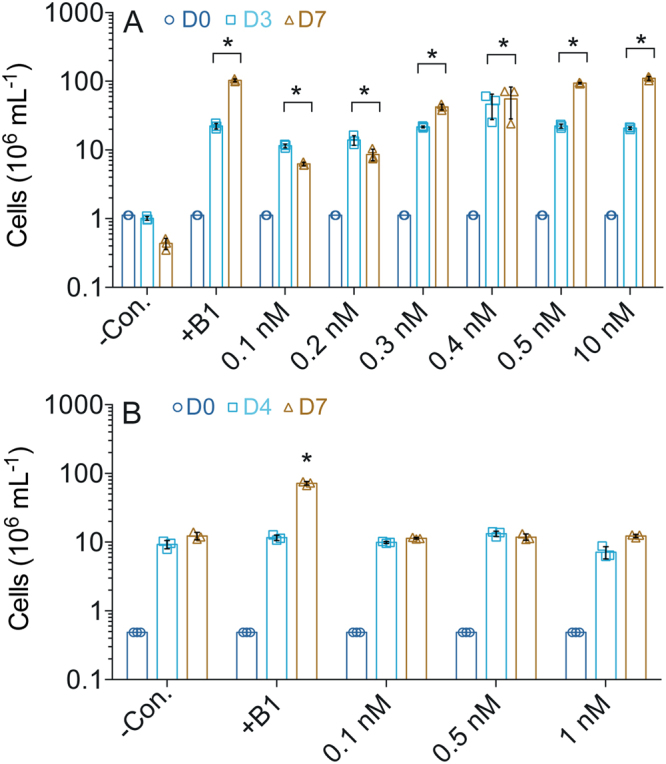
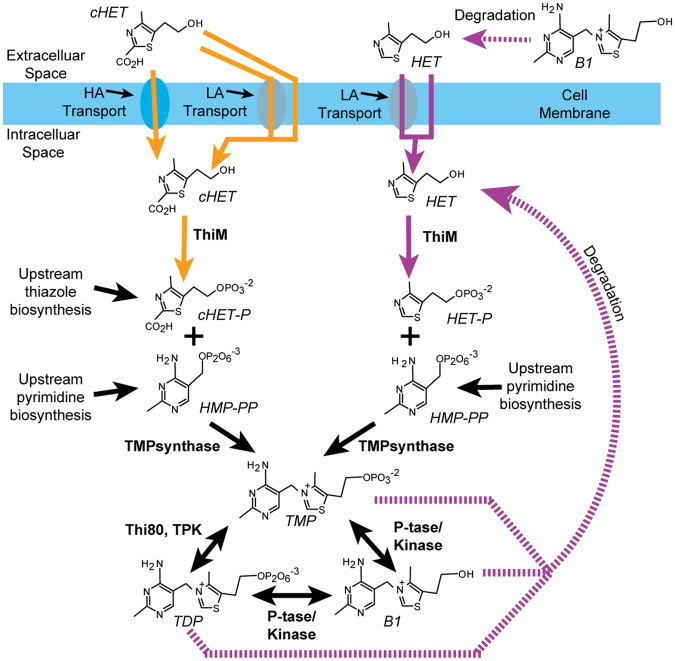
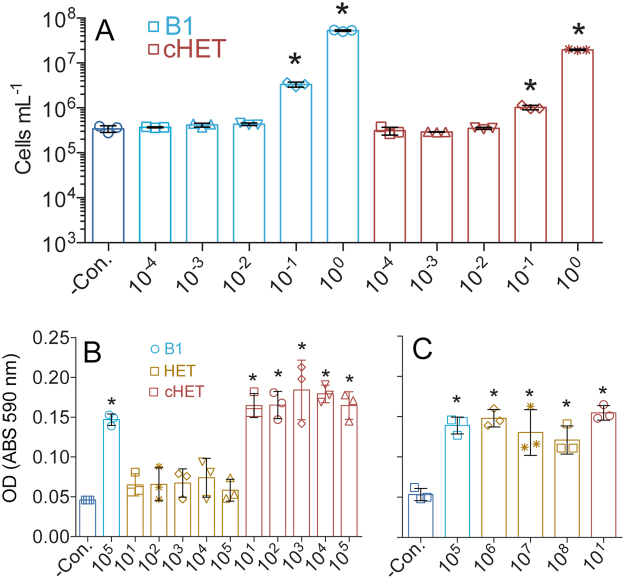
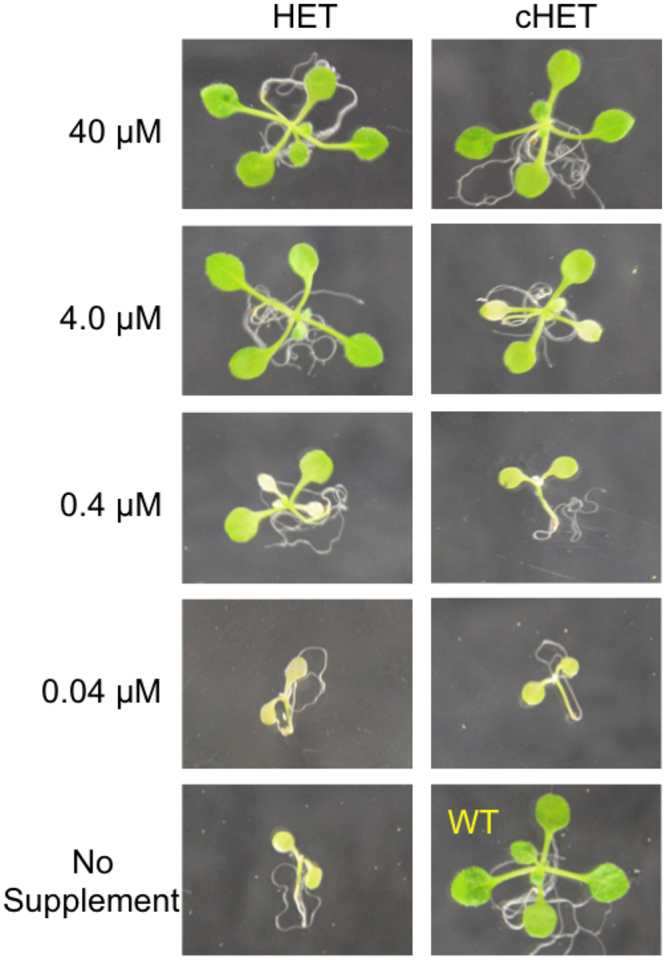
Almost all cells require thiamin, vitamin B1 (B1), which is synthesized via the coupling of thiazole and pyrimidine precursors. Here we demonstrate that 5-(2-hydroxyethyl)-4-methyl-1,3-thiazole-2-carboxylic acid (cHET) is a useful in vivo B1 precursor for representatives of ubiquitous marine picoeukaryotic phytoplankton and Escherichia coli - drawing attention to cHET as a valuable exogenous micronutrient for microorganisms with ecological, industrial, and biomedical value. Comparative utilization experiments with the terrestrial plant Arabidopsis thaliana revealed that it can also use exogenous cHET, but notably, picoeukaryotic marine phytoplankton and E. coli were adapted to grow on low (picomolar) concentrations of exogenous cHET. Our results call for the modification of the conventional B1 biosynthesis model to incorporate cHET as a key precursor for B1 biosynthesis in two domains of life, and for consideration of cHET as a microbial micronutrient currency modulating marine primary productivity and community interactions in human gut-hosted microbiomes.
几乎所有细胞都需要硫胺素,即维生素 B1(B1),它是通过噻唑和嘧啶前体的偶联合成的。在这里,我们证明 5-(2-羟乙基)-4-甲基-1,3-噻唑-2-羧酸(cHET)是一种有用的普遍存在的海洋微微型浮游植物和大肠杆菌的体内 B1 前体 - 引起人们对 cHET 的关注,因为它是具有生态、工业和生物医学价值的微生物的有价值的外源性微量营养素。与陆地植物拟南芥的比较利用实验表明,它也可以利用外源性的 cHET,但值得注意的是,微微型海洋浮游植物和大肠杆菌适应于在低(皮摩尔)浓度的外源性 cHET 上生长。我们的研究结果呼吁对传统的 B1 生物合成模型进行修改,将 cHET 纳入到生命的两个领域的 B1 生物合成的关键前体中,并考虑将 cHET 作为一种微生物微量营养素货币,调节海洋初级生产力和人类肠道微生物组中的群落相互作用。